
Cannabis resin is much more than that crystalline shine covering mature flowers. From a scientific perspective, this sticky substance represents the product of millions of glandular trichomes, specialized structures that act as authentic biochemical factories capable of synthesizing cannabinoids, terpenes, and flavonoids. For growers seeking to optimize the quality of their harvests, understanding the mechanisms that regulate resin production is fundamental.
The Biology Behind Trichomes
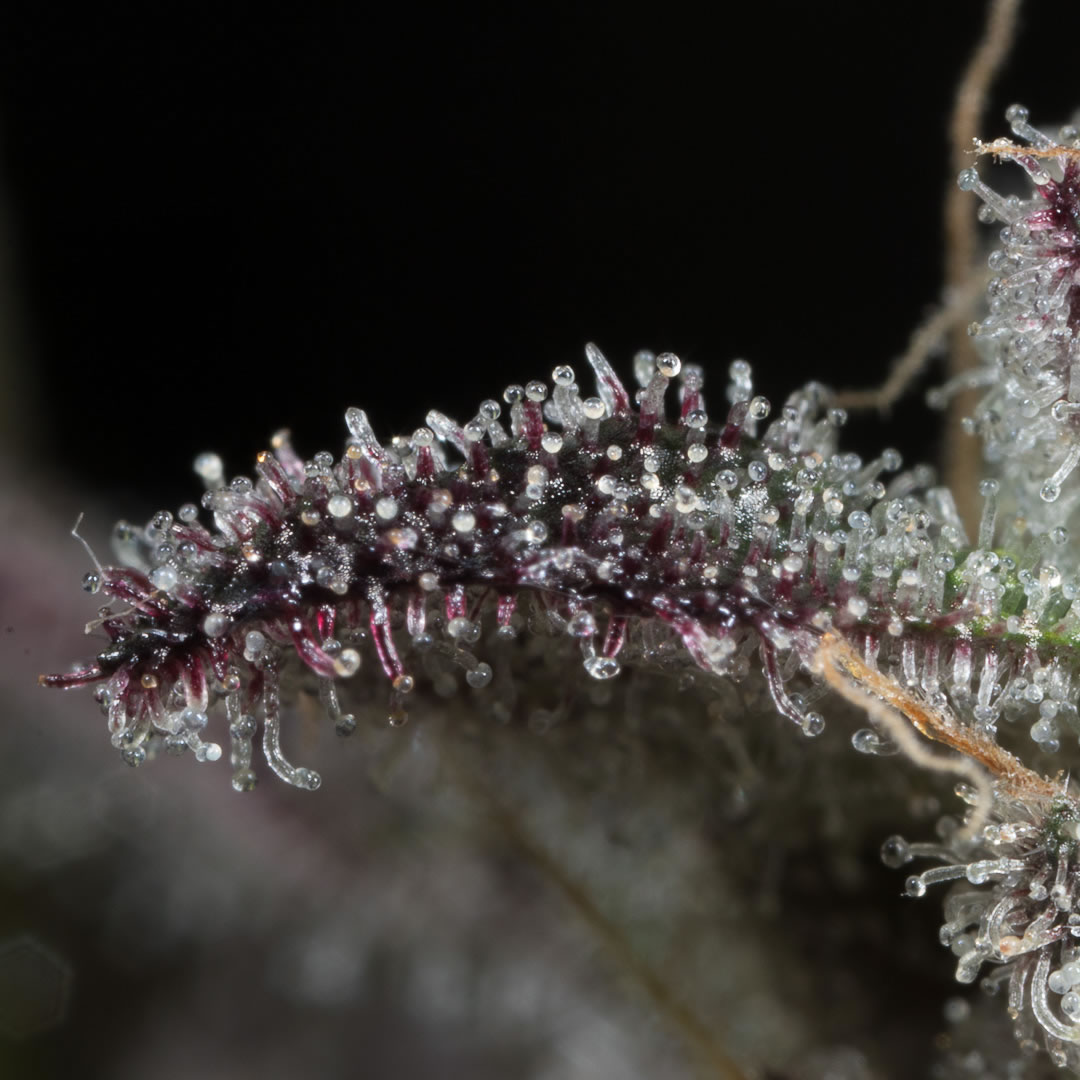
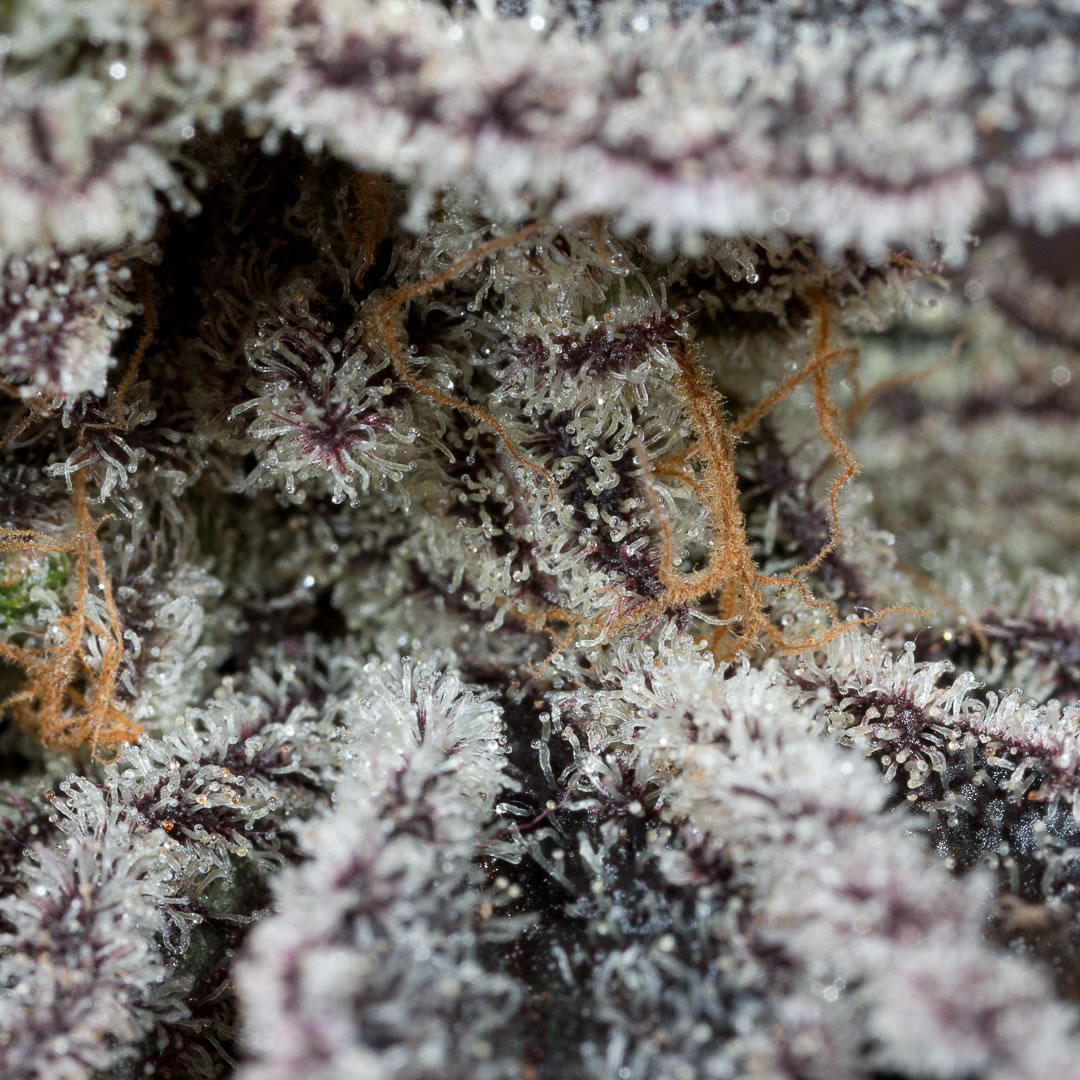
Glandular trichomes are epidermal structures in the form of small hairs that emerge primarily from the bracts of female flowers. These structures have evolved as a defense mechanism against herbivores, ultraviolet radiation, and environmental stress. In cannabis, there are mainly three types of glandular trichomes: bulbous (barely visible microscopically), capitate sessile, and capitate stalked, with the latter being the main responsible for resin production thanks to their larger glandular head.
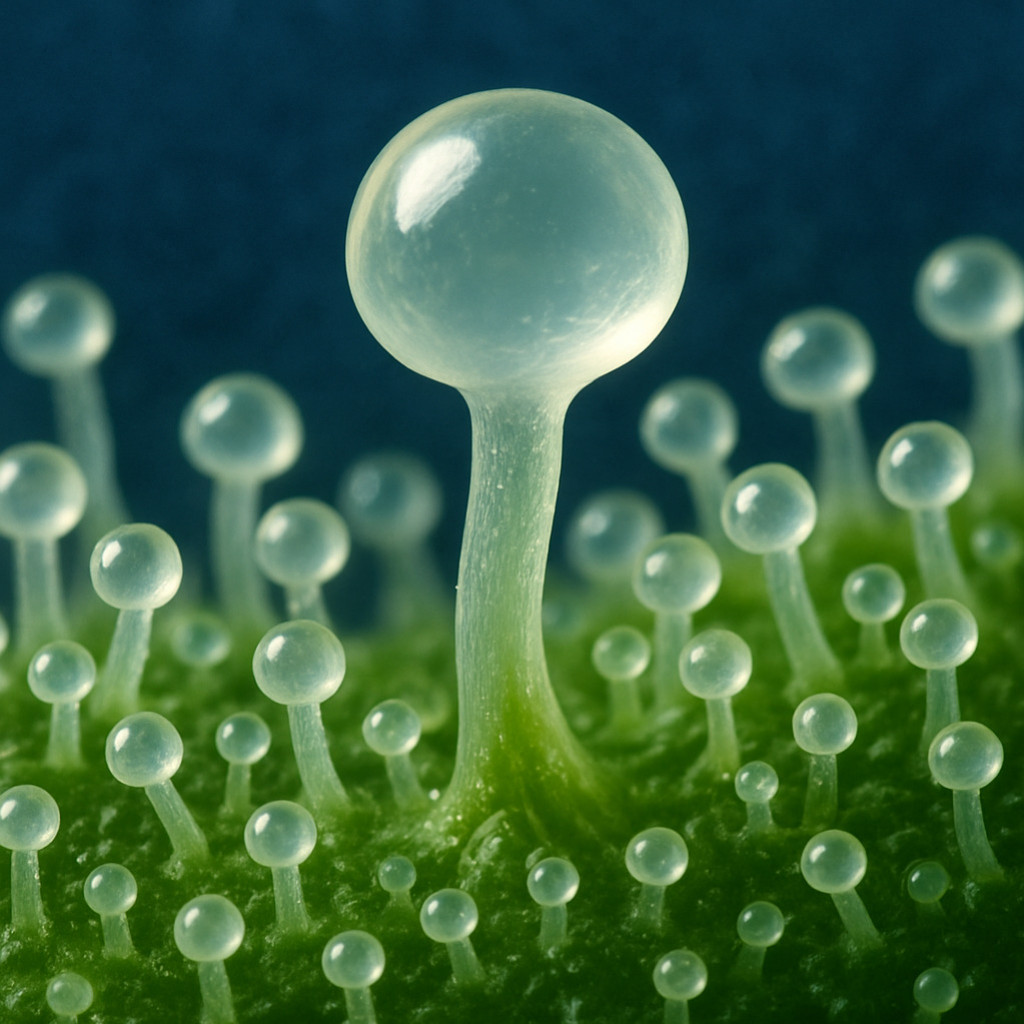
Not everything that glitters is potent. Only pedunculated glandular trichomes (with "stick") produce THC/CBD. Look for milky-amber heads, not just glitter.
Recent research through proteomics has revealed that glandular trichome heads present an overabundance of proteins related to the biosynthesis of secondary metabolites, especially those involved in the methylerythritol phosphate (MEP) pathway, crucial for the production of isoprenoid precursors of cannabinoids. These findings demonstrate that trichomes are not passive structures, but highly specialized metabolic centers with elevated rates of energy production and protein turnover.
The Importance of Genetics and Harvest Timing
Although we can manipulate environmental factors to optimize resin production, genetics remains the determining factor. Studies on trichome development in different cannabis genotypes have demonstrated that trichome density, stalk length, glandular head diameter, and maturation timing vary significantly among cultivars. This means that choosing a naturally resinous genetic constitutes the first essential step to obtain trichome-rich flowers.
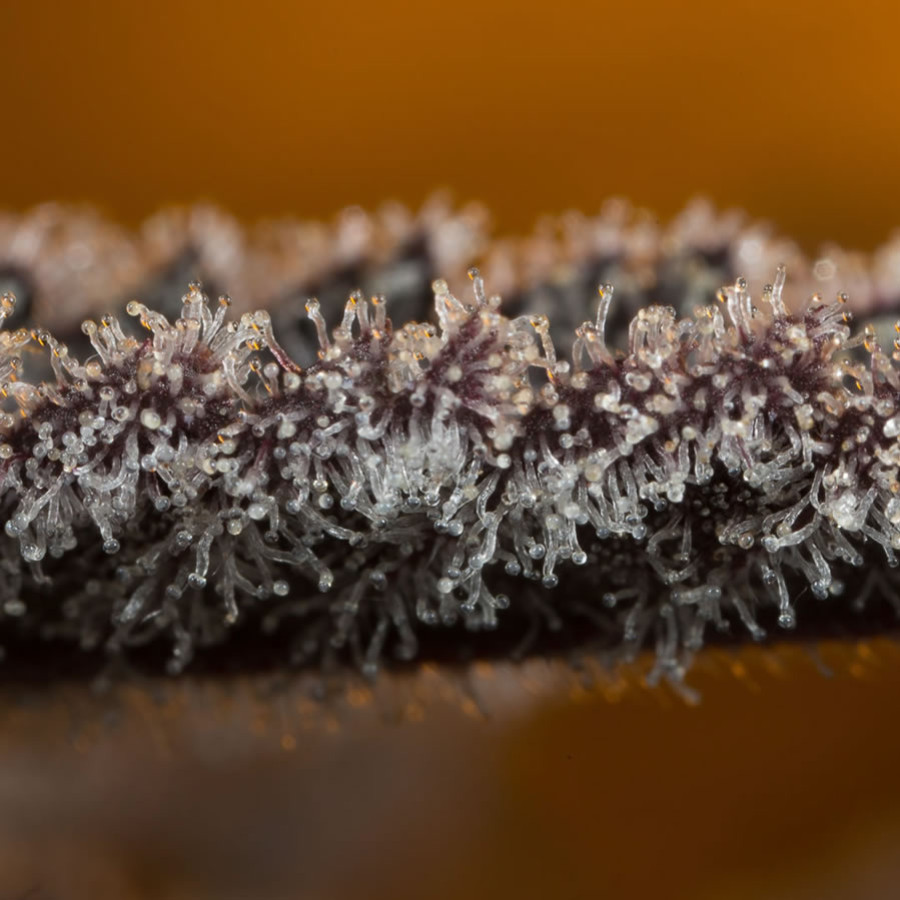
The asynchronous formation of trichomes in bracts implies that at any given moment, trichomes coexist in different stages of development and maturation, which directly affects the total cannabinoid content in the final product. Therefore, harvest timing must be determined by carefully observing the state of trichomes under magnification, seeking that optimal point where the majority present a milky color indicating maximum cannabinoid concentration.
The cannabis harvest is crucial: cutting at the optimal time determines potency, flavour and effects. Find out how to know when to cut your plant.
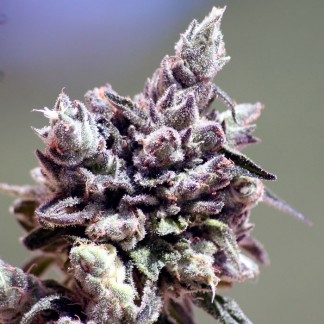
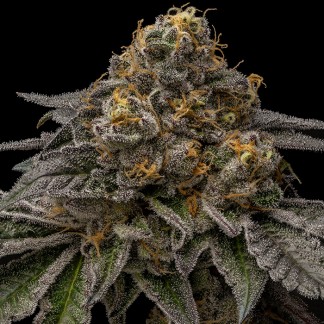
Most Resinous Ripper Seeds Varieties
Understanding that genetics is the fundamental pillar, at Ripper Seeds we have worked to stabilize varieties that maximize this glandular potential.
The Role of Ultraviolet Light
One of the most studied environmental factors in relation to resin production is ultraviolet radiation, particularly UV-B (280-315 nanometers). When cannabis plants are exposed to UV-B radiation, they perceive this exposure as a potential threat and respond by increasing trichome production as a photoprotection mechanism. These trichomes, rich in cannabinoids and terpenes, act as a natural filter that reduces cellular damage.
Research conducted at the University of Mississippi has demonstrated that cannabis plants exposed to UV-B light during flowering show a significant increase in THC levels compared to plants grown without UV exposure. THC acts as a natural sunscreen for the plant, and those exposed to higher levels of UV radiation tend to produce elevated concentrations of this cannabinoid. The higher concentration of trichomes around flowers can be interpreted as an evolutionary strategy to protect reproductive organs from radiation damage. However, it has also been shown that this increase in THC levels has a limit that depends on genetics.
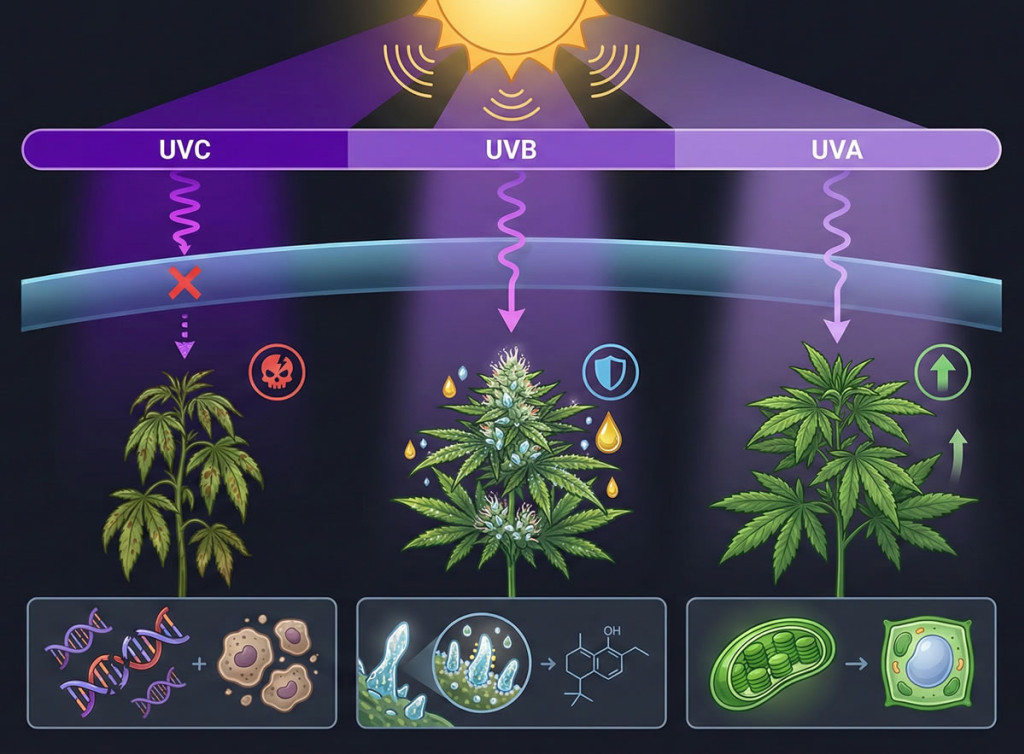
Ultraviolet light promises to increase cannabis potency, but current science contradicts classic studies. Learn about the differences between UVA, UVB, and UVC, how they affect trichomes and cannab...
For indoor growers, implementing supplemental UV-B lighting during the final weeks of flowering can be beneficial. However, it is essential to apply this technique with caution, using short exposure periods (15 minutes to 2 hours daily) and taking necessary safety measures, as UV-B radiation can also be harmful to humans.
The Emerson Effect and Light Spectrum Optimization
Beyond UV radiation, the complete light spectrum plays a fundamental role in photosynthetic efficiency and, by extension, in the plant's ability to produce secondary metabolites such as cannabinoids and terpenes. A particularly relevant phenomenon for growers is the Emerson effect, discovered by plant physiologist Robert Emerson in 1957.
This effect demonstrates that photosynthesis is significantly more efficient when plants simultaneously receive red light (660-680 nm) and far-red light (720-740 nm), compared to exposure to each wavelength separately. The reason lies in how the two plant photosystems work: photosystem II (PSII) responds better to red light, while photosystem I (PSI) is more sensitive to far-red light. When both systems work synchronously thanks to the combination of these wavelengths, photosynthetic efficiency can increase up to 30-40%.
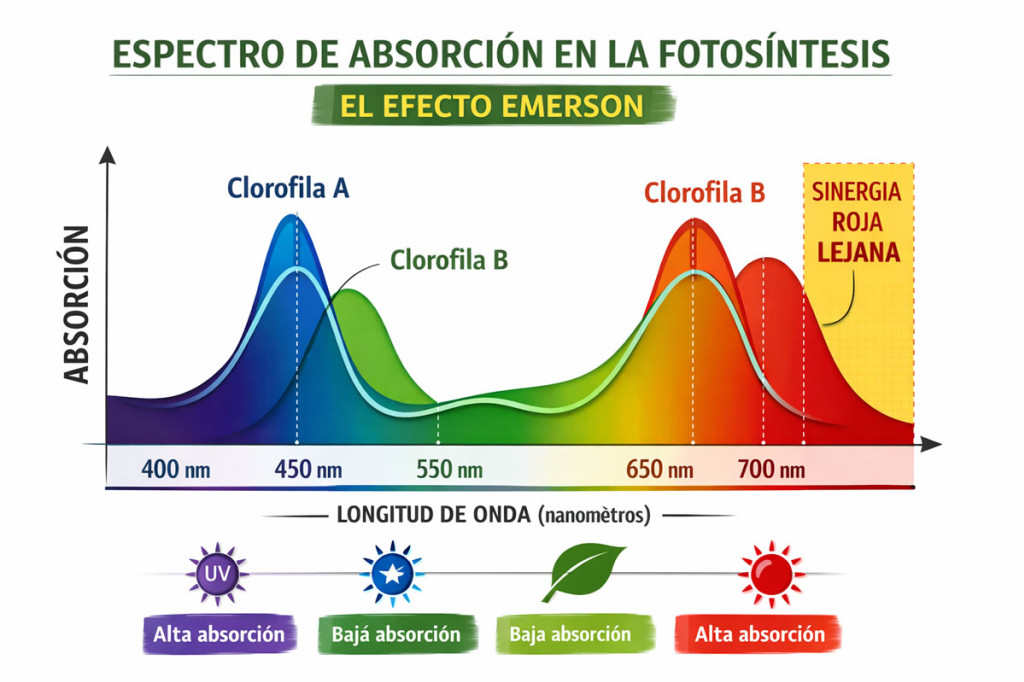
Guide to the Emerson effect applied to cannabis cultivation: how to combine deep red and far-red with LEDs to improve photosynthesis, control morphology, and shorten flowering times.
For cannabis cultivation, this has important practical implications. Greater photosynthetic efficiency translates into increased energy production (ATP) and reducing power (NADPH), which are essential for the biosynthesis of cannabinoids and terpenes in glandular trichomes. Plants with more efficient photosynthesis have more resources to invest in the production of these secondary metabolites.
Modern LED systems have allowed growers to take advantage of this effect in practical ways. Fixtures that include both red diodes (especially in the 660 nm range) and far-red light diodes (730 nm) can optimize both vegetative growth and resinous flower production. Some manufacturers have developed specific spectra for cannabis that maintain an optimal red:far-red ratio, typically between 1.2:1 and 1.5:1, to maximize the Emerson effect without inducing excessive plant stretching.
It is important to note that far-red light also plays a role in photoperiod regulation and can accelerate the transition between vegetative photoperiod and flowering. Some growers use short pulses of far-red light at the end of the light period (technique known as "far-red initiator") to simulate natural sunset and improve flowering response, although this strategy should be applied with knowledge of the specific cultivar and its photoperiod requirements.
Controlled Water Stress
Moderate and controlled drought stress has emerged as a promising technique to increase cannabinoid content. A study published by researchers at the University of Guelph demonstrated that a single controlled application of drought stress increased the concentration of tetrahydrocannabinolic acid (THCA) and cannabidiolic acid (CBDA) by 12% and 13% respectively, compared to non-stressed plants. Even more impressive, the yield per unit of cultivation area of THCA, CBDA, THC, and CBD increased between 43% and 67%.
The timing of water stress application is crucial to minimize yield losses and maximize secondary metabolite concentration. In the mentioned study, stress was applied in the seventh week of flowering, when vegetative growth had largely ceased. Cannabinoids accumulate mainly during the flowering stage, but the exact moment of highest concentration varies according to the cultivar, so it is recommended to apply stress between two and three weeks before harvest.
The technique requires careful observation. Under controlled conditions, visible wilting occurred after eleven days without watering, with this gradual stress allowing plants to acclimate. Growers should pay attention to leaf angle as a stress indicator: at the drought threshold, plants show visible wilting and the angle of indicator leaves increases approximately 50% compared to the angle of turgid leaves.
However, it is important to note that more recent studies have shown variable results. Research carried out with different cultivars indicates that severe drought stress can reduce both yield and cannabinoid content, while moderate drought levels (30-50% field capacity) do not significantly modify either yield or THC and CBD levels. This suggests there is a narrow window of optimal stress that varies according to genetics and growing conditions.
Light, Temperature, Humidity, Nutrition, and Other Environmental Factors
Beyond light and temperature, various environmental factors influence trichome formation. General light intensity is fundamental: flowers located at the top of the plant, which receive greater amounts of light, produce significantly higher quantities of cannabinoids and terpenes than those in lower positions. This highlights the importance of uniform light distribution and training techniques that maximize light exposure for all flowering points.
Relative humidity also plays an important role. During the final weeks of flowering, reducing humidity below 40% can stimulate plants to produce more trichomes as a protection mechanism against dehydration. However, a careful balance must be maintained, as excessively low humidity can overstress plants and negatively affect yield.
Regarding nutrition, although nutritional deficiencies will negatively affect trichome growth and maturation, there is no conclusive evidence that specific supplements dramatically increase resin production beyond maintaining plants in optimal nutritional status. Studies suggest that maintaining adequate levels of phosphorus and potassium during flowering can positively contribute to the development of floral structures and their associated trichomes.
Physical Stress Techniques
Some cultivation techniques that induce controlled physical stress have shown potential to increase trichome production. Methods such as super-cropping (stem bending) or LST (low stress training) are commonly used both to increase overall flower production and to induce stress responses that can stimulate resin production. The principle behind these techniques is that moderate and controlled stress activates the plant's natural defenses, including the production of secondary metabolites in trichomes.
Some growers also experiment with periods of total darkness (24-48 hours) just before harvest, with the hypothesis that this can induce a stress response that increases trichome and resin production. However, scientific studies have not yet provided conclusive evidence on the effectiveness of this method, remaining as a practice based more on empirical experience than on experimentally verified results.
Understanding the Cannabis Plant to Maximize Resin
Ultimately, resin is not an accidental product, but the culmination of a complex dialogue between the seed's genetic potential and the environmental stimuli the plant receives throughout its life. As we have seen, from choosing a cultivar with superior glandular density to precise manipulation of light spectrum and water stress, each grower's decision acts as an "instruction" for these biochemical factories called trichomes.
Optimizing the harvest does not consist of applying techniques indiscriminately, but in understanding plant physiology to work in harmony with it. By implementing tools such as the Emerson effect or UV-B radiation with judgment and observation, the grower ceases to be a spectator to become a conductor of cannabinoid biosynthesis. The pursuit of the perfect flower is, in essence, the pursuit of balance between the stress necessary to trigger the plant's defenses and the optimal care to preserve its vigor.
Main Sources
- Tanney, C.A.S., Backer, R., Geitmann, A., & Smith, D.L. (2021). Cannabis Glandular Trichomes: A Cellular Metabolite Factory. Frontiers in Plant Science, 12, 721986. https://www.frontiersin.org/journals/plant-science/articles/10.3389/fpls.2021.721986/fullLivingston, S.J., et al. (2020). Characterization of the Cannabis sativa glandular trichome proteome.
- Potter, D., et al. (2023). Glandular trichome development, morphology, and maturation are influenced by plant age and genotype in high THC-containing cannabis. Journal of Cannabis Research, 5, 11. https://link.springer.com/article/10.1186/s42238-023-00178-9
- Burgel, L., et al. (2025). Bracts, Buds, and Biases: Uncovering Gaps in Trichome Density Quantification and Cannabinoid Concentration in Cannabis sativa L. Plants, 14(14), 2220. https://www.mdpi.com/2223-7747/14/14/2220
- Lydon, J., Teramura, A.H., & Coffman, C.B. (1987). UV-B radiation effects on photosynthesis, growth and cannabinoid production of two Cannabis sativa chemotypes. Photochemistry and Photobiology. (Cited in Technology Networks studies, 2021: https://www.analyticalcannabis.com/articles/the-science-of-cannabis-trichomes-313105)
- Danziger, N., & Bernstein, N. (2021). Light matters: Effect of light spectra on cannabinoid profile and plant development of medical cannabis. Industrial Crops and Products. (Cited in https://www.thepurefactory.com/en/growing-tips/the-importance-of-ultraviolet-light-in-led-lighting-for-cannabis-cultivation/)
- Caplan, D., Dixon, M., & Zheng, Y. (2019). Increasing Inflorescence Dry Weight and Cannabinoid Content in Medical Cannabis Using Controlled Drought Stress. HortScience, 54(6), 964-969. https://www.cannabisbusinesstimes.com/irrigation/article/15690170/3-tips-for-controlled-drought-stress
- Park, Y., et al. (2022). Effects of short-term environmental stresses on the onset of cannabinoid production in young immature flowers of industrial hemp. Journal of Cannabis Research, 4, 4. https://jcannabisresearch.biomedcentral.com/articles/10.1186/s42238-021-00111-y
- Shenhar, I., et al. (2025). Effects of Drought on Inflorescence Yield, and Secondary Metabolites in Cannabis sativa L. bioRxiv. https://www.biorxiv.org/content/10.1101/2025.02.16.638548v1
- Eichhorn Bilodeau, S., et al. (2019). An update on plant photobiology and implications for cannabis production. Frontiers in Plant Science, 10, 296. https://www.frontiersin.org/journals/plant-science/articles/10.3389/fpls.2021.620021/full
- Jin, D., et al. (2023). Comparison of the Cannabinoid and Terpene Profiles in Commercial Cannabis from Natural and Artificial Cultivation. Molecules, 28(2), 833. https://www.mdpi.com/1420-3049/28/2/833
- García-García, A.L., et al. (2022). Exogenous application of stress-related signaling molecules affect growth and cannabinoid accumulation in medical cannabis. Frontiers in Plant Science, 13, 1082554. https://www.frontiersin.org/journals/plant-science/articles/10.3389/fpls.2022.1082554/full
- Emerson, R., et al. (1957). Some factors influencing the long-wave limit of photosynthesis. Proceedings of the National Academy of Sciences, 43(1), 133-143.
- Zhen, S., & Bugbee, B. (2020). Far-red photons have equivalent efficiency to traditional photosynthetic photons: Implications for redefining photosynthetically active radiation. Plant, Cell & Environment, 43(5), 1259-1272.