
In the universe of Cannabis sativa, trichomes are essential microstructures that concentrate much of the therapeutic, sensory, and economic value of the plant. These tiny formations cover flowers, leaves, and stems, and have the ability, in appropriate cases, to synthesize and store cannabinoids, terpenes, and flavonoids.
However, a widespread misconception persists: thinking that every shiny or "frosty" flower is synonymous with potency or quality. In the cannabis world, not everything that glitters is gold. Not all trichomes are glandular and, therefore, not all those that reflect light contain active compounds.
What are trichomes?
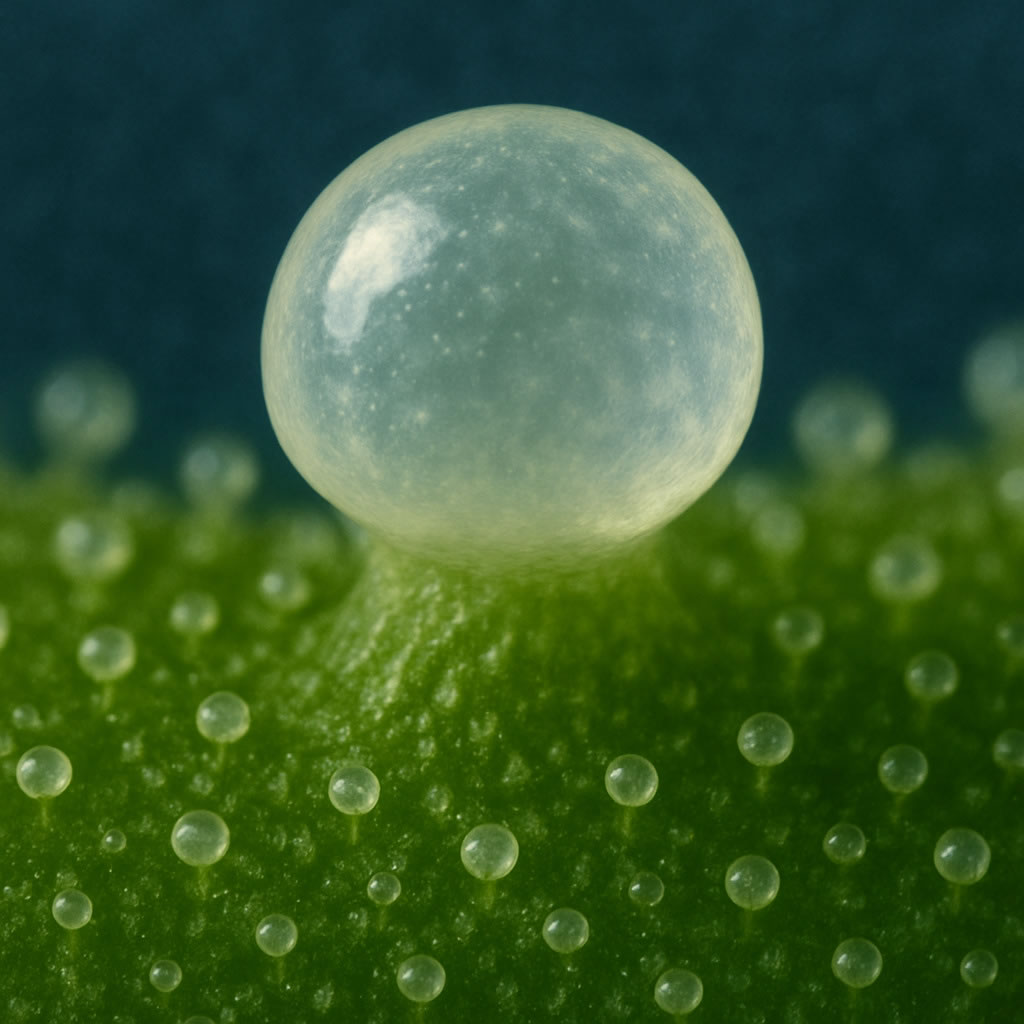
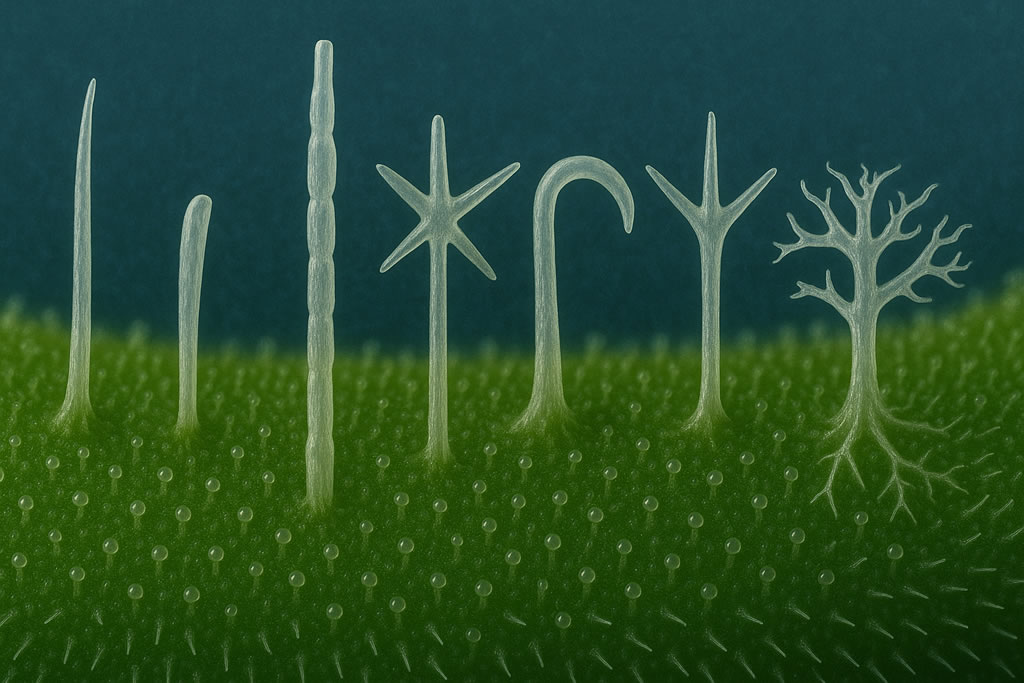
Trichomes are epidermal extensions that vary in form and function depending on the plant species and the organ where they develop. In the case of cannabis, they are classified into glandular trichomes, responsible for producing and accumulating secondary metabolites like THC, CBD, terpenes, and flavonoids, and non-glandular trichomes, also called tector or basal trichomes, which act as a physical barrier and defense against the environment, without synthesizing bioactive compounds.
The distinction between these types is key in harvesting, extraction, quality evaluation, and pharmaceutical production.
Types of cannabis trichomes
Capitate-stalked glandular trichomes
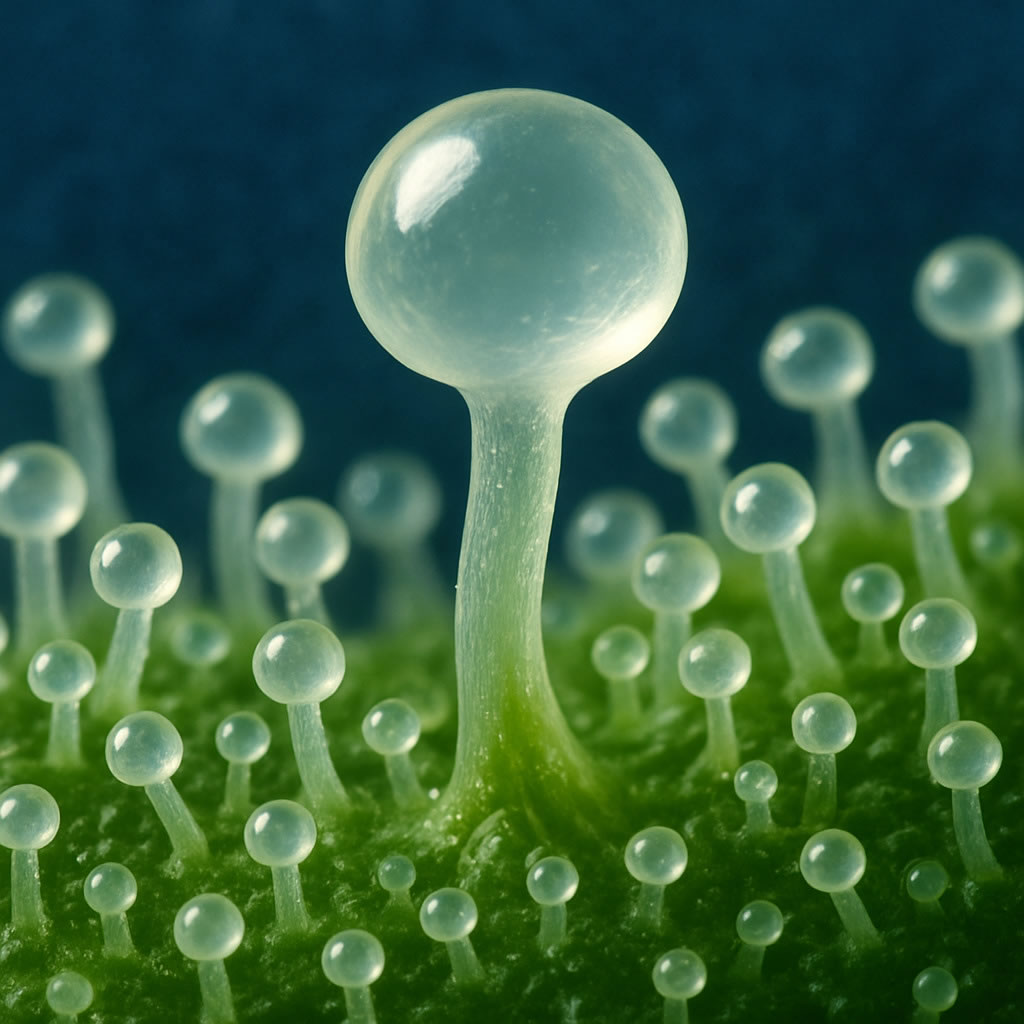
These are the most relevant at therapeutic and commercial levels. They present a clearly visible spherical head supported by a stalk, and are concentrated mainly on mature flowers and female bracts.
This structure not only provides greater space for resin production and storage, but also allows for higher levels of cannabinoids and terpenes. During their development, the glandular head goes from being transparent to milky —the optimal point of biosynthesis— and finally amber, which indicates the beginning of degradation.
Capitate-sessile glandular trichomes
They lack a stalk and are found attached directly to the epidermis, especially on young flowers and sugar leaves. Their production of active compounds is more limited, although in some cases they can evolve into stalked trichomes.
Bulbous glandular trichomes
They are extremely small, with a size between 10 and 15 microns, and have no stem. Their contribution in terms of resin is marginal, making them irrelevant for therapeutic or commercial applications.
Non-glandular trichomes (tector or basal)
They do not participate in the production of cannabinoids or terpenes, but play a defensive and adaptive role. Various forms exist, such as simple unicellular ones that help conserve moisture, cystolithic ones that serve as a mechanical barrier against insects, or branched and woolly trichomes, which offer thermal insulation and protection against solar radiation.
Anatomy of a stalked glandular trichome
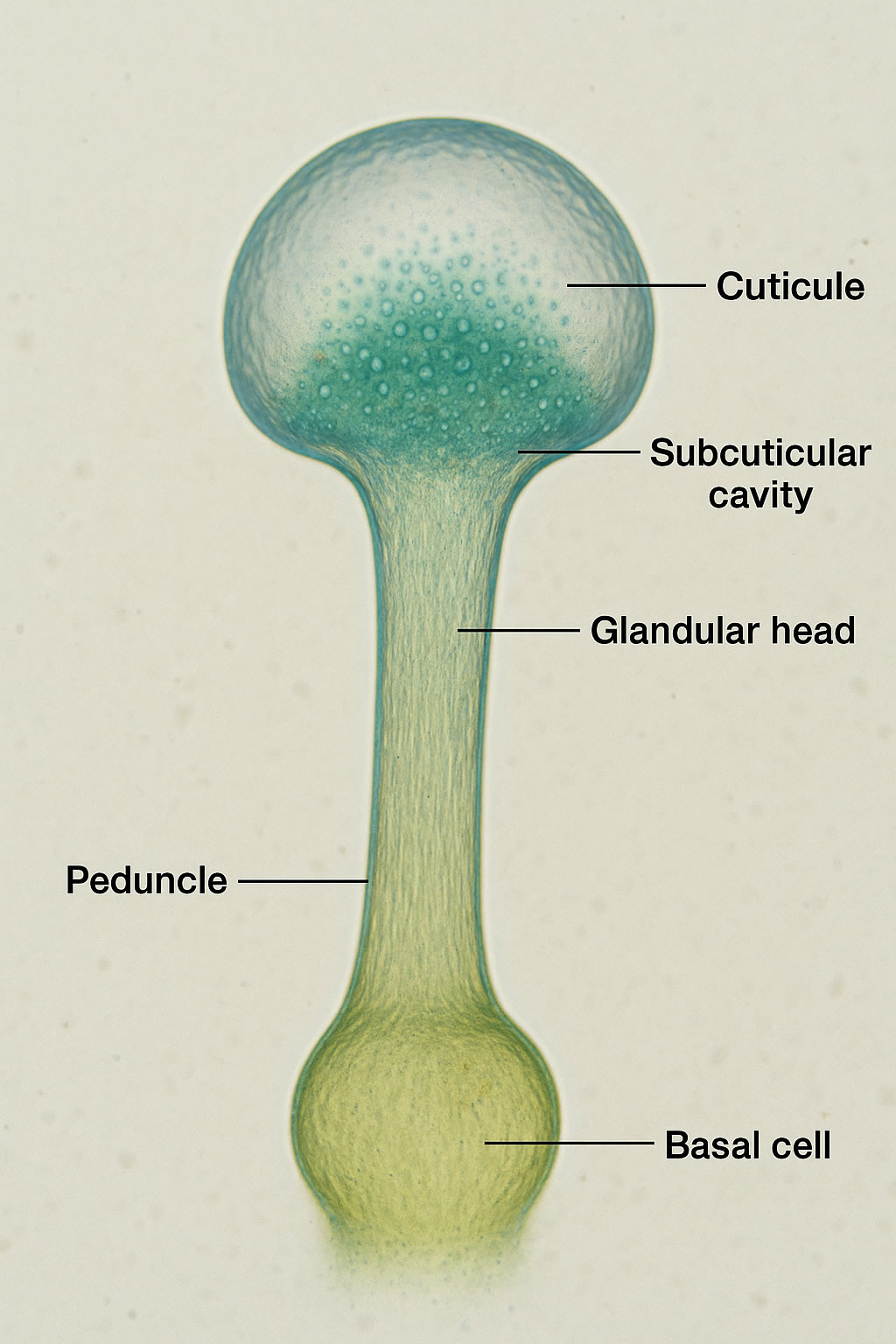
These structures function as specialized microfactories. At their base is the basal cell, responsible for anchoring the trichome to the epidermis and facilitating communication with the plant's tissues.
The stalk acts as structural support and transport pathway for precursors. The glandular head is where biosynthesis and storage of metabolites occurs, which are concentrated in the subcuticular cavity, protected by an external cuticle that prevents evaporation and premature degradation.
Why does the stalk make the difference?
Stalked trichomes are characterized by having more developed secretory cells and a larger subcuticular cavity, which allows them to store greater amounts of resin. This translates to significantly higher levels of cannabinoids and terpenes compared to other types.
Therefore, these trichomes are considered the best indicators of pharmacological and commercial quality in cannabis.
How to evaluate marijuana trichomes?
To properly assess the state of trichomes, it is recommended to use a magnifying glass or microscope with magnification between 60 and 100x. It is essential to observe not only the shape —presence or absence of stalk— but also the density and color of the glandular head, which varies from transparent in immature trichomes to amber when degradation has already begun.
It is also advisable to not confuse glandular trichomes with tector ones, which, despite their shine, do not contain active compounds.
What is the purpose of evaluating cannabis trichomes?
Trichome analysis allows for crucial decisions to be made at different stages of cultivation and processing. Determining the optimal harvest time, for example, depends on the degree of trichome maturity.
It is also key for selecting parents in genetic improvement processes, choosing plant material for resin extraction or verifying the quality of a sample before its industrial transformation.
The science behind trichomes
Development and natural regulation
Glandular trichomes develop from specialized stem cells of the floral epidermis. This process is regulated by genetic factors, hormones like auxins, gibberellins, and cytokinins, as well as by environmental stimuli. Exposure to UV light or moderate water stress, for example, can stimulate their formation and biosynthetic activity.
Formation stages
The development of a trichome follows a precise sequence: it begins with the activation of regulatory genes, followed by cell type determination. Subsequently, the trichome structures are built —such as the stalk and head— which culminate their maturation with the formation of the subcuticular cavity and the protective cuticle.
Genetic variability
The genetics of each variety directly influences the density, type of trichomes, their metabolic activity, and the resulting chemical profile. Some strains present a higher proportion of stalked trichomes or generate more THC and specific terpenes, which determines their organoleptic and pharmacological profile.
Advanced trichome analysis methods
Scientific tools exist that allow for more precise characterization of trichomes. Confocal or Raman microscopy allows studying their structure and composition without needing to destroy the sample. Chromatographic techniques like GC-MS or LC-MS accurately quantify levels of cannabinoids and terpenes. And NIR spectroscopy offers rapid analysis that can be performed directly in the field.
How to identify varieties with real psychoactive effect
It is important to debunk some myths: a flower with much shine or strong aroma does not necessarily guarantee high THC content. The so-called "bag appeal" can be misleading if not accompanied by proper analysis.
Terpenes in cannabis are essential compounds that influence the user experience, from aromas to therapeutic effects. These natural compounds not only give each cannabis strain its character but als...
To identify a truly potent sample, it is essential to observe the presence and density of mature stalked glandular trichomes —milky or amber colored— as well as assess a complex terpenoid profile and verify the results of certified cannabinoid analyses.
Practical recommendations
Whenever possible, acquire cannabis from dispensaries or reliable sources that present laboratory results. Portable magnifying glasses are a useful tool for initial visual inspection, although keep in mind that curing and storage also significantly influence the final effect.
In conclusion, in cannabis, appearance can be misleading. Only detailed observation and rigorous chemical analysis truly allow identifying a flower of high therapeutic quality. Learning to recognize the correct trichomes is key for growers, patients, and discerning consumers like you.