
Growing cannabis is a journey of patience and care. But the harvest moment defines everything: that instant when you cut your plants determines the potency, flavor, and final effect of the cannabis you'll enjoy.
The optimal harvest window is very short: It's marked by a delicate balance between the maturation of trichomes, cannabinoid biosynthesis, environment, and genetics. Making the right decision at the right moment is an art, and learning to read the plant's signals is a grower's best tool.
Trichomes: microscopic cannabinoid factories
To the naked eye, buds are covered with a "frost" that, in reality, are trichomes: microscopic structures shaped like resin glands. They are miniature biological laboratories where cannabinoids (like THC and CBD) and terpenes that provide aroma and flavor are produced.
The most important trichomes are the capitate-stalked ones. Within them, specialized cells transform precursor compounds into active cannabinoids through a process called biosynthesis.
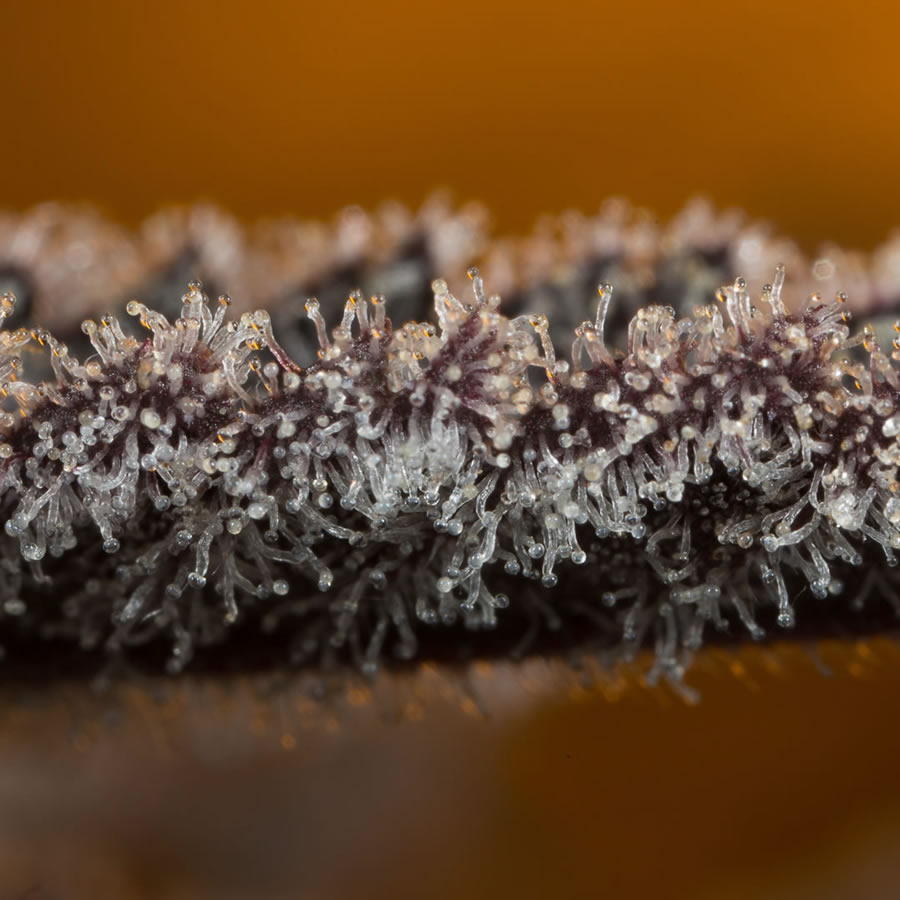
The life cycle of trichomes and the biosynthetic pathway
Trichome maturation is not random: it's a chemical pathway genetically programmed in the plant. It all begins with a precursor compound called CBGA (cannabigerolic acid), often nicknamed "the mother cannabinoid".
During flowering, specialized enzymes act on CBGA to convert it into other compounds:
- THCA synthase converts CBGA into THCA (the acidic form of THC).
- CBDA synthase converts CBGA into CBDA (the acidic form of CBD).
This peak of enzymatic activity occurs in the middle and final phase of flowering. The evolution of trichomes is the visual reflection of this process.
-
Clear trichomes: This is the initial phase. Trichomes are transparent because biosynthesis is in full development. They contain mainly CBGA and other precursors. Harvesting here produces flowers with low potency and more energetic or anxious effects.
-
Milky or cloudy trichomes: This is the glory point. CBGA has mostly converted to THCA or CBDA. Cannabinoids reach their peak and trichomes become white and opaque due to resin density. Here maximum potency is achieved and an ideal balance in aromas and effects.
-
Amber trichomes: THC (obtained by heating THCA) begins to degrade into CBN, a more sedative cannabinoid. The resin acquires a golden or brown tone. Total potency may decrease, but effects become more relaxing and physical.
Observing these changes with a magnifying glass or microscope is the most reliable method to make the decision.
Pistils: a key clue
Pistils - those "hairs" that grow from the buds - also help interpret maturity. At first they are white and straight, but they curve and darken over time. When between 50% and 70% have turned to orange or brown tones, it's a clear signal that the plant is at its point.
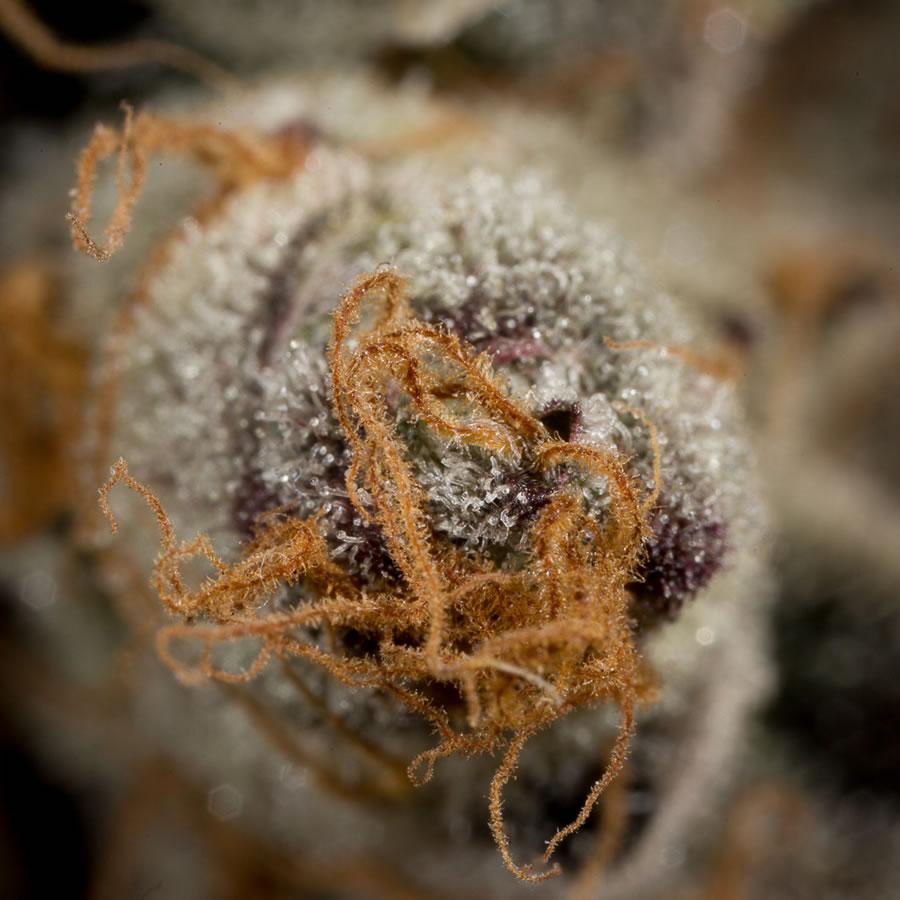
The best way to interpret pistils is to use them as a complementary tool:
-
If you observe that most are still white and straight, no matter what the calendar says: the plant is still not ready.
-
If between 50% and 70% have already darkened and curved, it's a strong indication that harvest is near, but it's always advisable to confirm by observing trichomes with a magnifying glass.
-
If more than 80–90% are dark and dry, you've probably entered a late harvest, with more sedative effects.
Pistils offer a quick and accessible reading of the maturation state, especially useful outdoors or when optical tools are not available. Even so, the grower seeking precision should always complement this signal with trichome observation, which is the true thermometer of potency and effect profile.
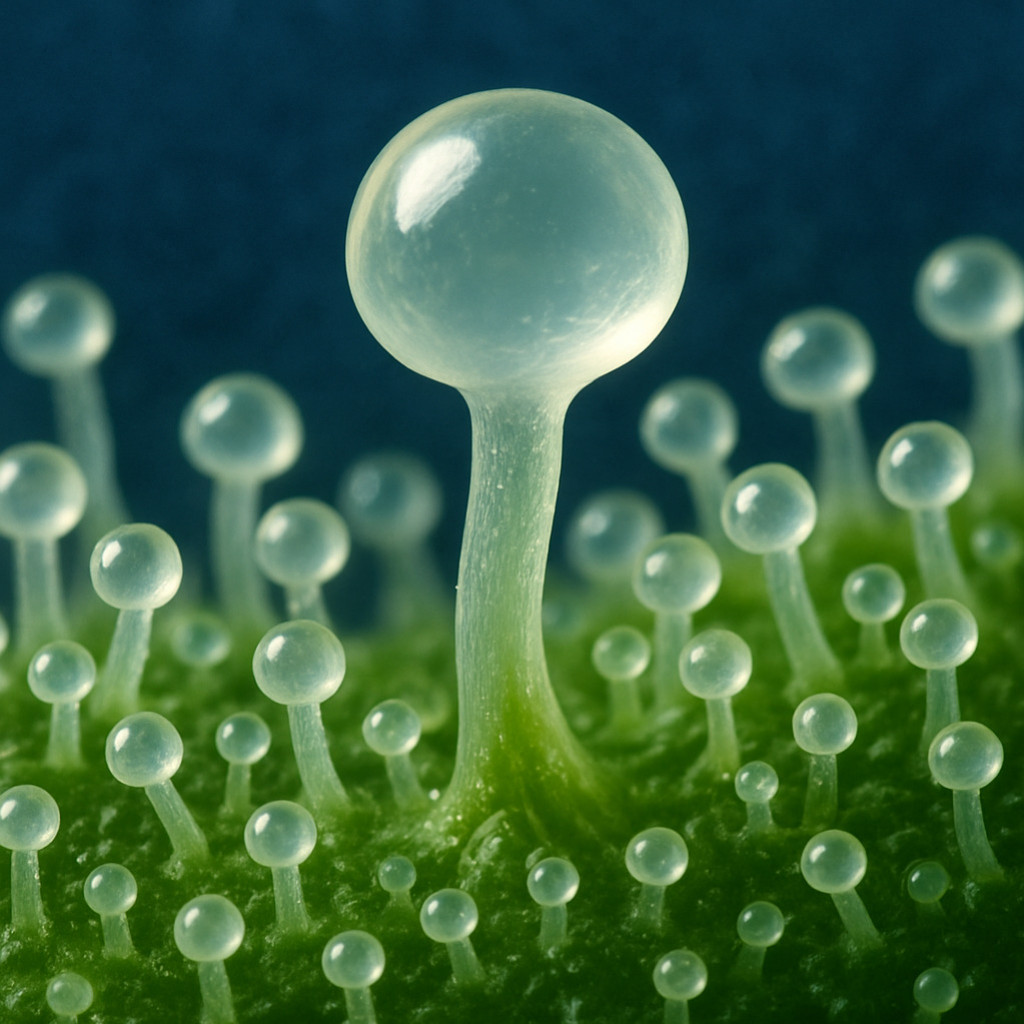
Not everything that glitters is potent. Only pedunculated glandular trichomes (with "stick") produce THC/CBD. Look for milky-amber heads, not just glitter.
The harvest moment defines the effect
The decision to cut not only influences potency, but also the type of experience you're seeking.
-
Early harvest: Cerebral, energetic and creative effect (higher percentage of clear and milky trichomes).
-
Optimal harvest: Maximum cannabinoid concentration. Offers a balance between mind and body and highlights the characteristics of the genetics (50-70% milky trichomes, the rest clear and amber).
-
Late harvest: A more intense, relaxing and sedative body effect, ideal for rest. The flavor becomes smoother (70% or more amber trichomes).
The same crop can offer very different experiences, depending on when you decide to cut.
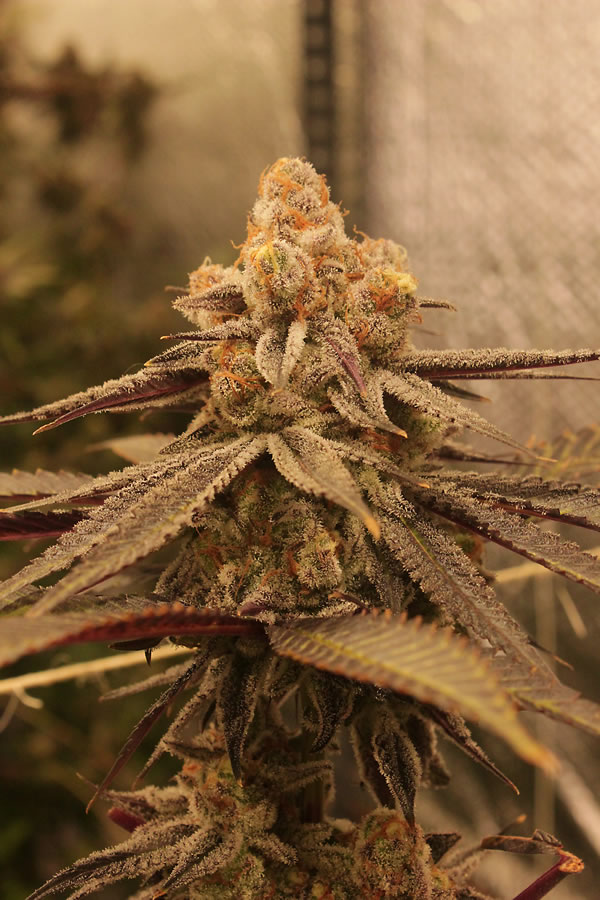
The environment: an invisible ally
Harvest quality doesn't only depend on timing, but also on the environment.
-
Temperature: Ideally maintain flowering between 18 and 27 °C during the day and between 15 and 24 °C at night. Lowering the temperature in the final weeks (to 15-18 °C) can stimulate resin production and color development in some genetics.
-
Humidity: It's crucial to reduce it progressively, from 50% at the beginning of flowering to 40-45% in the final weeks. This not only favors resin, but also prevents mold in dense flowers, a common risk at the end of the cycle.
After harvest: the science of drying and curing
Cutting at the right moment is only half the journey. Poor drying or curing can ruin months of effort.
Drying: preserving the essence
This is the most important process to preserve quality. The goal is to eliminate moisture slowly.
- Method: The most common is to hang whole branches in a dark space, with good air circulation. You can also use drying nets for smaller buds.
- Conditions: Maintain a temperature of 15-21 °C and relative humidity of 45-55%.
- Duration: Ideal drying takes between 7 and 14 days. You'll know it's ready when thin stems break with a "snap" instead of bending.
Curing: softening the flavor
Curing allows flowers to slowly decompose to improve flavor and smoke smoothness.
- Process: Once dry, store flowers in airtight glass jars, filling them to 75% of their capacity.
- Humidity: The goal is to maintain stable humidity between 55% and 65%. You can use small hygrometers inside jars to monitor.
- "Burping": During the first week of curing, open jars daily for 10-15 minutes to release excess moisture and allow air exchange. After the first week, reduce frequency to once every 2-3 days.
- Duration: Curing can last from 2 to 8 weeks or even more, improving flavor and effect over time.
In conclusion, the harvest moment is the culmination of the cycle. Observing trichomes with patience, interpreting pistils, considering the environment, and avoiding haste are the keys to obtaining maximum quality flowers. Because the moment of cannabis harvest is key to determining the cannabinoid composition of the flower as well as its effects when consumed and the final quality of the bud.
Happy harvest!