
What a moonrock is and why it's called that
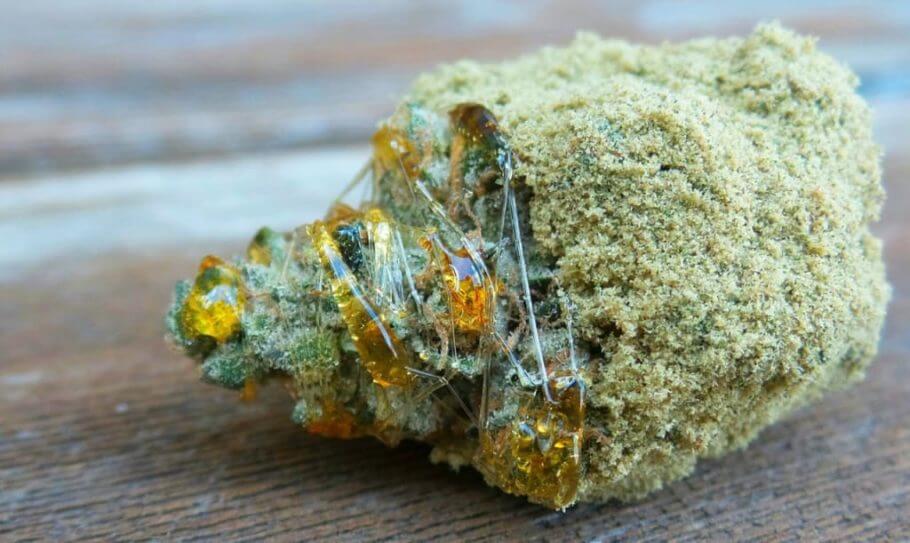
A moonrock (or moon rock) is a cannabis bud coated in a thin layer of sticky extract and then rolled in resin powder, usually kief. It isn't an extraction but a way of bringing together in a single piece the three components you need: cannabis flower, extract and kief. If you're not sure what a concentrate is or what types exist, we cover it in our guide to types of extractions and concentrates.
Each layer has a job. The flower is the core: it provides the structure and the flavor of the strain. The extract acts as the glue and adds concentrated resin. The outer powder covers the whole thing, stops the piece from sticking to everything and gives it its final look.
The name comes from that look. Once coated, the bud loses its recognizable shape and resembles a stone with a grainy surface, like a moon rock. The term became popular in the US market.
Why there's no standard potency
Because extract and resin powder are added to the flower, a moonrock can reach a higher cannabinoid concentration than the flower on its own. How much higher depends on each piece: on the potency of the materials used, how much extract it contains and the amount and composition of the coating. Two pieces that look the same can differ greatly in potency.
That's why you should be wary of the potency figures that circulate about moonrocks in general. Without a lab test of that specific piece, any number is an estimate. With homemade material, you have no way of knowing precisely.
Looks aren't quality
An even finish tells you the coating is well distributed, and not much else. A fine powder says something about its particle size, not its purity. A light color may be due to less plant matter, but it doesn't prove it. And none of these three things tells you that the flower is good, that the extract is high quality or that the piece is more potent. A perfect coating can hide mediocre flower, and with commercial moonrocks that's exactly the risk: what you see is the outer layer, not what's underneath.
When it's worth making moonrocks
A moonrock doesn't create new material: it combines flower, extract and kief (or another resin powder) that you already have separately. Its value lies in using up leftover extract and kief and bringing them together with good flower in a single piece.
It makes sense when:
- You've built up kief in your grinder and don't know what to do with it.
- You make rosin now and then and have some left over.
- You want to prepare a few pieces for a special occasion.
What you're using up are the leftover extract and kief. The flower, on the other hand, has to be good. There's no point using a moonrock to improve weak flower: the coating hides the appearance, not the taste. If the flower is mediocre, the moonrock will be too, and you'll have used up extract you'd have been better off enjoying on its own.
Each piece uses up extract and powder, so it's worth thinking about from the moment you choose the genetics. To find out which plants yield the most material, check out our selection of the best strains for making rosin.
And if you want more resin from the same plants, the work starts during cultivation. We explain how in how to increase resin when growing cannabis.
What materials you need: flower, extract and powder
The flower: which bud to choose
Look for a compact, dense bud. A loose or airy bud soaks up the extract in its gaps and falls apart when you handle it.
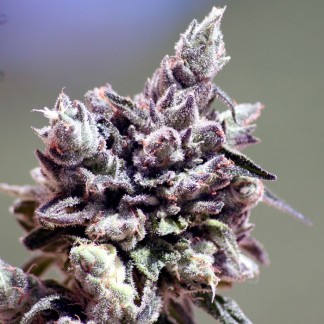
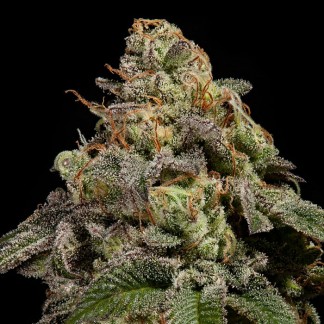
From our catalog, OMG (GMO x Kush Mints) produces dense, sticky buds covered in resin that work both as a core and for extracting. Zombie Kush is one of our most resinous genetics, with large flowers and a huge amount of trichomes, and we especially recommend it for extractions: it's a good source for both the sticky layer and the coating.
The flower must be properly dried and cured before you start. Poorly dried flower already carries a risk of mold, and once it's coated it's much harder to check.
The sticky layer: rosin or hash
The easiest to work with is rosin. It spreads well, sticks to the flower and is made with heat and pressure, without solvents. If you've never made it, you'll find the full process in our introduction to rosin.
Some types of hash also work: the soft, oily ones you can knead between your fingers. Flatten them into thin sheets and press them onto the bud. Dry, crumbly hash won't stick and is no good for this layer.
Many commercial moonrocks use BHO. It's an option, but it's made with flammable solvents and we don't cover it on this blog.
Whatever the extract, consistency is what matters: it needs to stretch into a thin layer without dripping.
Don't use cooking oil, honey, syrup or any other substance that doesn't come from the plant as glue. They don't burn well, change the flavor and make the smoke worse.
The outer layer: kief, dry sift or bubble hash
The most common material is the kief that collects at the bottom of the grinder. It works, though it carries bits of leaf. A dry-sifted powder is cleaner. Bubble hash can also be used as the outer layer, though it has to be completely dry, and depending on its texture it doesn't always give a finer finish. We explain how to make it in ice water extraction.
Whichever you use, the finer the powder, the better it sticks and the more even the surface. If it's lumpy, run it through a sieve first.
Combining different strains
You can use material from a single plant or mix flower, extract and powder from different strains. With a single strain the flavor is more consistent; mixing lets you use up leftovers from several harvests, with a less predictable result.
How to make moonrocks step by step
Before you start, set out a non-stick surface (parchment paper or a silicone mat), a tool to spread the extract (a dabber or small spatula) and a plate with the powder. Wear nitrile gloves so you don't lose resin on your fingers.
- Adjust the consistency of the extract. If it's hard, warm it gently, for example with the heat of your hand or by placing the container over hot water. Never use a direct flame. If it's too runny, let it cool for a while.
- Apply the extract in a thin layer. Turn the bud between your fingers while you spread the extract with the tool, or drizzle a thin thread over it. The aim is to cover the whole surface, not to build a thick layer. There's no set amount: it depends on the size of the bud, the consistency of the extract and how much powder you want to add afterwards.
- Roll it right away. Before the extract cools, roll the bud in the powder until it's fully covered. Press lightly with your fingers so the powder sets.
- Repeat if you want it thicker. You can add a second layer of extract and another of powder. Each extra layer uses more material and makes it harder to light.
- Let it rest. Place the piece on the non-stick paper until the surface is no longer tacky and the powder is set. The extract doesn't dry: it cools and settles. A few hours is usually enough; if the extract is soft, it's better to leave it overnight. Do this at room temperature and without heat, which degrades the aroma. This rest won't fix flower that was damp: that has to be sorted out before you start. Save any powder left on the plate for next time.
What goes wrong when making moonrocks
The extract drips or the powder turns into a paste. The extract is too runny or the layer is too thick. Chill it in the fridge for a while before applying it and spread less.
The extract won't spread and tears off bits of flower. It's too hard. Warm it gently until it stretches without breaking. If it's dry hash, you won't get it to work as the sticky layer.
The bud falls apart. It's too loose, or overly dry and brittle. Choose a compact bud that holds its structure and handle it as little as possible.
The powder falls off when you touch the piece. The extract cooled before rolling or some areas were left uncovered. Roll it right after applying the extract and press the powder in with your fingers.
It keeps going out and you have to relight it. To some extent this is normal, as a moonrock doesn't burn like loose flower. It gets worse with thick layers and damp flower. Breaking it into small pieces helps.
Mold appears. Most likely the flower wasn't properly dry before it was coated. There's no fix: a piece with visible mold should be thrown away.
Snowballs: how they differ from a moonrock
A snowball is put together just like a moonrock: flower, sticky layer and coating. What changes is the outer layer, which is white and shiny and gives it the look of a snowball. The name has no fixed definition: it's used for pieces with a white coating, whatever the material.
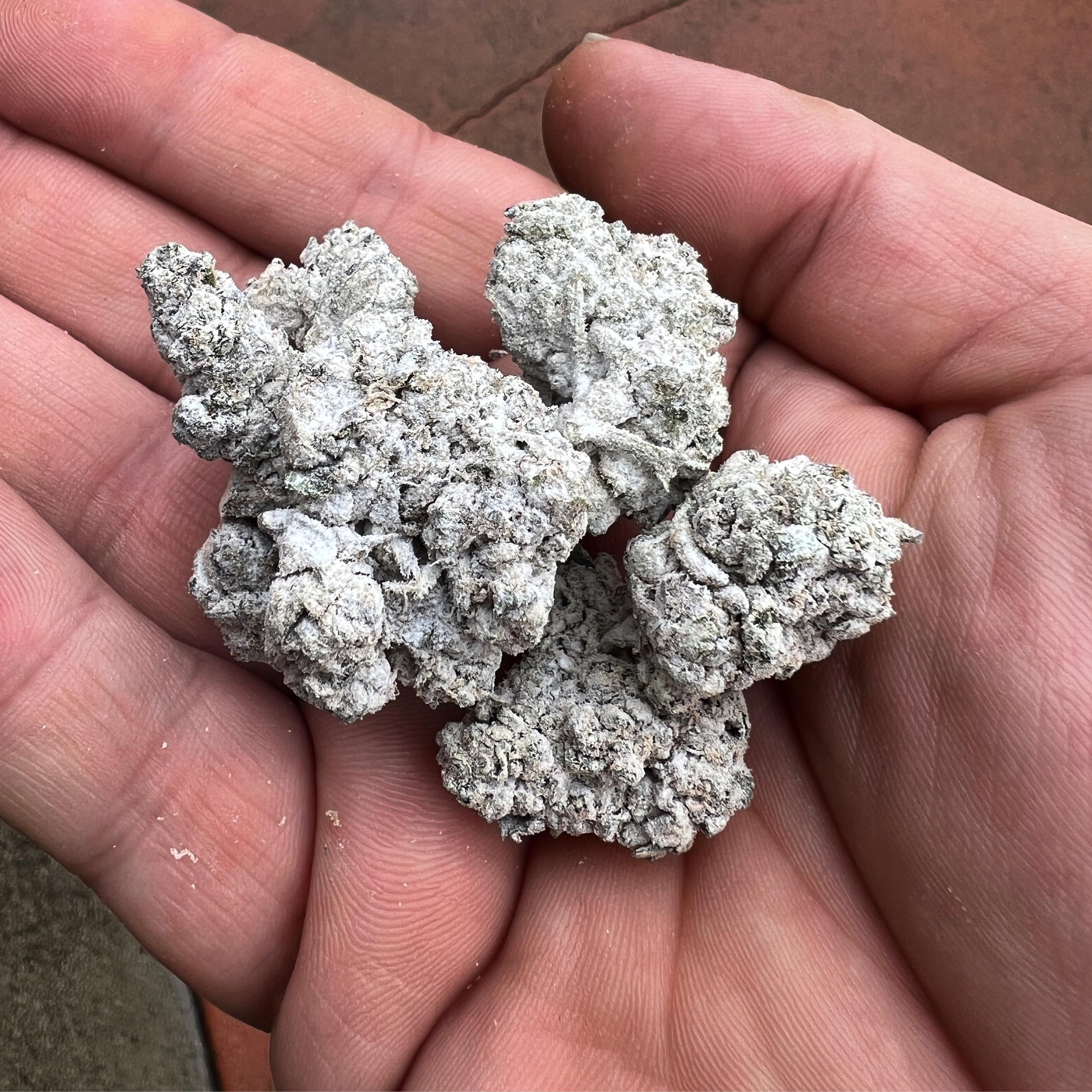
It's worth knowing where that white comes from. The completely white snowballs you see in photos and on the market are usually coated in isolated cannabinoid crystals. This isn't a powder separated from the plant by mechanical means, like kief or dry sift: it requires specific isolation and purification processes that have nothing to do with the separation techniques you can apply to your harvest.
With your own material you can make a pale version. For that you need the cleanest powder you have: a very fine dry sift or a highly refined, fully dried water hash. The less plant matter it carries, the lighter the color. The result will be light blond or cream, not snow white. And, as with moonrocks, a lighter color doesn't mean a better piece.
How to smoke it without wasting it
Don't use the grinder: the resin makes it sticky and much of the material stays inside. If the piece is very sticky, put it in the fridge for a while in a closed container so the resin hardens, then cut it with scissors or a sharp knife over non-stick paper. That way you can recover whatever falls.
To smoke it, the most convenient option is a glass pipe or bong, which are easier to clean when resin builds up.
You can also smoke it in a joint, but it goes out often. It works better if you mix small pieces with regular flower, which helps keep it burning steadily.
If you know you'll be smoking it in a joint, coat small buds instead of one large one. That way you don't have to cut them afterwards, you lose less material and they go out less often.
Precautions when consuming moonrocks
With pieces heavily loaded with extract, the effect can be more intense and last longer than you expect. If you have no experience with concentrates, don't start with a moonrock. Since you can't tell a piece's potency from its appearance, the first time use a small piece and wait until you feel the effect before having more. Don't mix it with alcohol or other substances, and don't drive or do anything that requires attention or quick reflexes after consuming it.
How to store moonrocks
Keep moonrocks in an airtight glass jar, out of reach of children and pets, in a dark, cool, dry place. If you store several pieces together, separate them with non-stick paper so they don't stick to each other.
A short spell in the cold inside a closed container, to harden the extract or cut a piece, isn't a problem. Keeping them in the fridge for days is another matter: every time you take the jar out, condensation can form, and moisture is the last thing you want. For storage, a cool, dry place is better.
There's no specific data on how long they last. Cured flower loses aroma over time even when well stored, and there's no reason to think a moonrock fares any better, so it's best not to keep them too long. Check the pieces from time to time and discard any with visible mold.
Frequently asked questions
Can you make moonrocks without BHO?
Yes. Rosin or a soft, oily hash work well as the sticky layer. BHO is common in commercial moonrocks, but it isn't essential.
Can you use grinder kief to make moonrocks?
Yes, it's the most common material for the coating. It contains some plant matter, so the finish is less clean than with a sifted powder, but it sticks well if it's fine and free of lumps.
Is a moonrock the same as caviar or sun rocks?
Not exactly, although the names vary depending on who uses them. Caviar usually refers to flower coated in extract but not rolled. A moonrock adds the outer layer of kief or resin powder, which changes its appearance, texture and the way it burns. Sun rocks is a trade name whose meaning varies by manufacturer; it isn't a preparation with a fixed definition.
Can you make moonrocks with old weed?
Yes, if it's been stored properly, but age alone doesn't tell you whether the flower is in good condition. The absence of visible mold doesn't guarantee it's free of contamination either. If there are signs of deterioration or any doubt about how it's been stored, the safe choice is to throw it out. Also, if it's so dry that it crumbles, it will break apart when you apply the extract. Don't try to rehydrate it before coating: you'd be adding moisture right before covering it, and you wouldn't be able to check it afterwards.
Which is better, making moonrocks or dabbing the rosin directly?
It depends on what you're after. When you dab, the rosin is vaporized and keeps its flavor better. In a moonrock, the extract burns along with the flower and some of the aroma is lost in combustion. In return, you don't need any dabbing gear and you get to use the flower, extract and kief together in a single piece.