
A clogged filter, a zip left half open or an extractor fan rattling against the wall at two in the morning. Any one of those three is enough to stop a discreet grow from being discreet.
Being discreet isn't about hiding anything. It's about keeping your grow out of everyone else's space. Smell, noise, light, humidity and visibility are the routes by which a tent "escapes" from your home, and every one of them can be brought under control.
We're going to close those routes one by one, starting with smell, which is the first thing to reach the landing, and finishing with the tricks that look like solutions but only make things worse.

What kind of nuisance can a cannabis grow cause
When people talk about discreet growing, almost everyone thinks of smell. It's the most obvious sign, but it isn't the only one.
| Sign | When it increases | Risk of nuisance |
|---|---|---|
| Smell | Late flowering, harvest and drying | 🔴 High |
| Visibility | Windows and light reflections | 🔴 High |
| Light | Indoor grows running lights at night | 🟠 Medium/high |
| Noise | Extraction, fans and dehumidifiers | 🟠 Medium |
| Humidity | Poorly ventilated spaces | 🟠 Medium |
| Waste | Trimmings and harvest waste in communal bins | 🟡 Low/medium |
Noise, light and humidity go unnoticed by the grower because they live with them every day, but they get noticed exactly when everyone else is trying to rest. Humidity also has a long-term effect: if it stays high, it leaves condensation and mould on walls and ceilings, which sooner or later becomes a problem with your landlord or the building.
Where to put your grow tent at home
Where you put the tent is the first decision you make and the cheapest one, because it shapes the smell, the noise, the light and who can get to it.
Near an air outlet. Look for a room where you can run the duct outside, through a window or a vent, well away from neighbours' windows, light wells and communal areas. If that isn't an option, we'll cover how to deal with it further down.
Away from shared walls. Vibration from the extractor fan and the circulation fans travels through the building's structure and reaches the flat next door even when you can barely hear it in your own home. Don't rest the tent against party walls or bedroom walls.
Out of sight. Plants next to a window are visible during the day, and at night any light leak, or even a white wall lit up opposite the glass, can be spotted from a long way off.
Out of reach of children and visitors. Your plants, your harvest, your nutrients and any plant protection products need to be kept away from children, visitors and flatmates. A room with a lock, or small padlocks on the tent zips, solves it, and in some jurisdictions it's a legal requirement.
How to get rid of weed smell in a grow tent
Forget the home remedies. Getting rid of weed smell in an indoor grow comes down to one very simple principle: air should only leave where you decide, and always through a filter.
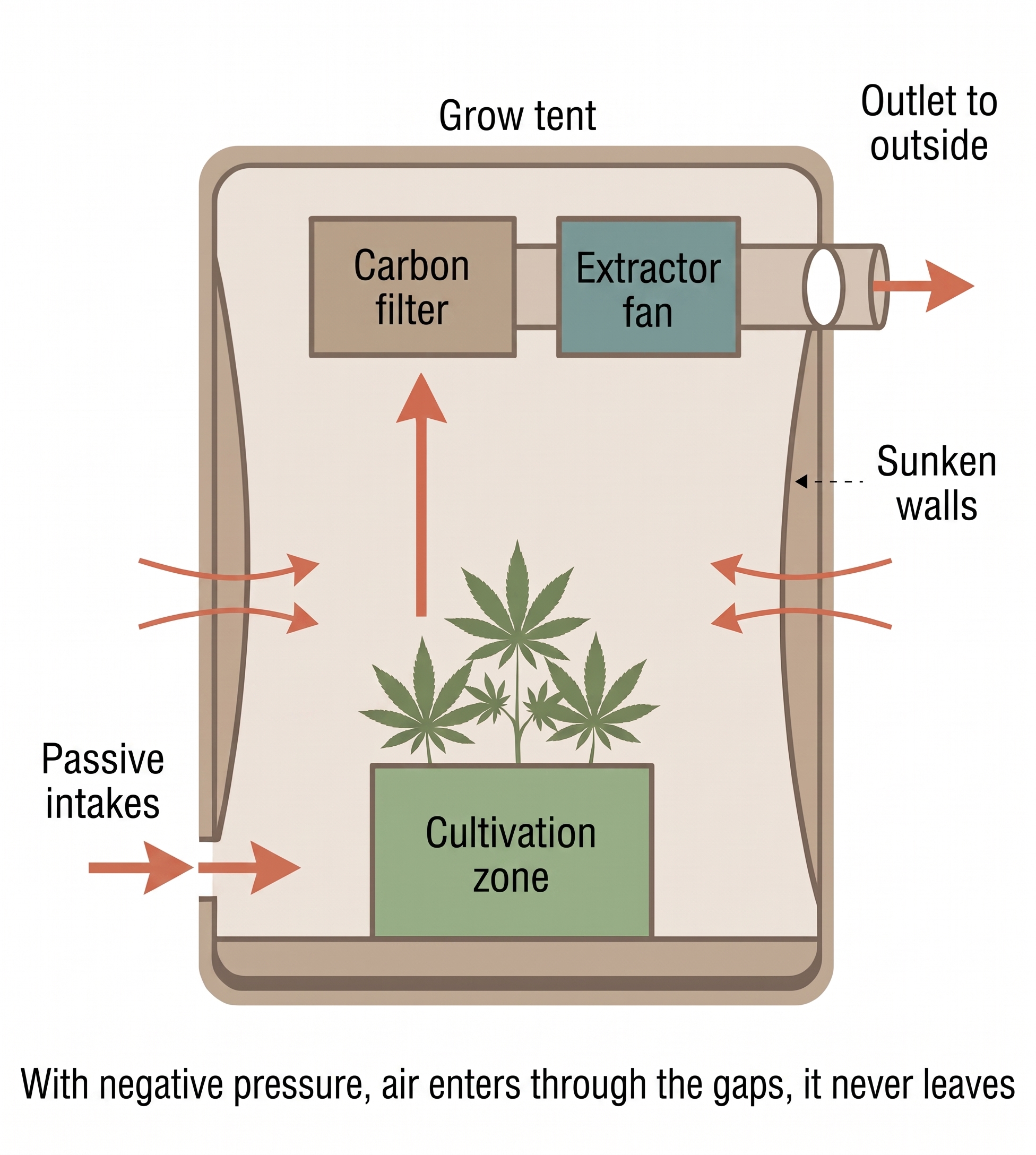
The correct path for the air is this:
The filter goes inside the tent, usually near the top, which is where the warm, aroma-laden air collects. The extractor fan sits after it and pulls air through the filter. If any part of that path fails, the rest of the system counts for nothing.
How to work out the airflow you need
A badly sized system is one of the most common reasons a tent smells outside. The calculation takes four steps:
- Work out the volume of the tent: length × width × height. A 120 × 120 × 200 cm tent gives 1.2 × 1.2 × 2 = 2.88 m³.
- Work out the real airflow you need at the hottest points: the usual rule of thumb is to change all the air in the tent every one to three minutes. At peak temperatures, with the lights on in summer, aim closer to one minute: 2.88 × 60 = 173 m³/h. That's the air that actually has to leave through the duct.
- Allow for the resistance of the filter and ducting: the airflow quoted on a fan's spec sheet is measured with nothing attached. Put a carbon filter and ducting in the way and the real figure drops. Add 25-30%, and a bit more if the duct is long or has bends: 173 × 1.3 ≈ 225 m³/h. That's what the fan should deliver running flat out.
- Add headroom so it can run turned down: a fan running at full tilt all the time is louder, wears out faster and has nothing in reserve for the hottest days. If you want to cover the peaks at around 70% of its capacity: 225 ÷ 0.7 ≈ 320 m³/h. In this example, the right choice is a fan rated at around 350 m³/h with a speed controller, plus a filter rated for the same airflow as the fan or more.
Heat from the lights is what pushes up your extraction needs the most: an overheated tent forces you to run the fan at maximum, which means more noise and worse filtering.
The rest of the time, with milder temperatures or during lights-off, you don't need to change the air every minute. The fan can run a good deal lower, which is when it's quietest, as long as the tent walls still curve slightly inwards (we explain that in the negative pressure section).
What size extractor fan you need for your tent
This table applies the same calculation to the most common tent sizes: a full air change every minute at peak temperatures, 30% added for the resistance of the filter and ducting, and headroom to run at around 70%.
| Tent (cm) | Volume | Real airflow at peak | Recommended fan (rated) | Typical diameter |
|---|---|---|---|---|
| 60 × 60 × 160 | 0.58 m³ | 35 m³/h | around 100 m³/h | 100 mm |
| 80 × 80 × 160 | 1.02 m³ | 61 m³/h | around 150 m³/h | 100 mm |
| 100 × 100 × 200 | 2.00 m³ | 120 m³/h | around 250 m³/h | 125 mm |
| 120 × 120 × 200 | 2.88 m³ | 173 m³/h | around 350 m³/h | 125-150 mm |
| 150 × 150 × 200 | 4.50 m³ | 270 m³/h | around 500 m³/h | 150 mm |
| 240 × 120 × 200 | 5.76 m³ | 346 m³/h | around 650 m³/h | 150-200 mm |
These are reference figures. Go up a step if you're running high-wattage lights in a small tent, growing in a hot climate, or working with a long exhaust duct. The relationship between diameter and airflow varies from one manufacturer to another, so always check the spec sheet.
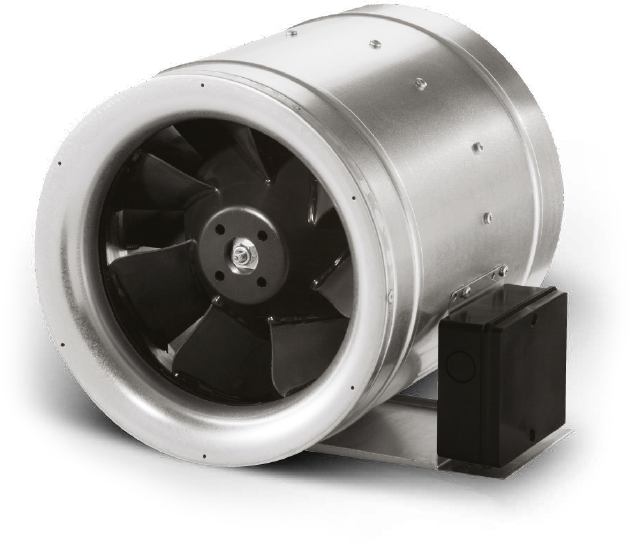
Airflow isn't the only thing that matters: the type of fan does too. The rated figure is measured with the fan blowing freely, with no filter or ducting. The moment you put resistance in front of it, different types behave very differently, and the gap is huge.
- Axial fans. The simplest and cheapest, essentially a propeller in a tube. They move plenty of air with nothing in the way, but lose most of their airflow as soon as they have to pull through a carbon filter. Not a good choice for an odour control system.
- Mixed-flow and centrifugal fans. These are built to work against resistance and hold their airflow far better with a filter and ducting attached. They're the right choice for growing.
- The airflow and pressure curve. Good spec sheets include a graph showing how much airflow the fan delivers against a given resistance. If the sheet only quotes a maximum figure, be sceptical.
- Same diameter throughout. Filter, fan and ducting should all share the same collar size. Every reduction chokes the airflow and creates noise. And keep the ducting as short and straight as you can.
How a carbon filter works and when to replace it
Activated carbon has an extremely porous structure. As air passes through it, the molecules responsible for the smell are trapped on the surface of those pores. It's a physical process called adsorption.
What it doesn't do matters just as much. It can't act on air that escapes somewhere else, so any leak cancels out its effect. It doesn't reduce humidity or heat either, and it doesn't last forever: once the pores fill up, it becomes saturated and stops trapping smell.
How well it works comes down to four things:
- Quality and quantity of carbon. A thicker carbon bed increases the contact time with the air and the total capacity of the filter. Weight gives you a rough idea of how much carbon is inside: between two filters of the same size, the heavier one usually has more capacity. Some spec sheets also quote carbon activity ratings such as CTC or iodine number, and the higher the figure, the more it can hold. If you're thinking long term, there are refillable filters where you only replace the carbon.
- Airflow. Push more air through the filter than it's rated for and the contact time drops, so some of the smell passes straight through without being trapped.
- Humidity. When relative humidity is high, water vapour takes up some of the pores and the carbon loses capacity. Keep it below 50% in late flowering, including during lights-off, when it tends to climb. As well as protecting the filter, that reduces the risk of mould in your grow.
- Pre-filter. The fabric sleeve on the outside stops dust from clogging the carbon. Clean or replace it regularly.
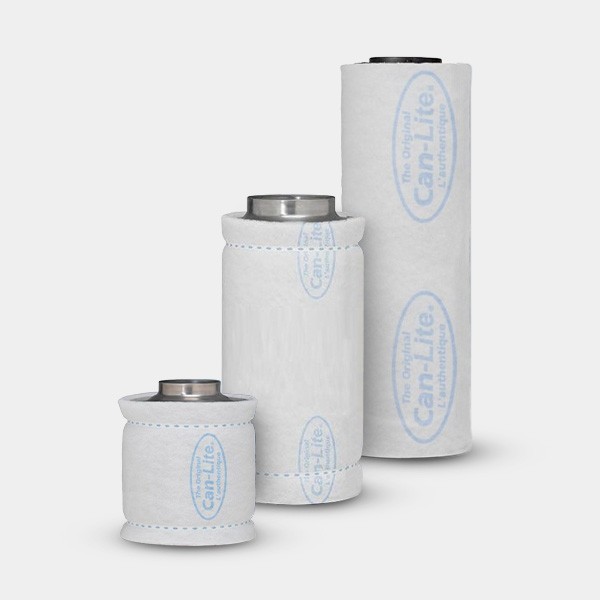
When should you replace it? Manufacturers give estimated lifespans, but real use is what counts: running hours, humidity, dust and the quality of the carbon. The practical test is simple: if your negative pressure is right, there are no leaks and it still smells outside the tent, the filter is saturated.
How to stop the smell escaping your home
A good fan and a good filter aren't enough if the air finds another way out. Here's how to make sure all the air goes through the filter and the smell doesn't reach communal areas or other homes.
What negative pressure is in a grow tent
If the tent extracts more air than comes in, the pressure inside sits slightly below the pressure in the room. The result is that air tends to come in through any gap rather than go out. Zips, seams and cable ports stop being escape routes, and air only leaves the tent through the filtered circuit.
Checking it is easy: with the fan running, the tent walls should curve slightly inwards. To achieve that, leave passive air intakes low down in the tent, ideally on the opposite side to the filter. Their area needs to be enough for the fan to pull without straining: as a guide, at least the same as the fan's collar, and more if they have light traps fitted, since those restrict airflow (we'll cover them in the light section).
Careful not to overdo it. If the walls cave in a long way, there isn't enough air coming in. The fan works harder, heats up, loses real airflow and starts whistling. Negative pressure should be slight, not extreme.
How to find smell leaks in your tent
These are the places unfiltered air tends to escape from:
- Joints between filter and fan, and between fan and ducting. Use duct clamps and aluminium tape, not just any adhesive tape.
- Zips, fully closed, especially during flowering.
- Cable ports and tent vents. Close off any you aren't using.
- Crushed ducting or too many bends. Every tight curve reduces airflow and creates noise.
- Fan coupling. If it isn't properly attached to the filter, it's pulling in unfiltered air.
Your nose is no use for checking this: when you live with a smell, your brain stops registering it. Run the test at the worst possible moment, in the last weeks of flowering and with the fan at the lowest speed you use. Leave the house for at least half an hour and, when you come back, smell in this order: the landing, the duct outlet and the room with the tent closed. If it only smells next to the tent, you have a leak. If it smells at the duct outlet, the filter is saturated or it's getting more airflow than it's rated for.
Where should the air go? Even filtered, exhaust air can carry some residual smell. Don't aim it at neighbours' windows, light wells or communal areas, and never connect it to the building's shared ventilation ducts: they can carry the smell into other homes, and in many buildings it isn't allowed.
Do odour neutralisers work?
Neutralising doesn't necessarily mean eliminating. The foundation of any system is activated carbon, which traps the smell. Gels and evaporating neutralisers can help with residual smell in the room when you open the tent or handle the plants, as long as they're kept outside the tent, because inside their aromas can taint your flowers. There are also versions that fit into the exhaust duct, after the carbon filter, to treat residual smell in the outgoing air. Air fresheners and scented products, on the other hand, only mask the smell (we'll come back to that in the mistakes section).
Ozone deserves a mention of its own. Ozone generators do eliminate odours by oxidising the molecules, but ozone is a respiratory irritant, and the concentration needed to tackle smell is already past the point of being safe for people. That's why room ozone generators, the kind you put inside a living space, aren't an option in a home.
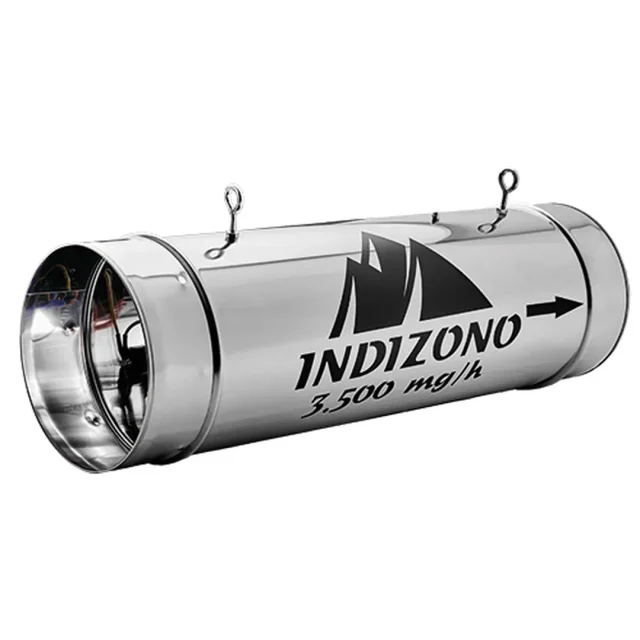
In-line ozone generators are a different matter. They fit into the exhaust duct, after the filter and the fan, and treat air that's already on its way outside. The ozone never comes into contact with you or your plants. They're a supplement for residual smell in the outgoing air, never a replacement for a carbon filter, and they depend on the extraction always running: if the fan stops while the ozone generator keeps going, ozone builds up in the duct and can find its way back into the room.
How to vent a grow tent with no window
This is the situation for plenty of growers living in flats: there's no window in the room, or no sensible way to run a duct outside. In that case, the filtered air can be exhausted into the room itself. With a properly sized filter, the smell is still trapped.
The problem is a different one. Heat from the lights and the moisture the plants transpire stay in the room, and the tent draws that same air back in, hotter and more humid each time. For the setup to work, you need three things:
- Some air change in the room, even modest, so it doesn't turn into a closed loop.
- A dehumidifier running in the room. There's more detail in our article on temperature and humidity in the grow room.
- Temperature control in summer, because with no route outside the heat builds up fast.
Bear in mind, too, that with no dilution outdoors, any drop in filter performance shows up immediately. Keep the room door shut and check the filter more often.
When a cannabis grow smells the most
Smell isn't constant across the cycle. A good part of what makes a plant noticeable several metres away comes from sulphur compounds that the human nose detects in tiny amounts, and which increase over the last weeks of flowering and peak during curing. Knowing when those peaks arrive lets you strengthen the system just in time:
- Late flowering. Check the filter before this stage starts, not once it already smells outside.
- Every time you handle the plants. Touching flowers, tying branches down or defoliating breaks trichomes and releases aroma instantly. Do it with the fan at full speed, and leave training techniques for the vegetative stage.
- Harvest and trimming. The peak of the whole cycle. Work inside the grow room with the door shut and the fan at maximum. When you've finished, clean your scissors, trays and gloves, or seal them in a bag.
- Drying. Dry inside the tent, with the lights off and the filtered extraction running. If the tent is still in use, set up a small drying tent with its own filter. There's full detail in our guide to drying and curing cannabis.
- Curing. Open your jars inside the tent or next to the filter, with the fan running, and close them again as soon as you're done.
- Waste. Leaves, stems and roots smell more than you'd expect. Keep them in sealed bags and don't let them pile up on the balcony or in the yard.
How to reduce noise from fans and extraction
Your extractor fan, circulation fans, pumps and dehumidifiers all make a noise you stop hearing within days, but that carries a long way into the home next door. And not all of it is equally annoying: the worst isn't the sound coming out of the unit, it's the vibration it passes into walls, ceilings and floors. That travels through the building's structure and arrives next door as a low hum, especially at night when there's no background noise to cover it. That's why almost every solution comes down to separating your equipment from the structure.
How to soundproof your fan and tent
- Choose EC motors. Fans with EC (electronically commutated) motors adjust smoothly and run quietly at low speeds. AC motors on basic controllers tend to hum when you turn them down.
- Hang the fan. Suspend it with elastic straps or anti-vibration mounts, with no rigid contact with the tent frame, the ceiling or the wall. Check they'll take the combined weight of filter and fan.
- Use acoustic ducting. Insulated ducting with an absorbent lining is far quieter than plain aluminium flexible duct. An in-line silencer on the fan outlet helps even more.
- Avoid tight bends, crushed ducting and restricted intakes. All three create turbulence and whistling.
- Isolate your clip fans. Put a rubber pad between the clamp and the tent pole, and keep the blades clean: built-up dust unbalances them and increases vibration.
- Stand dehumidifiers and pumps on anti-vibration pads, never directly on wooden floors or hollow furniture that acts as a sounding board.
Final test. One night, with everything running, go and listen from the next room and from the hallway. If you can hear it, so can other people.
How to prevent light leaks in your grow tent
Light escapes through zips that are open or worn, cable ports, air intakes, ducting and seams where the fabric has rubbed thin. Outside the tent, it gets out through windows and blinds, or as reflections off pale walls and mirrors. Light you barely notice indoors can be clearly visible from outside at night, and a purple or bright white glow behind a blind catches anyone's eye.
Sealing the tent properly also protects your plants: in photoperiod varieties, light getting in during the dark period can stress them and encourage hermaphrodite flowers.
How to seal a grow tent
- Do the dark test. With the light on and the room dark, go round the outside of the tent seam by seam.
- Fit light traps on the passive intakes. They're baffled fittings that let air through but block light.
- Close off any cable ports you aren't using, and tidy your cables so they don't hold openings apart.
- Check your windows at night from outside the house. Blackout curtains or blinds solve most cases.
- Replace worn zips or, if the tent has really had its day, consider replacing it.
If you run your lights at night, which plenty of growers do to keep temperatures down and take advantage of cheaper electricity rates, this check becomes a priority.
Which cannabis strains to choose for a discreet grow
Everything above helps, but the variety you choose determines from the outset how hard your system will have to work. These are the factors that matter most:
- Short flowering. A shorter flowering cycle means fewer weeks spent keeping the intense smell of the final stages under control.
- Compact structure. Plants that stay short are easier to keep inside the tent, and need less handling during flowering, which is when the most aroma is released.
- Terpene profile. Very pungent profiles, such as diesel or sulphurous ones, aren't incompatible with a discreet grow, but they do demand a well-sized extraction and filtration setup.
Two feminised varieties that fit the bill
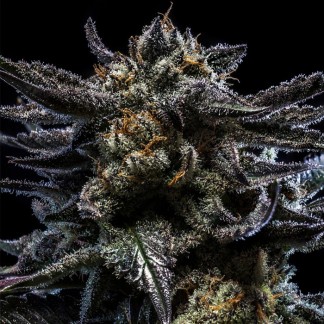
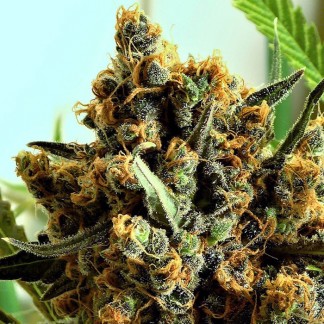
Criminal+ is the fastest in the catalogue. 80% indica dominant, it flowers in 50 to 55 days and needs only one or two weeks of veg, so the whole cycle shortens at both ends. Indoors it stays between 80 cm and a metre. Two things to watch: it stretches hard when you flip to 12/12, up to two and a half times in the first weeks, so flip it early; and its dense buds make it prone to mould at the end of flowering, so keep an eye on humidity, which protects your carbon filter as a bonus.
Zombie Kush is the easiest to keep low. Also 80% indica, it flowers in 55 to 60 days and stays between 70 cm and a metre indoors. What makes it interesting here is its structure: short branches and plenty of lateral growth, exactly what you need to fill a tent outwards rather than upwards. It's the natural candidate for a SCROG. In exchange, it asks for a longer veg, three to four weeks.
Which genetics make a discreet grow harder
It's not that you can't grow them, it's that they'll ask more of your setup. Worth knowing before you buy:
- Sativas and hazes. Long internodes, heavy stretch in flowering and cycles that run to 65 or 70 days. More weeks at peak aroma and more height problems in a low tent.
- Diesel, sour and sulphurous profiles. Among the most pungent aromas there are. If that's what you like, go ahead, but size your filter generously and don't push it past its useful life.
- Long flowering, beyond 60 days. Every extra week is another week with the system working at its limit and another chance for the filter to saturate before harvest.
- Very high-yielding, dense-budded varieties. They pay off in weight, but they hold humidity and call for tighter environmental control.
Autoflowering varieties, the most discreet option
If discretion is your priority, autoflowering varieties have three advantages no feminised plant can match.
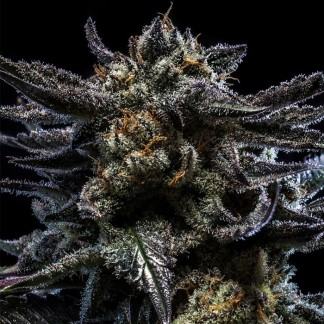
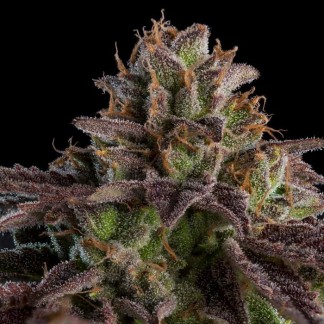
The first is time: they don't just shorten flowering, they shorten the entire cycle. Auto Zombie Kush is ready in 50 to 60 days from germination, and Auto Kmintz in 60 to 70. That's whole weeks less exposure.
The second is size. Auto Kmintz stays between 60 and 80 cm, with tight internodes and good branching, which probably makes it the easiest variety in the catalogue to keep out of sight in a small tent.
And the third is that they don't depend on the photoperiod: they flower with age, not with hours of light. A small light leak in the tent won't stress them or turn them hermaphrodite, which is something that can happen to a feminised variety.
The trade-off is that they won't take a long veg or aggressive training, so height control depends almost entirely on picking the right genetics and the right pot.
Control height before flowering starts
Height is a discretion problem, not just a space problem. A plant that reaches the light forces you to open the tent, move it or prune it mid-flower, which is exactly when it releases the most aroma, and if it presses against the walls it can distort them and compromise your negative pressure.
The key is that photoperiod plants keep growing after the switch to 12 hours of light, and many double their height in those first weeks. That's why all your height work has to happen during veg:
- Flip to flowering sooner. The simplest approach. With fewer weeks of veg, the plant is smaller when the stretch hits.
- Low stress training (LST). Bending and tying branches down keeps the plant low and opens up the canopy, with almost no stress.
- Topping, FIM and main-lining. These split the plant into several colas of equal size rather than one dominant central one. They need a few days of recovery, so they belong early in veg.
- SCROG. A horizontal screen spreads the branches out and keeps them all at the same height, making better use of the light in the tent.
- Adjust the pot. A smaller container limits the final size, at the cost of watering more often.
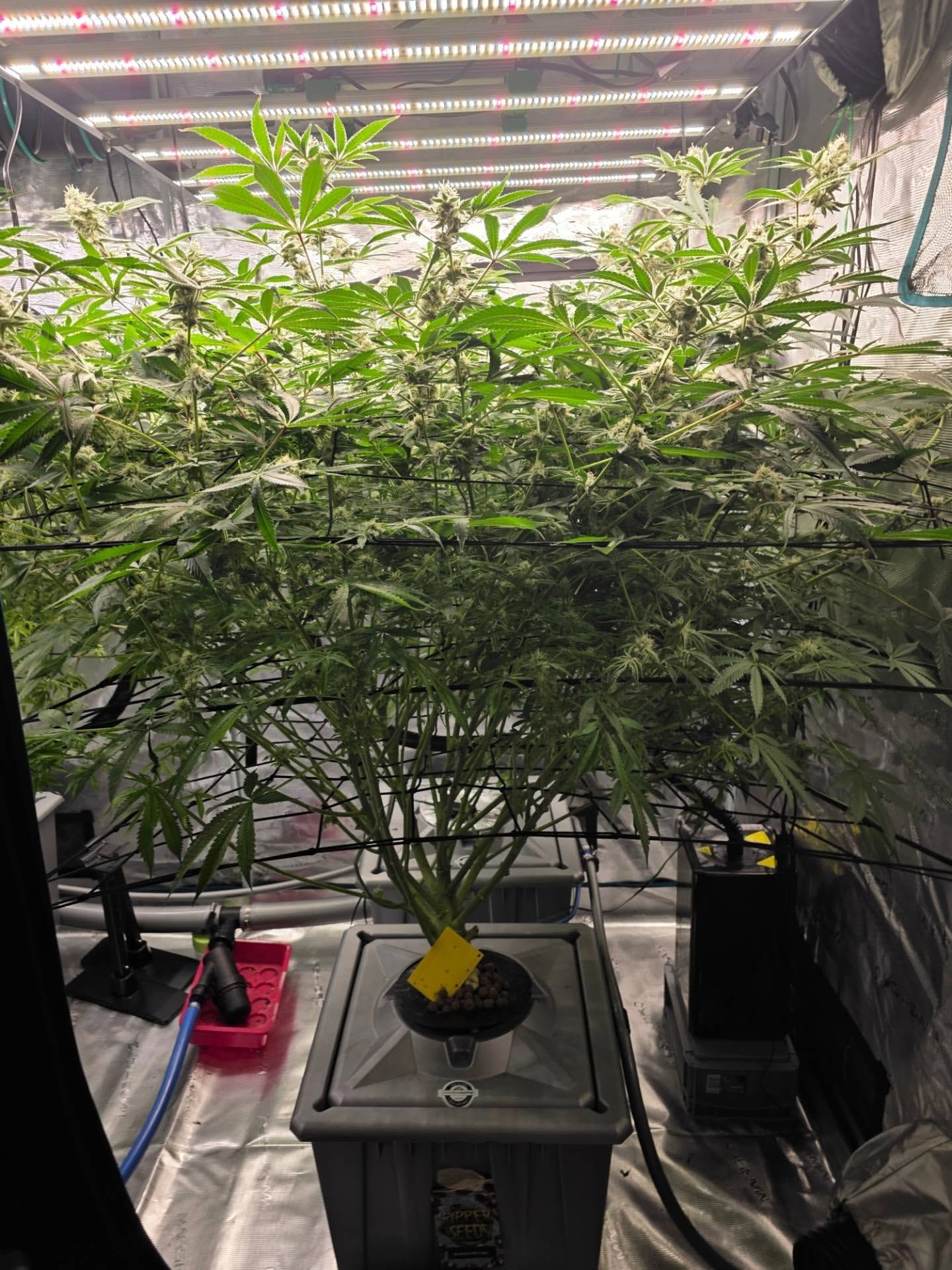
What to do if a neighbour complains about the smell
A complaint about smell almost always has a technical cause behind it. Work through the system in this order:
- Check the extraction. Does the fan have enough airflow? Is it turned down too low?
- Check the filter. If it's been in use for many months or has been working in high humidity, it may be saturated.
- Look for leaks. Zips, cable ports, duct joints. Run the tissue paper test.
- Review your timings and activities. Handling plants, harvesting and drying all send the smell up. If they line up with when your neighbour notices it, there's your cause.
- Fix the cause, don't mask it. Changing the filter, redirecting the exhaust or sealing leaks works. An air freshener doesn't.
Afterwards, repeat the smell test from the leaks section to confirm the problem is sorted.
If you rent, bear in mind that in many countries serious, repeated nuisance to neighbours gives your landlord grounds to act, usually with a formal warning before anything more serious. Fixing the problem promptly, and being able to show that you have (the receipt for the new filter, the changes to your setup), is the best way to stop things escalating.
The most common mistakes in a discreet grow
With smell
- Trying to mask it. Air fresheners, incense, scented candles or the classic home remedies, like a glass of vinegar, half a lemon studded with cloves or vanilla essence, make the room smell different, but they don't stop the smell of your grow reaching another room or the outside. And mixing two strong smells can end up more conspicuous than the original one.
- Opening windows with no plan. All you're doing is pushing unfiltered smell out into the street or towards your neighbour.
- Moving air without filtered extraction. A fan pushing air out of the tent spreads the smell through the whole house.
- Connecting your extraction to the building's shared ducts.
With your equipment
Under-sizing is a common mistake: a fan or filter that's too small and always running flat out filters worse and makes more noise. Improvised installations don't work either, with crushed ducting, joints held together with whatever tape was handy, or fans resting directly on the frame.
And above all, with electrics
Don't overload your electrical installation to get more lighting, extraction or climate control. Humidity, heat and electricity together are a genuine fire risk.
- Add up the power draw of everything you're running (lights, fan, dehumidifier, heater or air conditioning) and compare it against what your installation can handle.
- Don't daisy-chain extension leads, and use ones with built-in protection.
- Check that your timers and sockets are rated for the load you're putting on them.
- Keep water and watering containers well away from sockets and extension leads.
- Don't make changes to the consumer unit yourself. If you need more capacity or new outlets, call an electrician.
Discreet and safe grow checklist
- ☐ Negative pressure confirmed: the tent walls curve slightly inwards.
- ☐ Mixed-flow or centrifugal fan, with headroom to run turned down.
- ☐ Carbon filter rated for the same airflow as the fan or more, and the same diameter.
- ☐ Passive intakes with enough area, fitted with light traps.
- ☐ No smell outside the tent (checked on returning from outside).
- ☐ Joints, zips and cable ports checked, no leaks.
- ☐ Relative humidity below 50% in late flowering, checked during lights-off too.
- ☐ No condensation or mould patches on windows and walls.
- ☐ Fan suspended, with no rigid contact with ceilings, walls or the tent frame.
- ☐ Tent kept away from walls shared with neighbours.
- ☐ Tent or room lockable, out of reach of children.
- ☐ Dark-room check with the light on: no light leaks.
- ☐ Windows checked at night from outside the house.
- ☐ Filter checked and drying space prepared before harvest.
- ☐ Electrical setup with no daisy-chained leads or overloads.
FAQs about discreet growing
Does cannabis smell during the vegetative stage?
Far less than in flowering. During veg the smell is mild and usually only noticeable when you touch the plants. Ideally you want your carbon filter installed and tested before you flip to flowering, because the smell builds week by week from that point on.
Do I need a carbon filter for a single plant?
Yes, if it's in flower. A single plant in its final weeks can be noticeable outside the room. For a small tent a compact fan and filter will do, but the principle is the same: all the air leaving has to go through the filter.
What if I can't vent the air out of the room?
You can exhaust the filtered air into the room itself. With a properly sized filter the smell is still trapped, but heat and humidity build up. You'll need some air change in the room, a dehumidifier and, in summer, temperature control.
Can you regenerate a carbon filter in the sun?
Not effectively. Sunlight can dry the carbon out, but the odour molecules held in its pores are only released by industrial processes at temperatures far beyond anything a domestic oven can reach. Once a filter is saturated, it needs refilling with fresh carbon or replacing.
Do ozone generators get rid of the smell?
It depends on the type. Room units, designed to sit inside a living space, aren't suitable in a home: ozone is a respiratory irritant and the concentrations that work on odour aren't safe. In-line units, fitted in the exhaust duct after the filter, do make sense as a supplement for residual smell in the outgoing air, but they never replace a carbon filter.
Do autoflowering varieties smell less?
Not necessarily. How strong the smell is depends mainly on the variety and its terpene profile. The advantage of autos is that they complete their cycle in less time, so the period of peak smell lasts fewer weeks.
A discreet grow doesn't come down to one miracle piece of kit, but to every part doing its job: a properly sized fan, a filter in good condition, a tent with no air or light leaks, equipment that isn't vibrating against the wall, and genetics that suit the space and the cycle you're after. With all that sorted, your grow stays where it belongs and life with the neighbours carries on as normal.
Ripper Team