
Hermaphroditism in cannabis plants is the ghost that every cannabis grower fears, as it can ruin entire harvests if not detected and managed in time. A single 'banana' can turn a promising harvest of seedless buds into a mess of pollinated flowers, ruining months of work.
This guide offers the essential knowledge to understand, prevent and manage stress-induced hermaphroditism in cannabis, an evolutionary phenomenon that has accompanied cannabis for millions of years.
Biological foundations of hermaphroditism
The Cannabis sativa plant is naturally dioecious, which means that separate male and female plants exist. However, throughout its evolution, cannabis has developed remarkable sexual plasticity. This plasticity is an ancestral survival mechanism.
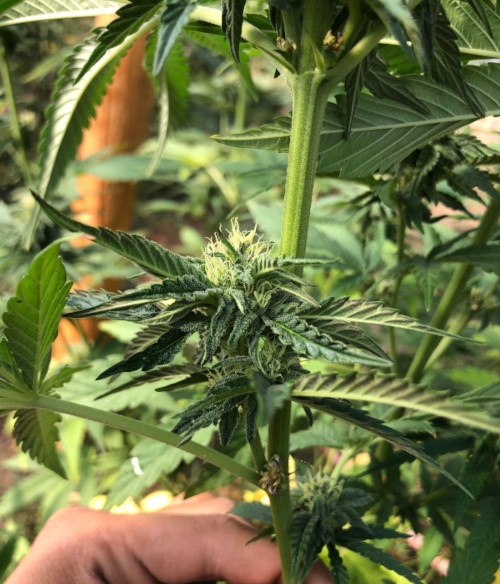
Imagine that the female plant has a genetic emergency switch that activates under extreme conditions. If the plant senses that it will not survive to be pollinated by a male and reproduce, it activates this switch to produce its own male organs. This allows it to self-pollinate and generate seeds to ensure the continuity of its species.
Therefore, genetically female plants can develop male reproductive organs when under stress conditions. Environmental factors can modify this basic genetic framework, causing a female plant to express hermaphroditic characteristics to survive.
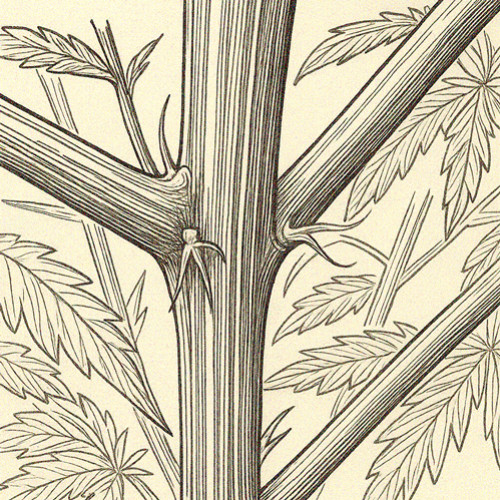
Complete guide to identifying male and female cannabis plants. Learn how to detect sex before flowering, avoid pollination and maximise your sinsemilla harvest.
Genetic vs stress-induced hermaphroditism
Scientific literature distinguishes between two types of manifestations that are frequently confused in practice: genetic hermaphroditism or stress-induced hermaphroditism.
- Genetic or true hermaphroditism involves the simultaneous presence of stamens and carpels within individual flowers. This phenomenon is relatively rare in cannabis and generally indicates genetic stability for bisexual expression.
- Stress-induced hermaphroditism (also called intersexuality or monoecy) is the most common in crops and appears as a response to adverse environmental conditions. Studies indicate that it can affect between 5% and 10% of cultivated plants.
| Genetic or True Hermaphroditism | Stress-Induced Hermaphroditism (Intersexuality) |
|---|---|
| Cause: It's a genetic characteristic, relatively rare. | Cause: Response to adverse environmental conditions. |
| Appearance: Stamens and carpels in the same flower. | Appearance: Male and female flowers in different parts of the plant. |
| Prevalence: Very low. | Prevalence: Most common in crops. |
How to identify hermaphrodite plants
Early detection of hermaphrodite plants is crucial to save your harvest. Constant monitoring, especially during the first weeks of flowering, is the best tool to avoid surprises.
Hermaphroditism symptoms usually appear about two weeks after the plant has suffered stress. Weeks 3 and 4 of flowering are the period of highest risk, but vigilance must be maintained until week 7.
Visually, these are the signs to look for:
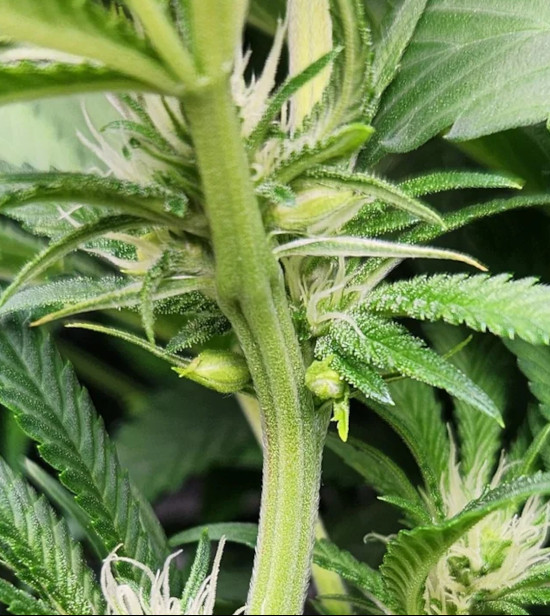
- Pollen sacs ("balls"): These are small smooth structures, egg or ball-shaped, about 2-3 mm in diameter. They have a light green or bright yellow color and usually appear at the nodes, between the branches and the main stem, or directly within the buds.
- "Bananas" or nanners: These are stamens (the male part that contains pollen) that grow in an elongated form, yellow-greenish in color, directly from the female buds. Unlike pollen sacs, which need to open to release pollen, bananas are already open and can release pollen immediately.
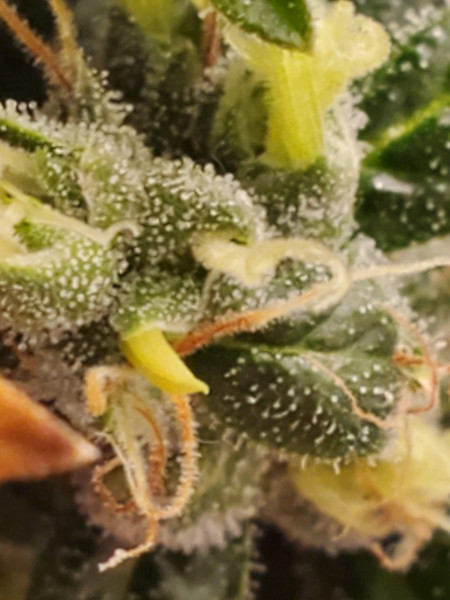
A 'banana' (or nanner) showing. Unlike pollen sacs, these elongated structures are already open and can pollinate your flowers immediately. Act fast!
The main characteristic is the simultaneous presence of white female pistils and these male organs on the same plant.
For more advanced growers, microscopy allows examination of the anther structure (the male reproductive organ). Hermaphrodite anthers produce pollen with lower viability, with germination rates of 10% to 30%, compared to a normal male plant. Emerging technologies, such as Raman spectroscopy, even allow early detection before symptoms are visible, achieving almost 99% accuracy.
Factors that trigger stress-induced hermaphroditism
Stress-induced hermaphroditism is a survival response of the plant to adverse conditions. The main factors that trigger it are grouped into the following categories:
1. Light stress
Interruptions in the light cycle are one of the most critical factors. Any exposure to light during the dark period (more than 12 hours) can cause hermaphroditism.
- Photoperiod interruptions: Light leaks, faulty timers or power outages.
- Light intensity: Excessive intensity (burns) or insufficient can generate stress.
- Light spectrum: An inadequate spectrum for the flowering stage also affects plant stability.
2. Thermal stress
Temperatures outside the optimal range for flowering (18°C to 26°C) are a significant risk.
- Excessive temperatures: Staying above 29°C for prolonged periods.
- Thermal shocks: Sudden temperature fluctuations, both day and night.
- Night temperatures: An excessive drop below the optimal range is also problematic.
3. Nutritional and pH stress
Imbalances in plant nutrition can reveal latent hermaphroditic tendencies.
- NPK imbalance: An excess of nitrogen can be especially problematic.
- Deficiencies: Lack of micronutrients compromises the overall health of the plant.
- pH fluctuations: A pH outside the optimal range (6.0-7.0 in soil) causes nutrient lockout.
- Salt accumulation: The use of synthetic fertilizers can accumulate salts in the substrate, preventing proper nutrient absorption.
4. Water and physical stress
Both lack and excess of water are harmful, as well as physical damage to the plant during flowering.
- Water stress: Prolonged drought or overwatering that saturates the roots.
- Water quality: Chlorine, contaminants or inadequate pH contribute to stress.
- Physical stress: Aggressive pruning or training techniques (LST, topping, super cropping) during flowering, as well as transplant shock or branch breakage.
Why does cannabis tend toward stress-induced hermaphroditism?
Stress-induced hermaphroditism involves complex hormonal cascades that act as evolutionary survival mechanisms. Ethylene plays a fundamental role by promoting female floral development, while its inhibition favors male expression.
Silver compounds, such as silver thiosulfate, block ethylene action, inducing male flowers in genetically female plants, a technique used scientifically for feminized seed production.
The balance between auxins and gibberellins is also critical in this process:
- Auxins promote female development.
- Gibberellins favor masculinization.
Environmental stress alters these hormonal ratios, triggering hermaphrodite responses as an evolutionary survival mechanism.
Jasmonic acid presents itself as another essential factor for stamen development and pollen viability. Environmental stresses that increase jasmonic acid production can significantly promote hermaphrodite flower formation, establishing a direct connection between growing conditions and sexual expression.
How to avoid having hermaphrodite plants?
Optimal environmental control
Precise control of environmental parameters establishes specific ranges to minimize the risk of hermaphroditism.
- Temperature - During the vegetative stage, temperature should be maintained between 20°C and 25°C, while in flowering the range adjusts to 18°C-27°C, never exceeding the critical threshold of 29°C-30°C.
- Relative humidity - Requires adjustments according to the flowering stage: during early flowering it's recommended to maintain between 50% and 60%, reducing to 40%-50% in late flowering, with a general acceptable range of 40% to 70%.
- Lighting - Must follow a strict 12/12 photoperiod during flowering, ensuring zero light leaks during dark periods, maintaining appropriate distance to prevent burns and providing a full spectrum suitable for cannabis.
- pH and nutrition- Require specific adjustments according to the growing system. In hydroponic systems it's recommended to maintain pH between 5.8 and 6.2, while in soil systems the optimal range is 6.2-6.8. NPK ratios should be balanced according to the growth stage, supplementing with vitamin B complexes to improve stress resistance.
Genetics prone to and resistant to hermaphroditism
Genetic selection
Careful selection of genetics from professional seed banks represents one of the most effective preventive strategies. It's especially important to work with seeds produced by the bank itself since poorly executed feminized seed production is one of the factors of hermaphroditism.
Likewise in serious breeding programs, it's crucial to avoid using hermaphrodite plants as parents, implement multi-generational stability tests, use molecular markers when available, and meticulously document hermaphroditism rates.
Varieties with higher hermaphrodite tendency
There are certain genetic lines that show greater susceptibility to hermaphroditism. These tendencies are frequently related to their geographical origin, historical hybridization or specific genetic characteristics that make them more sensitive to environmental stress.
Thai Sativas represent the most documented example of genetic predisposition to hermaphroditism. Thai landraces have evolved for millennia in variable tropical conditions, developing the capacity for hermaphrodite expression as a survival mechanism. This characteristic has been transmitted to many modern hybrids that contain Thai genetics in their lineage, including multiple Haze crosses and many equatorial sativas. It has been confirmed that these genetics maintain greater sexual plasticity even after multiple generations of domestication.
OG Kush lines have shown consistent hermaphrodite tendencies according to multiple reports from commercial growers and field studies. The original OG Kush genetics, descendant of Chemdawg, Hindu Kush and possibly Lemon Thai, seems to have inherited certain sexual instability. This includes many of its popular hybrids like Cookies (GSC), which is a cross of OG Kush with Durban Poison, as well as numerous variations like SFV OG, Fire OG, Ghost OG and Tahoe OG. The popularity of these genetics has perpetuated the problem, as many breeders have used hermaphrodite plants as parents without proper selections.

Discover the origin of the Kush strains: from Hindu Kush to the modern hybrids Zombie Kush and Washing Machine by Ripper Seeds. Powerful indica genetics.
Blueberry family represents another group with documented hermaphrodite tendencies. DJ Short's original Blueberry genetics, which includes Thai sativa influence, has transmitted this characteristic to many of its descendants. This includes hybrids like Blue Dream, Blueberry Kush, Blue Cheese, and numerous commercial crosses. Grower reports indicate that approximately 15-20% of Blueberry plants may show hermaphrodite characteristics under moderate stress conditions.
Diesel genetics have also shown predisposition to hermaphroditism, particularly lines derived from Chemdawg. Sour Diesel, NYC Diesel, and their numerous crosses frequently produce plants with intersexual tendencies. The genetic connection between these varieties and Chemdawg, which has historically shown sexual instability, explains this inherited characteristic.
Gorilla Glue #4 represents a particular case of accidental hermaphroditism that became a popular genetic. Originated from an unintentional hermaphrodite pollination in a grow room, GG#4 maintains high tendency to develop hermaphrodite characteristics, especially under thermal or light stress. This genetic has been widely distributed and many of its crosses inherit this characteristic.
Modern Cookies crosses, including Wedding Cake, Gelato, Sherbert, and many current "hype" varieties, frequently show hermaphrodite tendencies due to their genetic inheritance from GSC and OG Kush. The commercial popularity of these genetics has led to their extensive reproduction, often without adequate selection against hermaphrodite characteristics.
Varieties with greater sexual stability
In contrast, certain genetic lines have demonstrated notable sexual stability throughout decades of commercial cultivation. These varieties have been specifically selected for their stress resistance and genetic stability, representing reliable options for growers seeking to minimize hermaphroditism risks.
Northern Lights remains one of the most stable genetics available commercially. Developed in the 1980s from pure Afghan genetics, Northern Lights has been bred specifically for its stress resistance and sexual stability. Multiple generations of selection have resulted in an exceptionally reliable line, with documented hermaphroditism rates of less than 2% under normal growing conditions. Its hybrids, including Northern Lights #2, #5, and numerous crosses, generally maintain this stability.
Skunk #1 represents another line of exceptional stability. Created by Sacred Seeds in the 1970s through careful crossing of Afghan, Colombian and Thai genetics, Skunk #1 was specifically selected for vigor, stability and stress resistance. Decades of commercial cultivation have confirmed its reliability, with Super Skunk and other variations maintaining similar characteristics of sexual stability.
White Widow has demonstrated notable stability since its introduction in the 1990s. Created by crossing a Brazilian sativa with a Kerala indica, White Widow was developed by Green House Seeds with emphasis on genetic stability. The variety has won multiple Cannabis Cup awards and maintains a reputation for reliability among commercial growers. Its hybrids, including White Rhino, White Russian, and numerous stabilized crosses, generally inherit this characteristic.
Big Bud offers exceptional stability combined with superior yields. Developed specifically for commercial cultivation, this Afghan genetic has been selected for sexual stability and stress resistance over multiple generations. Critical Mass and other related hybrids maintain similar characteristics of reliability.
Hash Plant and other pure Afghan genetics represent some of the most stable lines available. These varieties, evolved in the mountains of Afghanistan for millennia, have developed exceptional stability and rarely show hermaphrodite characteristics under normal growing conditions.
Durban Poison represents a notable exception among pure sativas. Despite being a South African landrace sativa, Durban Poison has shown exceptional sexual stability, possibly due to its adaptation to specific climatic conditions and natural selection over centuries.
G13 and its direct hybrids have shown notable stability, although true G13 lines are extremely rare in the commercial market. Mr. Nice Seeds and some specialized breeders maintain stable lines derived from authentic G13 genetics.
Ripper Seeds' most hermaphrodite-resistant varieties
Hermaphroditism in cannabis is a common challenge, but not a fatality. As you've seen, it's not just a cultivation error, but a complex survival mechanism of the plant. With adequate information about the causes of stress, choosing stable genetics and constant vigilance, you can prevent its appearance and ensure a quality harvest.
Understanding and respecting the biology of the plant is the key to becoming a more successful and prepared grower.