
The difference between what the market offers and what a plant can provide in the hands of someone who cultivates it with discernment is, in many cases, vast. Commercial products respond to the logic of volume, rotation, and margin: variables that rarely coincide with those of the demanding consumer seeking constant quality, real purity, and a specific phytochemical profile.
Self-cultivation breaks that dependency. It provides total control over every variable that determines final quality: the starting genetics, the products applied, the exact moment of harvest, and the post-harvest processing conditions. There are no middlemen prioritizing profitability over organoleptic richness, nor market standards imposing high-turnover varieties over the profile the grower truly seeks.
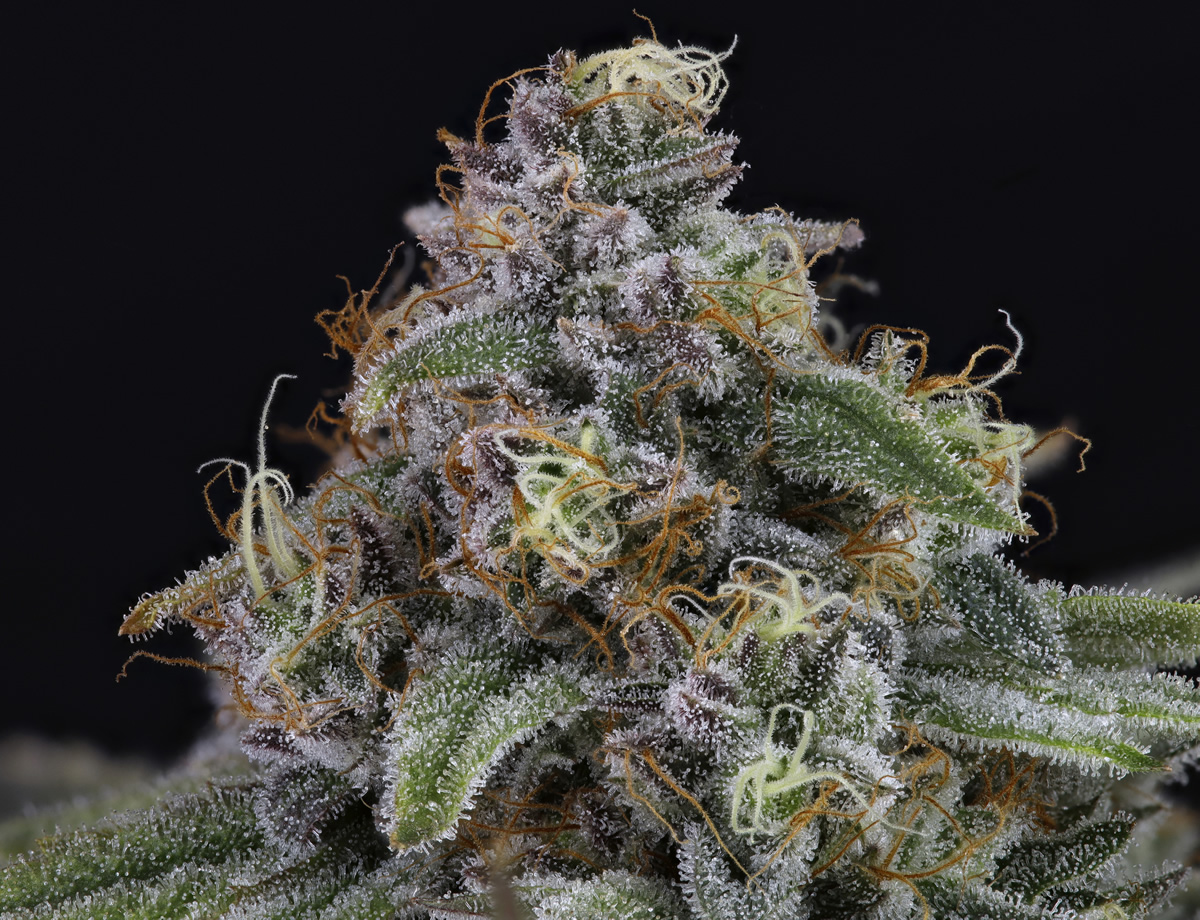
Cannabis variety Eyeballz, a cross between Blue Sherbet, Runtz, Gorilla Glue #4, and Lemon Cherry Gelato genetics.
Added to this technical control is real traceability. From seed selection to the final cure, every decision is in the hands of the cultivator, guaranteeing flowers free of unwanted residues, harvested at the optimal ripening point, and preserved under appropriate parameters. While the commercial market concentrates its catalog on a few high-turnover varieties, the self-cultivator accesses a wide range of cannabinoid and terpene profiles, adjusting production to their own criteria.
Once the initial investment in equipment is amortized, the cost per gram produced falls structurally. What was previously a recurring monthly expense becomes a model of planned and efficient self-sufficiency.
In the following sections, we break down why producing your own cannabis makes a tangible difference in genetics, quality, and cost, and which technical decisions determine that result.
Choosing cannabis seeds by chemotype and genetic profile
The market forces you to choose from what is available. The self-cultivator chooses from what exists, and the difference is huge. Faced with the limited local stock of any dispensary, the world's best seed banks offer a global catalog that any grower can access, with hundreds of documented genetics and precisely defined phytochemical profiles.
Cultivating by chemotype to obtain the desired effect
The average consumer chooses a variety. The self-cultivator chooses a chemotype: a specific chemical profile, with defined ratios of cannabinoids and a specific terpene composition oriented toward a particular effect. This distinction is not semantic — it is the difference between consuming what is there and producing what is needed.
In practice, this means being able to select genetics rich in limonene and pinene for more active and stimulating profiles, or looking for myrcene and linalool dominance for rest and relaxation. It also allows working with balanced THC/CBD ratios or the presence of minor cannabinoids like CBG, according to specific functional needs. The result is what we could call a personal pharmacopoeia: a set of genetics selected and cultivated by the user themselves, each oriented toward a specific function, without depending on generic market offers.
Genetic stability in cannabis seeds
Not all seeds offer the same level of consistency. The use of stabilized lines — F1, F2, F3 generations or IBL lines (bred through inbreeding to fix traits) — reduces phenotypic variability and guarantees that each crop reproduces the same results: same vigor, same structure, same chemotype. This is especially relevant when the cultivator has already found a profile that works and wants to reproduce it reliably cycle after cycle, without surprises.
Behind every stabilized line are years of selection by specialized breeders. Starting from this base is not just a technical advantage: it is taking advantage of accumulated genetic improvement work that the commercial market, with its short cycles and trendy varieties, can rarely offer.
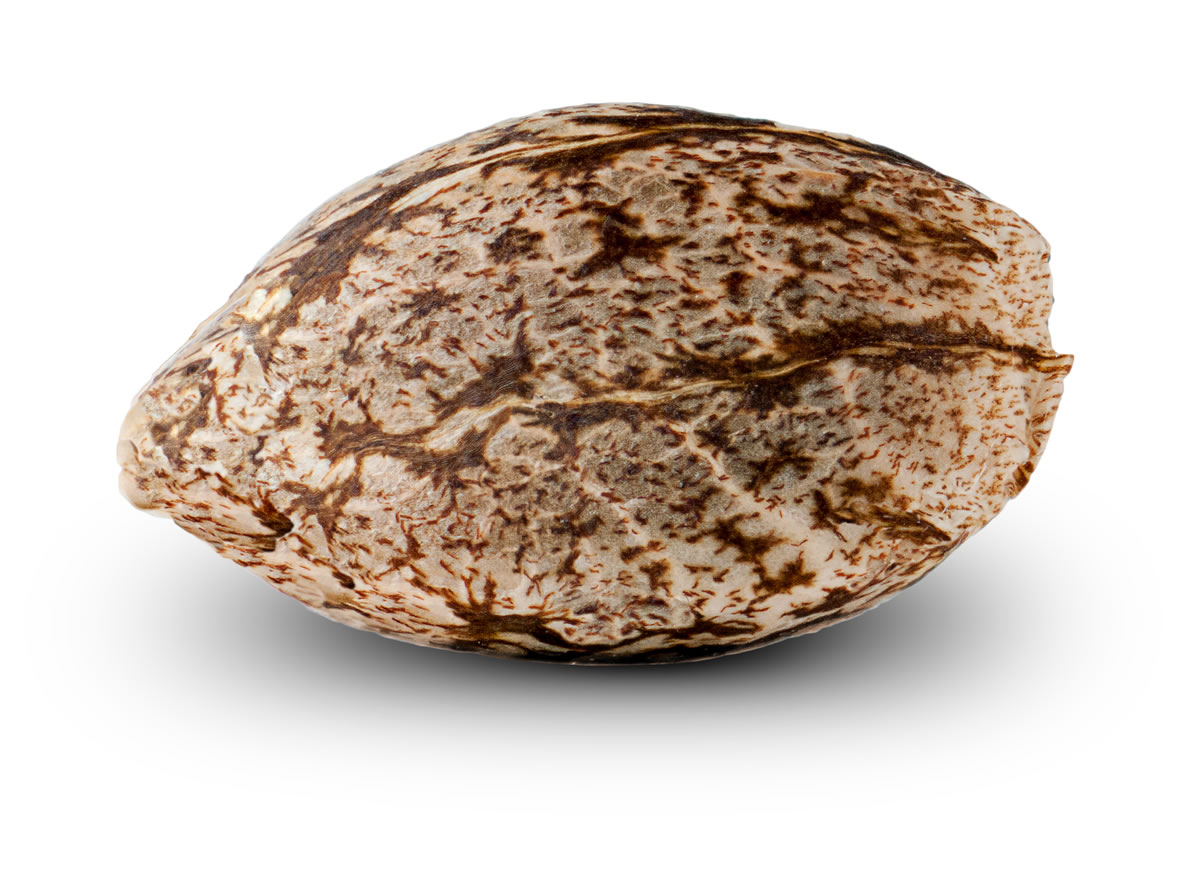
Stabilized line cannabis seed
Creating your own exclusive genetics
The most advanced level of self-cultivation goes beyond selecting and reproducing existing genetics. Through controlled pollination, the cultivator can cross two lines to combine desired traits — the cold resistance of one variety with the terpene profile of another, for example — and start their own stabilization process.
This work allows the plant to be adapted to particular microclimates: an outdoor area with high humidity, an indoor setup with specific light cycles, or a terrace with a limited thermal range. The result is genetics designed for that specific environment, with a yield and profile that no seed bank can offer out of the box. A level of personalization that the commercial circuit, by definition, cannot reach.
Control over traceability and cannabis quality
Excellent genetics poorly managed produce a mediocre result. Self-cultivation not only allows you to choose the right seed — it allows you to control every subsequent technical decision that determines the quality of the final product. From the inputs applied during cultivation to the curing conditions, every variable remains in the hands of the cultivator.
Production of pesticide and PGR-free flowers
Large-scale commercial production faces two pressures that the self-cultivator does not: protecting a high economic investment and maintaining a visual aesthetic that sells. To manage pests and diseases, industrial producers commonly resort to systemic pesticides and fungicides that penetrate the plant tissue and do not disappear with drying. The result is a product that may look flawless on the outside but contain active chemical residues on the inside.
The second problem is Plant Growth Regulators (PGRs), substances that artificially increase the density and weight of flowers at the cost of depleting the terpene profile and altering the plant's chemical composition. Their use is widespread in volume-oriented productions, and their presence is practically undetectable to the naked eye.
The self-cultivator eliminates both risks at the root. By directly managing the inputs applied, they can opt for clean production without needing to compromise quality in favor of profitability. The final product does not have to exceed any commercial threshold — it only has to meet the criteria of the person who will consume it.
Harvesting at the optimal point through trichome observation
The moment of harvest is not a date on the calendar — it is a technical decision that determines the final profile of the product. The tool for making this decision precisely is the direct observation of trichomes with a magnifying glass or microscope. Milky-looking trichomes indicate a more active and cerebral profile, with a greater presence of cannabinoids in their most stimulating form. Amber-toned trichomes indicate progressive degradation toward more sedative profiles. The proportion between the two at the time of cutting defines the effect.
This precision is inaccessible in the commercial market, where production schedules and stock rotation dictate the harvest time regardless of the plant's actual state. The self-cultivator harvests when the plant is ready for the desired effect, not when profitability demands it.
Cannabis curing as a quality factor
Drying and curing cannabis are the phases that most differentiate artisanal products from industrial ones, and the ones the commercial market most frequently sacrifices due to time pressure. Optimal technical drying requires stable conditions between 15 and 21°C with a relative humidity of 45–55%, maintained for the time necessary for the internal moisture of the flower to balance progressively. Drying too quickly — common in industrial production — collapses the terpene structure and leaves a flat aromatic profile.
Subsequent curing in airtight containers, with relative humidity maintained between 58% and 62%, allows residual chlorophyll to degrade in a controlled manner and terpenes to stabilize. The result is a smoothness, aromatic complexity, and consistency of effect that market products — forced out in weeks — rarely achieve. This extra time is not a luxury: it is the technical difference between a correct product and a truly superior one.
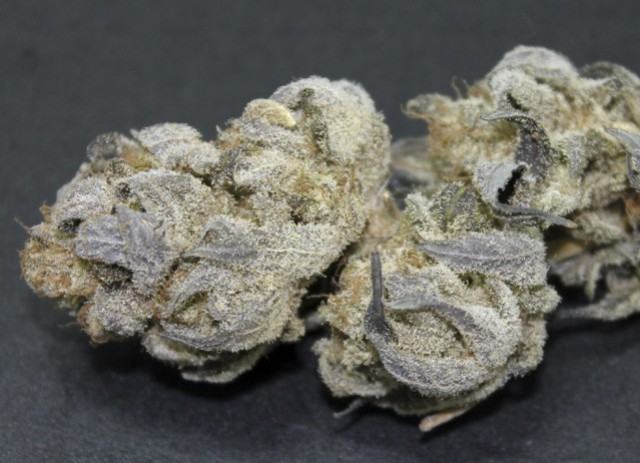
Drying removes the water from freshly cut flower and curing stabilises what is left inside the bud. Two separate processes, with separate parameters, and a good share of quality problems come from ...
Control over purity, harvest time, and post-harvest processing closes the quality cycle that genetics opened. What remains to be analyzed is whether this level of control makes economic sense — and the answer, once the cost structure is analyzed, is overwhelming.
Cannabis self-cultivation as an amortizable investment
The price paid for a gram at a dispensary or social club does not reflect the cost of producing it — it reflects the cost of producing, transporting, storing, marketing, and profiting from it at every link in the chain. The cultivator who produces for themselves eliminates all those margins at once. What remains is the real cost: electricity, water, and nutrients.
Production cost vs. cannabis market price
The market price, which depending on the region ranges between €6 and €15 per gram, includes cost layers that provide no improvement to the final product: logistics, middlemen, commercial infrastructure, distribution margins, and, in many cases, the cost of a visual aesthetic designed to sell rather than guarantee quality. The regular consumer finances all of that with every purchase without benefiting from it.
In an efficient indoor grow, once basic equipment is amortized — lighting, ventilation, irrigation system — the recurring cost per gram produced falls to a minimal fraction of its commercial value. In outdoor cultivation, where energy is free, the production cost is practically nominal. What was previously a high monthly expense without return becomes a model of planned self-sufficiency with a decreasing marginal cost cycle after cycle.
Integral use of the cannabis plant
The consumer who buys flowers only pays for one part of the plant's potential and discards the rest without knowing it. The cultivator, on the other hand, has access to the complete biomass. Secondary flowers and resinous trimmings from manicuring — usually discarded in the commercial circuit — are transformed into extractions, hashish, or high-quality derivatives that would have a significant additional cost on the market.
This absolute yield model optimizes every resource invested: every watt of light, every liter of water, every gram of nutrient. To this is added the elimination of plastic packaging and the logistical footprint of transport, making self-cultivation a more efficient model not only economically but also in terms of environmental impact.
Return on investment in self-cultivation
The economic logic of self-cultivation does not depend on a specific market — it depends on the difference between the cost of producing and the price of buying, and that difference exists in any context where cannabis has a market value. The initial investment in equipment is fixed and one-time. Recurring costs — electricity, water, nutrients — are predictable and decreasing as the cultivator optimizes their cycles. The market price, however, does not drop.
From the moment both curves cross, each harvest represents a cumulative net saving. The speed at which this point is reached varies according to the context, the setup, and regular consumption — but the direction is always the same.

Cannabis flower obtained through self-sufficiency, with a marginal cost per gram significantly lower than the average market value.
Genetics, quality, and cost: self-cultivation as a superior standard
Self-cultivation is not simply an alternative to the market. It is a change in position: moving from a passive consumer to an active producer who decides what they want.
Genetics cease to be a restriction imposed by available stock and become a design tool: selected chemotypes, terpenes oriented toward a function, and stabilized lines that guarantee reproducibility cycle after cycle.
Quality no longer depends on outside decisions — what is applied, when it is harvested, how long it is cured — to remain entirely under the cultivator's control. No systemic residues, no harvests forced by commercial calendars, and no accelerated curing that sacrifices the aromatic profile.
And cost ceases to be a recurring expense without return and becomes an amortizable investment with an increasing yield. Once the amortization threshold is passed, each harvest widens the gap compared to the equivalent market price.
When these three factors are managed with technical discernment, the result admits no direct comparison with what the market can offer.