
Piattella was born out of a practical problem. In 2019, the cannabis club Uncle's Farm in Barcelona built its offering around WPFF ice-o-lator, the whole fresh-frozen plant water extraction. The material was of exceptional quality, but it was impossible to handle as it came out of the freeze dryer: it melted at the touch and could not be served with any precision.
The question was simple: how do you stabilise that material without losing what made it valuable?
The Origin of Piattella
The development and popularisation of Piattella is attributed to the optimisation processes carried out in Barcelona from 2019 onwards at Uncle's Farm. As the local cannabis club scene matured, experiments began with cold preservation techniques to address the instability of the most oil-rich water resins. It was in this environment that combinations of temperature, time and sealing were tested on ice-o-lator water and ice extraction until the definitive technical protocol was established in 2020. Zio, one of the club's founders, systematised that process and named it Piattella. The starting material in those initial experiments was not exclusively from Uncle's Farm: Zio also worked with resins from producers such as La Sagrada Farms and Slite23, key references in Barcelona's solventless scene at the time.
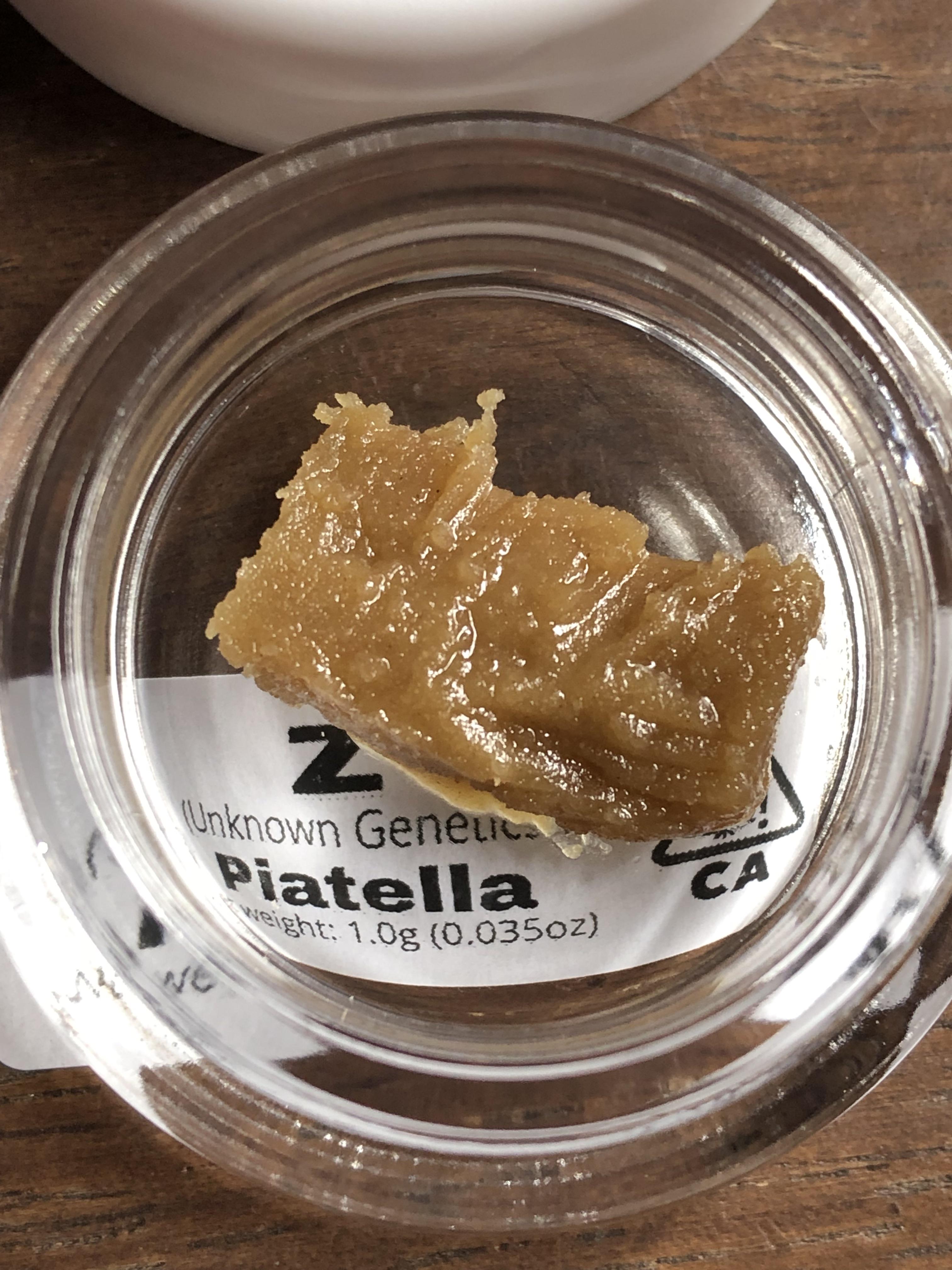
Piattella is not a protected designation of origin but a morphological description that the market has globally adopted as a category name. Results vary widely depending on the operator's skill and the genetics used. The first documented experiments on social media date back to 2018, but the technical protocol that popularised the current method was consolidated in 2020.
Piatella or Piattella? The term Piattella, from the Italian piatto ("flat") with the diminutive suffix -ella, describes the physical format the concentrate takes on during the sweating process: a flat, small and dense piece. Although it is common to find it written with a single 't' (Piatella) online as a simplification, the original Italian term is Piattella.
What is Piattella hash?
Piattella is top-quality WPFF ice-o-lator (six-star, full melt) subjected to a cold curing process. That definition has two parts that are not interchangeable.
The first part is the starting material: a water extraction made from whole fresh-frozen plant. It is not a premium variant of the process but the defining starting point: without it, the result departs from the original concept of Piattella, whose objective is to preserve the freshest possible profile of the plant.
The second part is the cure: a controlled process of temperature, humidity, time and sealing that stabilises the material and preserves its profile without thermal pressing or aggressive mechanical pressure. It is a method designed exclusively to maintain the virtues of an excellent initial resin; if the raw material contains impurities or extraction defects, the cold cure cannot correct them.
The distinction is necessary because the term is frequently misused. It is not an independent extraction method nor a variant of rosin. It is a curing process applied to a concentrate already obtained by ice-o-lator, with the goal of stabilising it and unlocking its potential without compromising it.
Differences between Piattella and hash
Unlike traditional pressed hashish, where oxidation and ageing of the dry material is intentionally sought in order to develop deeper, earthier flavours, Piattella aims for the opposite: minimising oxidation to maintain the fresh, vibrant terpene profile of freshly harvested cannabis. While classic hash darkens over time and gains complexity at the cost of losing volatile terpenes, a well-made Piattella retains lighter colours and an aroma far closer to that of the living plant.
This difference shapes much of the process: traditional hashish transforms the material through controlled oxidation, while Piattella acts as a high-fidelity preservation method. These are distinct objectives. Traditional hash transforms through oxidation; Piattella preserves. For this reason, many consumers focused on aromatic profile consider Piattella one of the most advanced expressions of modern solventless.
The starting material for Piattella
The WPFF (Whole Plant Fresh Frozen) method involves freezing the entire plant immediately after harvest, before the degradation of the most volatile terpenes begins. In freshly cut cannabis there are light aromatic compounds that disappear within the first few hours of exposure to air and heat. Conventional drying, however careful, entails that loss; immediate freezing is one of the most effective ways to minimise it.
That frozen material is processed by ice-o-lator (ice water extraction) to separate the trichomes from the rest of the plant. The result is a wet resin that retains a significantly greater portion of the original terpene profile, including the most volatile compounds that conventional drying eliminates. It is precisely that profile that the subsequent cure must preserve.
Drying that wet resin before curing is a critical step. For many extractors, freeze-drying offers the most stable and reproducible method: moisture removal at low temperature and low pressure, in darkness, without exposing the material to heat or air. The alternative — slow drying at low temperature, low humidity and total darkness over several days — yields acceptable results but with greater variability.
In either case, the goal is identical: for the material to enter the cure with the maximum possible terpene load, intact trichomes and no residual moisture that could compromise the subsequent process.
In the solventless scene, the standard most associated with high-end Piattella is six-star full melt: the material melts completely on heat without leaving any appreciable plant residue. Below that threshold, the curing process produces a lower-quality result regardless of how it is executed.
Strains for making Piattella
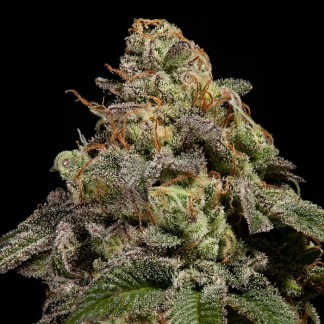
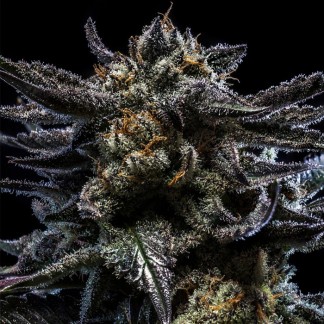
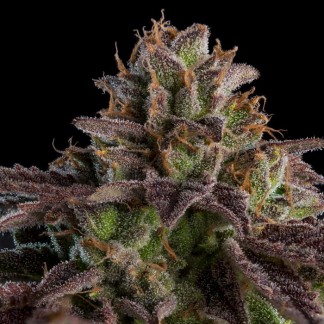
Some genetics yield significantly better results. Since the process depends entirely on the integrity of the resin prior to curing, seed selection should target two specific morphological traits:
- Trichome structure: Genetics with large glandular-head trichomes, selected in the 90 to 120 micron range, are recommended. In water extraction, the fragility of the pedicel — the stalk connecting the glandular head to the plant tissue — allows the head to detach intact with minimal agitation, reducing contamination from plant matter. That same glandular head, however, must have sufficient structural integrity to withstand drying or freeze-drying without collapsing.
- Lipid and terpene profile: Varieties with a dominance of sesquiterpenes (heavier and more stable) combined with a high load of volatile monoterpenes are those that best facilitate the "sweating" process without crumbling the solid structure of the piece. Crosses with genetic lines such as Kush, GMO or Zkittlez derivatives offer the ideal membrane density to withstand freeze-drying.
For this reason, when selecting genetics aimed at extractions, trichome architecture and oil stability are prioritised over raw THC percentage.
How Piattella is made: the curing process
Minimising oxidation and preserving the terpene profile
Oxygen, light and heat are the main factors that accelerate terpene degradation and alter the profile of a concentrate. In traditional hashish, prolonged exposure to these elements progressively transforms the aromatic profile: the freshest, most volatile compounds lose intensity and denser, earthier, darker notes associated with oxidative ageing appear. Among the compounds associated with the characteristic aroma of aged hashish, hashishene is frequently cited.
The Piattella cure operates in the opposite direction. Sealing, darkness and low temperatures reduce exposure to oxygen, UV radiation and heat to a minimum. This significantly slows the degradation of the aromatic profile and allows for the preservation of an expression much closer to the original material.
The visible result is typically a lighter, more uniform colour than that of the same material if poorly stored or excessively oxidised. In this type of concentrate, a dark colour is not generally interpreted as a sign of quality, but as an indication of oxidative degradation.
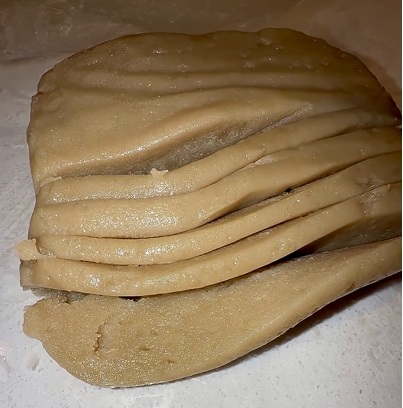
Piattella curing conditions
Although exact timings vary depending on the genetics and the state of the resin, the physical and environmental conditions required to execute a correct cold cure demand maintaining very strict control ranges:
- Temperature: between 4°C and 10°C, constant, without fluctuation
- Humidity: low
- Light: total darkness
- Duration: between 4 and 6 weeks
Temperature consistency is as important as the range itself: sudden changes generate condensation, which introduces moisture into the material and can compromise both the terpene profile and the microbiological stability of the concentrate.
These parameters are guidelines. The most demanding cold cure protocols require constant adjustment based on ambient humidity, the genetics being processed and the state of the resin.
The pressure factor and the "sweating" of the resin
The material is not simply left in the cold — it is sealed before being placed under curing conditions. The described methods are vacuum sealing and tight cellophane wrapping. Both serve two simultaneous functions: creating a barrier against oxygen and applying sustained pressure to the material.
That pressure produces what is known as the "sweating" of the resin: the progressive migration of terpenic oils to the surface of the material. The visual result is the glossy, moist layer that characterises a well-cured Piattella.
Sustained pressure during sealing is consistently associated with that glossy layer. The most widely held explanation among extractors is that it promotes the migration of terpenic and lipid fractions toward the exterior, producing a homogeneous redistribution of oils that stabilises the texture.
Common mistakes that ruin a Piattella
Although the protocol is seemingly straightforward, small failures anywhere in the chain typically produce mediocre or outright failed results:
- Residual moisture before curing: The most frequent cause of excessive stickiness and mould risk. Freeze-drying minimises this risk; slow drying requires more patience.
- Temperature fluctuations: Generate internal condensation and accelerated oxidation. Consistency is more important than the exact range.
- Starting material below six-star: An ice-o-lator containing plant matter or damaged trichomes will rarely develop the creamy texture, however perfectly the cure is executed.
- Insufficient sealing or inadequate pressure: Prevents proper "sweating" and leaves the material matte, dry and with less protection against oxygen.
- Curing at room temperature or in an uncontrolled domestic fridge: Very common in home attempts; produces uneven oxidation and rapid terpene loss.
Piattella hash vs. Hash Rosin
Both products start from high-quality bubble hash, but the processes that produce them differ in almost every other respect. That difference in process translates into profile differences that are perceptible to a discerning consumer.
| Piattella | Hash Rosin | |
|---|---|---|
| Starting material | WPFF ice-o-lator (fresh frozen required) | Live Rosin (WPFF) or Cured Rosin |
| Additional process | Cold cure, sealed, no heat | Heat pressing + optional cold cure |
| Heat in the process | No | Yes (in the press) |
| Purpose of curing | Preserve the original profile without oxidation | Stabilise texture after pressing |
| Final texture | Creamy, pliable, glossy | Variable: badder, jam, biscuit |
| Colour | Light to medium (low oxidation) | Variable depending on cure and pressing temperature |
| Terpene profile | Close to the original material | Modified by the heat of pressing |
| Yield | Maximum retention (loss <5% by evaporation) | Loss in rosin bag* (5–25%) |
| Standardisation | No standardised protocol | Greater consistency between producers |
The loss in Piattella is due to evaporation of volatile terpenes during curing. In materials with a dominant sesquiterpene profile it sits between 2% and 5%; in genetics with a high load of monoterpenes such as limonene, pinene or myrcene it can be higher. The loss in rosin is due to physical retention in the rosin bag: these are different mechanisms — one affects the aromatic profile, the other the total recovered mass.
The difference in terpene profile is a direct consequence of heat. Hash rosin pressing applies temperature to the material, which volatilises the lighter terpenes during the process. The result is a concentrate with a more stable but altered aromatic profile compared to the starting material. Piattella avoids applying direct heat during processing, which helps retain a greater proportion of those volatile compounds that pressing eliminates.
For a producer working with small batches, the difference in mechanism has a real impact: in Piattella there is no physical retention in the bag, whereas in hash rosin the loss in the press is inevitable regardless of working conditions.
How to identify a quality Piattella
The absence of standardisation around the name means that under the label "Piatella" or "Piattella" very different products coexist on the market. The evaluation criteria are primarily organoleptic. No certificate or external visual analysis substitutes for directly testing the material.
The texture test
At room temperature, a well-cured Piattella has a consistency similar to modelling clay: pliable, yielding without resistance while holding its shape without crumbling.
If the material sticks excessively to working tools and holds no shape at all, there are two likely causes: the cure is incomplete or there was residual moisture in the material before the process began. Conversely, if the material is brittle and crumbles, the fault lies in the starting material: a low-quality ice-o-lator with poor trichomes will not develop the characteristic creamy texture regardless of how the cure is executed.
Colour
A well-cured Piattella has a light to medium, uniform colour. The level of oxidation has a significant influence on colour: less oxidation, lighter colour. A dark material or one with uneven patches of colour indicates oxygen exposure during curing, an already-oxidised starting material, or both.
This is counterintuitive for anyone familiar with traditional hashish, where dark colour is typically associated with intensely pressed and cured material. In Piattella, the logic is reversed.
Surface
The glossy layer of "sweated" terpenes on the surface is the visual indicator of the pressure applied during curing. A matte, dry surface may indicate that the sealing was insufficient, that pressure was not sustained, or that the material did not have the terpene profile needed to produce that effect.
Behaviour under heat
The material should melt completely in a banger without leaving any appreciable plant residue. In practice, the most valued Piattellas start from full melt material: if the original ice-o-lator was not full melt, the cure does not correct that deficit. A material that leaves residue in the banger indicates that the starting material contained plant matter that should not have been there.
Aroma
The aroma of a well-cured Piattella is vivid, complex and recognisably close to the profile of the source cultivar. It is the most direct indicator that the terpenes have been preserved. A flat, muted or oxidised aroma indicates that the process has failed at some point: whether in the cure, the starting material or subsequent storage.
Price is not a reliable indicator of quality in Piattella. The lack of standardisation and the widespread use of the name create high dispersion among products. The most direct criterion is the organoleptic test: texture between the fingers, colour, surface gloss and aroma before it ever reaches the banger.
How to store Piattella
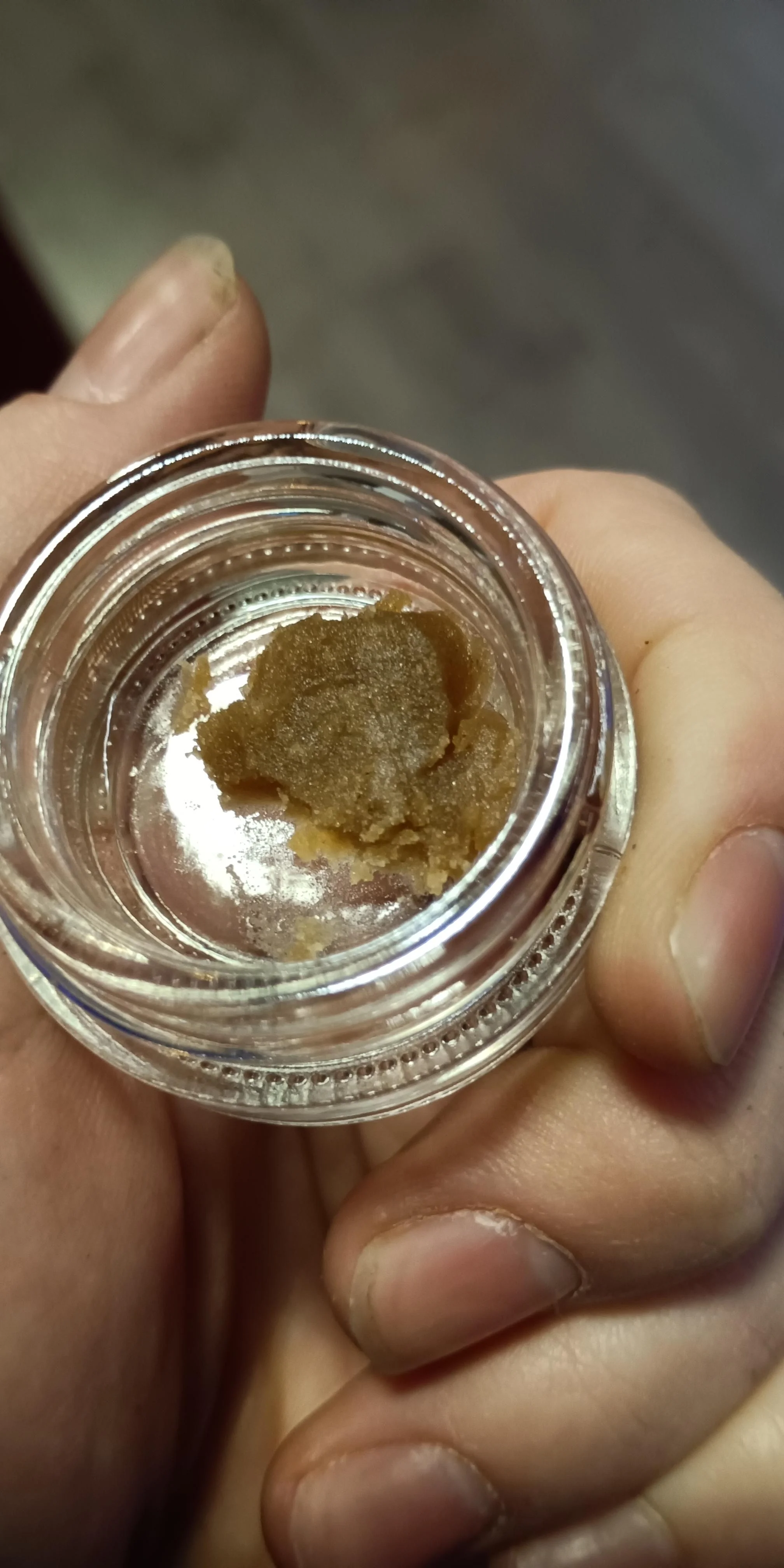
The same principle that defines the cure also defines storage: cold, darkness and sealing. Material that has reached its optimal curing point remains susceptible to degradation if storage conditions do not protect it.
The container must be airtight and opaque. Dark borosilicate glass or ultraviolet glass (Miron) are the most suitable materials: they do not interact with terpenes and do not allow UV light through. Soft plastic containers can leach compounds into the material and affect flavour over prolonged storage.
For short-term use (weeks), a refrigerator is sufficient. For prolonged storage, a freezer keeps the profile stable for months.
Condensation risk: The jar should not be opened immediately after being taken out of the cold. It is advisable to wait for the container to reach room temperature before breaking the seal; otherwise, ambient moisture will condense on the resin, causing accelerated oxidation or, in the worst case, mould growth.
Piattella as a standard in solventless concentrates
The popularity of Piattella reflects the growing interest in preservation processes aimed at minimising the degradation of the aromatic profile. Its logic is the opposite of most concentrates: it does not modify the material, but preserves it at its best. The cold cure, sealing, darkness and controlled temperature exist so that the terpene profile reaches the consumer as intact as the extraction left it.
Under the name 'Piattella', very different products currently coexist. The label is no guarantee. A Piattella is evaluated where hash has always been evaluated: in the hand, at the nose and in the banger.