
The story of GMO, also known as Garlic Cookies, is one of those that was born in the backrooms of forums and ended up becoming a myth among growers and extractors. It wasn't the typical strain created in a laboratory with marketing behind it, but the fruit of underground crosses, careful selections, and a certain dose of chaos (and drama) that gave even more flavor to the legend.
The myth of GMO: one cross, two names
In the early 2010s, Mamiko Seeds released their cross Chem Cookies (Chemdawg D × GSC Forum cut), the seed from which the gem called GMO would later emerge. At the same time, Divine Genetics was working another distinct line (Chemdog #4 × GSC), also called Chem Cookies. This name confusion sowed confusion from day one: the same label, but different genetics.
This "name chaos" was a constant in cannabis forums of that era, true hotbeds of experimentation. We lived it ourselves: garage growers exchanging genetics, sharing methods, and documenting each cross with the passion of self-taught scientists. Forums like THC Farmer and ICMag became virtual laboratories where each phenotype was dissected and each result debated to exhaustion.
Skunkmasterflex and the birth of the myth
In the middle of all that noise appeared Skunkmasterflex, a very active grower on the forums. From Mamiko's seeds, he selected a clone with a profile that didn't resemble anything known: garlic, gas, onion, spices... and baptized it with the now famous name "GMO" (Garlic, Mushroom, Onion). The nickname stuck hard and soon people started talking about that elite cut in small circles.
On the forums, Skunkmasterflex published comparisons of the phenotypes obtained from Mamiko and Divine Genetics crosses. In each case, he managed to highlight a "killer phenotype #3". This detail opened the door to a doubt that still persists: although the most accepted narrative attributed the GMO elite clone to Mamiko's seeds, there's evidence that Skunkmasterflex was testing Divine's stock at the same time.
Over the years, a supposed Divine contact claimed that he had shared the genetics "for fear of losing it". No proof ever appeared, but the anecdote added more flavor to the legend. Finally, the community consensus was what validated the story. On ICMag, users summarized it without further ado: "Mamiko made the original cross. Skunkmasterflex found the GMO pheno. Super rare." (ICMag, Garlic Cookies thread).
A story validated by the community
That mix of testimonies, posts, and anecdotes is what has kept the halo of mystery around GMO alive. The base genetics are clear, but the path to the elite clone has several layers that intertwine in the underground that we shared in those years. This is the DNA of a strain that wasn't born from a marketing strategy, but from the curiosity and passion of a community.
GMO's unique profile: the umami of cannabis
What made GMO special wasn't just its potency, but its absolutely distinctive aromatic profile. While other strains played with sweet or citric notes, GMO bet on unexplored territory: the umami of cannabis. That combination of garlic, onion, and sulfurous notes converted it into the "Marmite" of cannabis: you either love it or hate it, but it leaves no one indifferent.
The terpenes responsible for this profile form a complex symphony. Caryophyllene brings spicy and pungent notes, limonene adds a subtle acidity that balances the intensity, while myrcene supports the earthy and relaxing base. And there's even more: traces of sulfurous terpenes, uncommon in other strains, give that characteristic note that makes GMO recognizable even to novice noses.
From forums to cups
GMO started as a rumor, a clone that moved under the radar among those of us who knew how to appreciate it. But the potency, resin production, and that earthy and sulfurous profile were impossible to ignore. In 2017, the strain made the jump to the spotlight:
- 1st place for "Best Indica" at the Midwest Cannabis Cup.
- Presence in the Top 10 hybrid concentrates at the SoCal Cannabis Cup.
It didn't appear on High Times' "Strongest Strains on Earth 2017" list, but the echo was already made: GMO was a beast and was starting to make a place among the most talked about on the scene.
That jump to official competitions marked a turning point. What until then had been a well-kept secret of the underground became a public reference. Professional extractors began specifically seeking GMO for their premium products, and commercial growers demanded the clone insistently.
The encounter: the GMO clone and Ripper Seeds
Our relationship with GMO wasn't by chance. On one of the trips we made to California in search of unique genetics, two of our partners visited an underground circuit grower to get an elite Mochi clone (a Gelato selection). During the visit, that grower offered us a GMO joint. We lit it, took a few hits, and looked at each other with that expression of "holy shit... what is this?". The sensation was of total intoxication, as if our senses had been shaken all at once.
That day we took the Mochi cut, but we dedicated part of the trip to locating the GMO clone. Thanks to contacts from a good friend in the industry, we found what we were looking for: the elite cut that we would later work with and from which projects like OMG would emerge. It was love at first sight, and we knew GMO would mark a before and after.
California in those years was the global epicenter of cannabis innovation. Underground growers had created a genetics exchange system based on mutual trust and respect for work well done. Accessing those circles required much more than money: it took reputation, references, and above all, demonstrating that you understood the real value of what you had in your hands.
Ripper Seeds collaboration with Mamiko Seeds
At Ripper Seeds we have maintained a good relationship with Mamiko Seeds since the first Spannabis in Barcelona, always with a close and respectful treatment. On more than one occasion it was Mamiko himself who asked us to send the GMO elite clone, and we sent it to him a couple of times so that unique genetics wouldn't be lost. That constant collaboration reflects the bond of trust we have built between both projects.
This reciprocity is key in the world of genetic preservation. Elite clones can be lost due to diseases, pests, or even human carelessness. Maintaining several copies in different places is the only way to ensure that gems like GMO don't disappear forever.
How we grow GMO
Whoever is looking for a quick flower, better look elsewhere. GMO asks us for between 70 and 80 days of flowering if we want to get all its juice. Its dominant terpenes (caryophyllene, limonene, and myrcene) build that spicy and sulfurous aroma that makes it unmistakable. And in extractions it's pure gold: high yields and potent profiles that make it a favorite of hash makers.
Growing GMO requires patience and experience. During vegetative growth, the plant shows moderate but constant vigor, with compact internodes that predict a solid structure for flowering. Its leaves develop an intense dark green, almost jade, that has become a characteristic trait of the genetics.
In flowering, GMO deploys all its potential. The buds form dense and compact, with a coating of trichomes that appears early and intensifies week after week. From the sixth week onward, the aroma becomes penetrating, and it's advisable to have a good air filtration system. The last 10-14 days are crucial: that's when terpenes reach their maximum splendor and the resin acquires that sticky texture so characteristic.
Outdoors, GMO prefers warm and dry climates. High humidity during flowering can work against it, as the density of its buds makes it vulnerable to mold. Indoors, it responds very well to techniques like SCROG or LST, and its structure allows maximum use of growing space.
The extraction phenomenon
GMO revolutionized the world of extractions in a way that few of us anticipated. Its unique terpene profile translated into concentrates with intense and complex flavors that broke all expectations. Professional hash makers discovered that GMO offered exceptional yields, both in solvent and solventless extractions.
In rosin, GMO gives us a creamy texture and a color that goes from light gold to amber, depending on the starting material and pressing temperature. The flavor is explosive from the first inhalation: notes of roasted garlic, diesel gas, and a spicy aftertaste that remains in the mouth for minutes.
GMO BHO extracts became references in US dispensaries. Its terpene profile remained stable during processing, and final potency frequently exceeded 80% total THC, preserving an aromatic bouquet that left no one indifferent.
OMG: Ripper Seeds' answer
At Ripper Seeds we wanted to take the story one step further and work directly with that elite cut. Thus OMG was born (Oh My Garlic / Oh My God): a cross of GMO × Kush Mints.
Our idea? Maintain the funky soul of GMO but give it more structure, manageability, and slightly more contained flowering times. Kush Mints brought a minty touch over the garlic and gas base, rounding out the whole and making it more suitable for commercial cultivation without losing the underground essence that enchants in extractions.
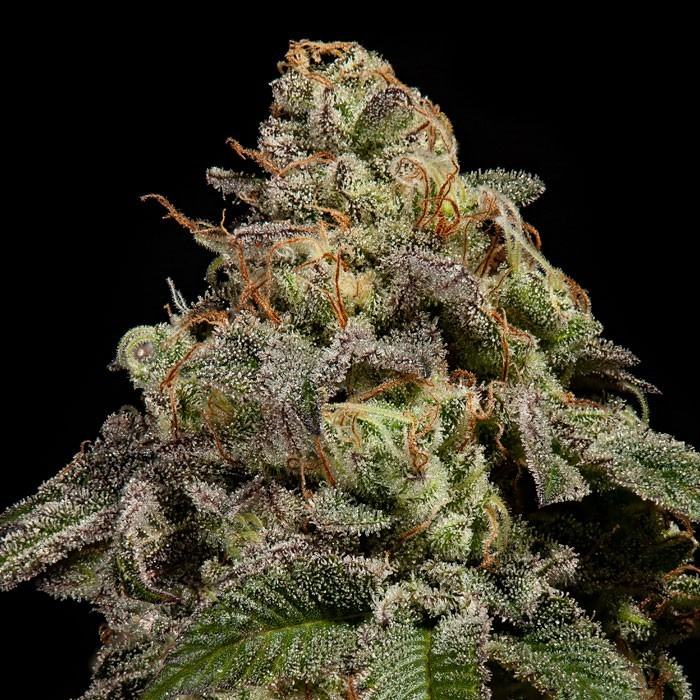
The OMG creation process was meticulous. We tried multiple crosses before finding the perfect combination. Kush Mints brought exactly what we were looking for: structural stability, improved resistance, and an aromatic profile that complemented rather than competed with GMO's characteristic notes.
The first generations of OMG showed balanced inheritance: the potency and unique character of GMO, with the robustness and ease of cultivation of Kush Mints. The minty touch doesn't mask the garlic and gas notes, but enhances them, creating an aromatic complexity that surprises both veteran growers and those just starting out.
Grower opinions reinforce what we were looking for:
- "Good mold resistance, even during weeks of rain and high humidity" (GrowDiaries).
- "Grew like a beast. Responded very well to topping and SCROG" (GrowDiaries).
- "9-10 weeks of vegetative growth and then another 9 of flowering" (Reddit / r/microgrowery).
- "Dense, firm flowers, covered in resin, exceptional flavor with touches of garlic, diesel and mint" (Zamnesia).
In the competitive circuit, OMG also left its mark: it won two cups at Spannabis Champions Cup, consolidating its place not only as a tribute to GMO, but as an evolution with its own identity.
Lab results: OMG in numbers
At the Spannabis Champions Cup, OMG also underwent official cannabinoid analysis at Ananda Lab (February 2022). The results showed a profile dominated by THCA:
- THCA: 30.00%
- Δ9 THC: 0.55%
- CBGA: 1.45%
- CBCA: 0.48%
- Other cannabinoids present in smaller proportions (CBDA, CBG, CBN, CBNA).
A THCA content of 30% clearly places it in the league of the most potent strains, confirming with lab data what growers already knew in mouth and head.
These analyses also revealed a particularly interesting minor cannabinoid profile. The significant presence of CBGA suggests additional therapeutic potential, while traces of CBN indicate controlled degradation that may contribute to the strain's characteristic relaxing effects.
GMO's legacy
GMO didn't just become a cult strain, but opened the doors to a whole new category of cannabis: "funky" or "weird" strains. Its success demonstrated that not all genetics had to smell like fruits or sweets to be appreciated. It paved the way for other strains with unusual aromatic profiles and challenged preconceived ideas about how quality cannabis should smell and taste.
Today, GMO is mother and father to dozens of crosses. Its genetics live on in strains like GMO Cookies, Garlic Breath, Peanut Butter Breath and many others that inherited part of its unique character. It's a testament to the power of careful selection and the importance of preserving unique genetics, even when they initially seem rare or uncommercial.
Epilogue
From forums to cups, from a shared joint in California to the podiums of Spannabis: thus was written the legend of GMO and its OMG offspring. A story of chance, passion, and obsession with genetics that demonstrates that great strains aren't born in offices, but in the underground, between smoke, friendship, and the relentless search for the extraordinary.
GMO's story is also ours. That of a community of growers, extractors, breeders, and enthusiasts who share the same passion and who, through forums, fairs, and meetings, continue building the future of cannabis culture. GMO is proof that the best often emerges from chaos, from free experimentation and generous knowledge exchange.
While we write these lines, somewhere in the world a grower is trying a new cross, selecting a special phenotype, or simply enjoying a hit of GMO. The story continues, and we continue to be part of it.
References and sources
- THC Farmer (2013), "Divine Genetics – Girl Scout Cookies" thread where Skunkmasterflex compares phenotypes THC Farmer
- ICMag, "Garlic Cookies, Chem Cookies… by Mamiko Seeds" thread with user comments on authorship ICMag
- High Times Cannabis Cup Results 2017 (Midwest, SoCal) – High Times archive
- Terpene profile and cultivation data reported in communities like Leafly and Growdiaries.
- Grower opinions: GrowDiaries, Reddit, Zamnesia.
- OMG (Oh My Garlic), Ripper Seeds – Ripper Seeds catalog
- Cannabinoid laboratory report (Ananda Lab, Spannabis Champions Cup 2022).