
What is the Mosaic Virus?
The Tobacco Mosaic Virus (TMV) represents one of the most serious viral threats for cannabis growers, both in indoor and outdoor crops. This pathogen, originally discovered in tobacco plants in the early 19th century, was later found in other species but retained the name given to it originally. It primarily affects the solanaceae family (cannabis, tomato, tobacco, eggplant, etc.).
Infected cannabis plants can experience yield reductions of up to 60%, in addition to a notable decrease in the quality of trichomes and cannabinoids, crucial factors for any serious grower.
Unlike many other diseases that affect cannabis, TMV does not directly kill plants, but progressively weakens them, reducing both the quantity and quality of buds produced. This characteristic makes it an especially insidious threat, as growers may not realize the problem until it's too late to safeguard the rest of their crop.
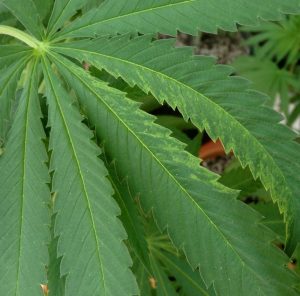
What exactly is the Mosaic Virus?
The Tobacco Mosaic Virus is a viral pathogen that belongs to the Virgaviridae family. Its name derives from the characteristic mosaic pattern it produces on infected leaves, where light and dark green areas alternate, creating a distinctive visual effect that facilitates its identification in advanced stages of infection.
This virus has extraordinary survival capacity, able to remain viable in dry plant debris for decades. Scientific studies have shown it can remain infective for up to 50 years under suitable conditions, which explains why its complete eradication becomes practically impossible once it establishes itself in a growing area.
Cannabis, belonging to the same botanical family as other traditionally affected plants like tomato, eggplant, and tobacco, presents natural susceptibility to TMV. However, the intensity of symptoms and impact on production vary considerably between different varieties and phenotypes.
Cannabis Varieties Most Susceptible
Not all cannabis varieties show the same vulnerability to TMV. Tropical sativa varieties tend to be especially susceptible, possibly due to their evolution in environments where this type of viral pressure was less common. Varieties like those originating from Southeast Asia, Central Africa, and some Central American regions show more severe symptoms when infected.
Autoflowering plants present a particular case of vulnerability. Their accelerated life cycle means that any interruption in normal development has proportionally more serious consequences. A TMV infection during the first weeks of life can result in plants that never reach their genetic potential, producing tiny, inferior-quality buds.
Conversely, indica varieties, especially those with Afghan or Pakistani genetics, usually show greater natural resistance. This is probably due to thousands of years of evolution in regions where various viral pathogens were common, developing more robust defense mechanisms.
Specific Symptoms in Cannabis
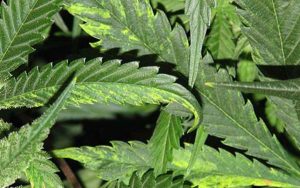
TMV manifestation in cannabis presents unique characteristics that growers must learn to recognize. During the early vegetative phase, symptoms can easily be confused with nutritional deficiencies, especially magnesium or iron. Young leaves begin to show an irregular coloration pattern, with areas ranging from light green to pale yellow, alternating with zones of normal or even darker than usual green.
As the plant matures, symptoms become more distinctive. Leaves develop a characteristic rough texture, with small blisters on the underside that are detectable by touch. Apical growth is severely affected, resulting in plants with significantly reduced height - frequently up to 50% less than healthy plants of the same genetics.
Impact on Flowering Phase
It's during flowering when the true impact of TMV becomes evident. Flowering sites develop abnormally, producing small, airy buds with notably reduced trichome density. This decrease in trichome production not only affects the final harvest weight but also directly impacts potency, as it's in these structures where cannabinoids are concentrated.
Infected plants frequently show hermaphroditic tendencies, developing male flowers alongside female ones. This phenomenon can ruin entire crops if not detected in time, as accidental pollination drastically reduces bud quality and can perpetuate the infection through contaminated pollen.
Maturation is also affected, with buds developing abnormal colorations in pistils and uneven maturation that greatly complicates determining the optimal harvest time. Many growers report that infected plants never reach the ideal maturation point, remaining in an intermediate state indefinitely.
Also of Interest
What is latent hop virus? The latent hop virus is, as its name suggests, a virus that infects plants and was discovered in hop strains. As long as the latent virus affects hops, it is not a very...
Transmission Mechanisms in Cannabis Crops
TMV transmission in cannabis crops occurs mainly through biological vectors, with insects being the primary responsible for propagation. Aphids, particularly the species Myzus persicae and Aphis gossypii, are extremely efficient vectors. These insects acquire the virus when feeding on infected plants and transmit it immediately to the next host, without needing an incubation period.
Thrips, especially Frankliniella occidentalis, also play a significant role in transmission, particularly in indoor crops where they can proliferate without natural predators. Their small size and flight capacity make them especially dangerous vectors, capable of moving between distant plants and rapidly spreading infection throughout the entire crop.
Mechanical Transmission
Mechanical transmission represents a considerable risk in modern cultivation operations. Common practices like pruning, plant training (LST, SCROG), and taking cuttings can become transmission vehicles if strict disinfection protocols are not followed.
The simple act of touching an infected plant and then handling a healthy plant can transmit the virus if micro-wounds exist in plant tissues. This is particularly relevant during training techniques that involve bending or twisting stems, creating small cracks that facilitate pathogen entry.
The Tobacco Factor
A frequently underestimated source of contamination is the presence of tobacco products in the growing area. TMV can remain viable in cured and processed tobacco, including commercial cigarettes. Growers who smoke or allow visitors to smoke near their plants are introducing an unnecessary and easily avoidable risk.
This transmission route is particularly insidious because it can go unnoticed for months. The virus present in tobacco products can contaminate hands, clothing, or tools, remaining viable long enough to infect susceptible plants.
Comprehensive Prevention Strategies
TMV prevention requires a systematic and multi-layered approach that addresses all possible entry and transmission points. The first pillar of any effective preventive strategy must be establishing rigorous quarantine protocols for all new plant material entering the operation.
All new plants, regardless of their origin, must be maintained in complete isolation for a minimum of three weeks. During this period, plants must be monitored daily to detect any sign of viral disease. This protocol must be applied without exceptions, even for plant material that comes from apparently reliable sources.
Disinfection Protocols
Effective disinfection goes beyond simple alcohol use on tools. Every implement that comes into contact with plants must be treated with a 70% isopropyl alcohol solution for at least 30 seconds of contact. Pruning scissors, training instruments, and any measuring tools must follow this protocol without exception.
The grower's hands represent one of the most common and least controlled transmission vectors. Hand washing must be performed with soap for a minimum of 20 seconds before entering the growing area and between handling different plants. Using disposable nitrile gloves provides an additional barrier, but they must be changed frequently to avoid cross-contamination.
Clothing used in the growing area must be exclusive to this activity. Growing aprons or coats must be washed regularly with hot water and detergent, and ideally should be dried at high temperature to eliminate any possible viral contamination.
Integrated Vector Control
Managing insect vectors requires an approach that combines multiple strategies. Yellow and blue chromatic traps must be strategically distributed throughout the growing space, not only as a control method but also as an early monitoring system that allows detecting vector presence before they establish significant populations.
The introduction of natural predators like Aphidius colemani for aphid control should be considered as part of an integrated pest management strategy. These parasitoids provide effective biological control without the risks associated with chemical pesticides that could affect final product quality.
Physical barriers, such as anti-insect screens on all air inlets, represent the first line of defense against external vectors. These screens must have an opening no larger than 150 microns to be effective against thrips, although this may require adjustments to ventilation systems to maintain adequate airflow.
Early Identification and Diagnosis
Early TMV diagnosis in cannabis requires a trained eye and deep knowledge of specific symptomatology. The first symptoms are subtle and can easily be confused with nutritional or environmental problems. The key is developing a systematic monitoring system that allows detecting abnormal changes before the infection becomes fully established.
During daily inspections, growers must pay special attention to young leaves and active growth points. The appearance of irregular coloration, especially patterns that don't follow leaf veins, should be considered suspicious. Leaf texture also provides important clues; infected leaves develop a characteristic roughness that is detectable by touch.
Differential Diagnosis
Distinguishing TMV from other common cannabis problems requires experience and attention to detail. Magnesium deficiencies, for example, also cause interveinal chlorosis, but tend to affect older leaves first and follow a more uniform pattern. TMV, conversely, preferentially affects new growth and creates irregular patterns that don't respect the leaf's vascular architecture.
pH problems can also create similar symptoms, but generally are accompanied by other signs like necrosis on leaf edges or multiple simultaneous deficiencies. TMV produces more specific and localized symptoms, at least in the initial stages of infection.
Definitive diagnosis confirmation requires specialized laboratory analysis, preferably through PCR techniques that can detect virus presence even in asymptomatic plants. Although this represents an additional cost, it can be a valuable investment for commercial operations where TMV losses could be devastating.
Response to Infection Detection
Once TMV presence is confirmed in the crop, the response must be immediate and decisive. No curative treatment exists for infected plants, so the only viable option is complete elimination and implementation of measures to prevent spread to healthy plants.
The first critical step is immediate isolation of all suspicious plants. This must be done with extreme care to avoid accidental virus dispersal during the removal process. Plants must be carefully bagged in situ before being moved, using double bags to ensure complete containment.
Substrate elimination is equally important. The soil or growing medium from infected plants must be considered contaminated and completely eliminated. It must not be reused under any circumstances, not even after composting, as the virus can survive these processes.
Growing Space Decontamination
After eliminating infected material, the entire growing space must undergo a thorough decontamination process. All surfaces must be cleaned with a 10% sodium hypochlorite solution, paying special attention to areas where plant debris may have accumulated or where pruning activities have been performed.
Ventilation systems require special attention. Filters must be completely replaced, and ducts must be cleaned and disinfected. The virus can remain viable in dust particles suspended in air, so air system decontamination is critical to prevent reinfections.
Growing tools must undergo sterilization with moist heat (autoclave) or intensive chemical treatment. Simple alcohol use is not sufficient to guarantee complete virus elimination from porous surfaces or those with microscopic cracks.