
What is Fresh Frozen?
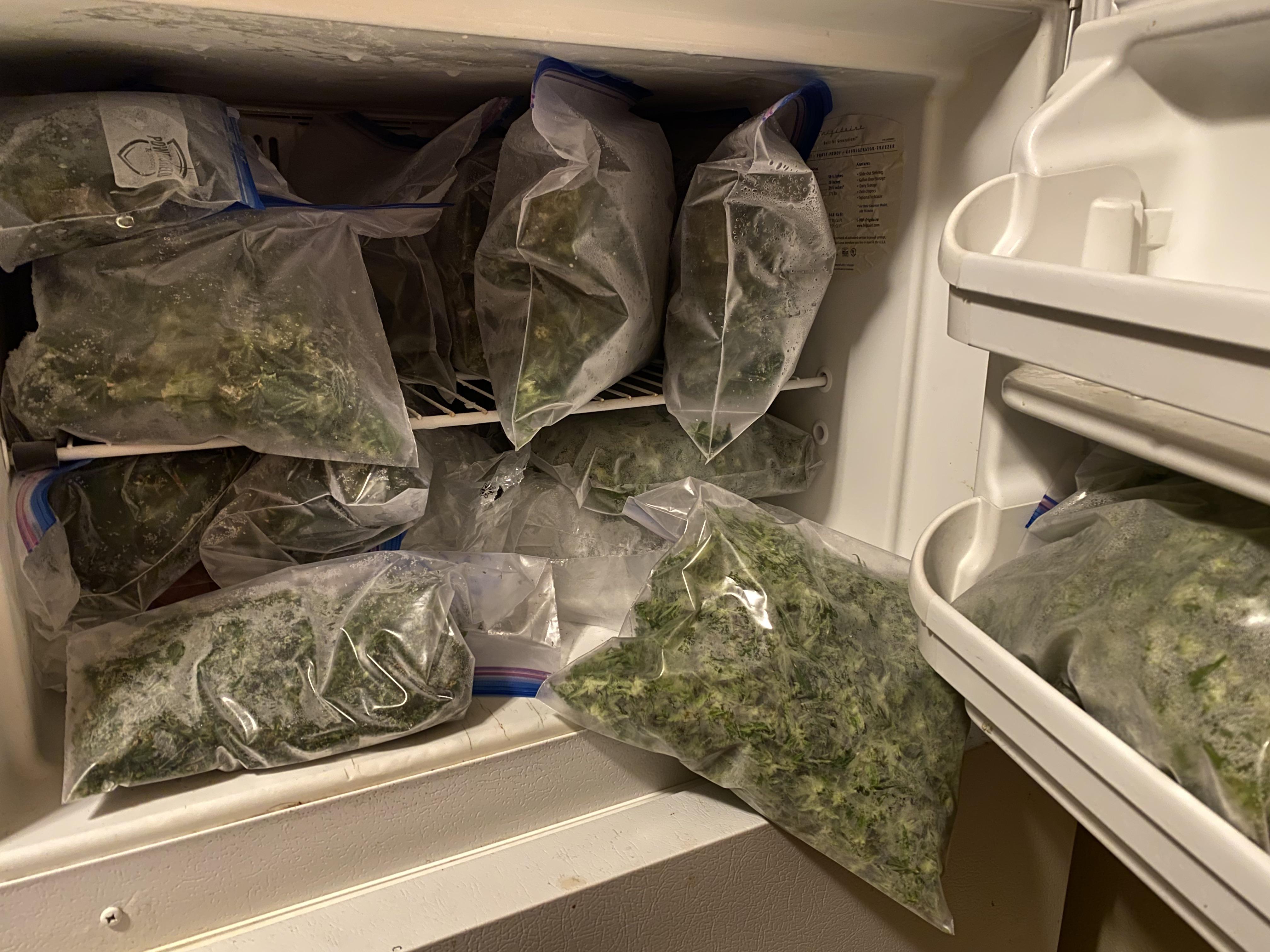
Fresh Frozen is a plant material preparation technique that consists of freezing the freshly harvested plant immediately, without subjecting it to any prior drying or curing process. The goal is to stop enzymatic activity and oxidation from the moment of cutting, preserving the chemical composition of the material in the state closest possible to that immediately after the cut. The living plant already differs slightly from the freshly cut plant —cutting activates enzymatic processes immediately— so Fresh Frozen does not preserve the plant's profile while alive, but rather the one that exists the instant the cold chain begins.
Fresh Frozen is the specific raw material for Live Rosin and high-end Ice-o-lator.
In both cases, the extraction process uses very cold water and mechanical agitation to separate the glandular trichomes from the plant material: the trichomes, being denser, are separated by size difference through filter meshes and collected as extract. The quality of the resulting concentrate depends decisively on how much of the original terpene and cannabinoid profile has been preserved in the starting material, and that is exactly the parameter that Fresh Frozen protects.
Why does traditional drying destroy the terpene profile?
Within the terpene profile of cannabis, not all compounds behave the same during processing. Monoterpenes (C₁₀) —Myrcene, Limonene, Terpinolene, Pinene— have a low molecular weight and high vapor pressure at room temperature. Sesquiterpenes (C₁₅) —Caryophyllene, Humulene, Bisabolol— are heavier and considerably more stable. This structural difference determines what is lost during drying and what survives.
The conventional drying process subjects the material to between seven and fourteen days of exposure to these conditions. During this period, three mechanisms of terpene degradation act simultaneously:
-
Direct evaporation. The most volatile monoterpenes —especially Myrcene, Terpinolene and the alpha and beta forms of Pinene— are passively released into the environment from the surface of the trichomes, without the need for active heat. The vapor pressure of these compounds at 20-25°C is sufficient to cause continuous evaporation. The airflow necessary for homogeneous drying actively accelerates this process: each air renewal carries away a fraction of the aromatic profile that cannot be recovered.
-
Oxidation. In the presence of oxygen, many terpenes not only are lost but transform into different compounds. Limonene, for example, can oxidize into Carvone —a compound with a completely different aromatic profile, associated with mint and cumin rather than citrus— or into peroxide forms that alter the final result even more pronouncedly. The resulting material does not simply have a profile reduced in intensity: it has a qualitatively different profile, with notes that were not present in the original plant.
-
Enzymatic activity. During the first hours and days after cutting, while the plant retains sufficient internal moisture, enzymatic processes inherent to plant metabolism continue to be active. Oxidases directly attack free terpenes, accelerating their oxidative degradation. Glucosidases act on glycosylated terpene precursors —bound forms that the plant uses as reserves— breaking them down before they can contribute to the final profile. This enzymatic degradation occurs even before drying has begun to have a visible effect: the first hours after cutting are the period of greatest relative loss.
This explains why Cured material tends to express more "earthy", "spicy" or "woody" profiles: it is not that those compounds have increased, but that the fresher, more citrusy monoterpenes have decreased, altering the relative balance of the profile.
Cold acts on all three mechanisms simultaneously. Below -18°C, the vapor pressure of monoterpenes drops to the point where their evaporation is practically zero, the rate of oxidation reactions is drastically reduced, and enzymatic activity is halted. Below 0°C, enzymatic inhibition ceases to be linear: reactions do not slow down proportionally, but in many cases are effectively interrupted. The underlying thermodynamic principle —the speed of most chemical reactions is reduced approximately by half for every 10°C decrease, the so-called Q10 factor— operates with quantitative precision in the 0°C to 40°C range; in the subzero range, that model is only a starting point, not a reliable extrapolation. What matters for the process is the practical result: at -18°C, degradation does not slow down. It stops.
The most consistent results from available literature point in the same direction: losses of Myrcene, Terpinolene and alpha-Pinene during a seven-day drying under controlled conditions range between 40% and 60% compared to fresh plant content. Limonene shows greater variability between studies, with documented losses between 25% and 50%. Sesquiterpenes such as Caryophyllene and Humulene are proportionally less affected, with losses generally below 15-20%. Material frozen with an uninterrupted cold chain and processed within four weeks retains more than 90% of the original terpene content; residual losses concentrate in the handling and extraction phases, not in storage.
| Compound | Fresh plant (reference) | Dried material (7 days, controlled conditions) | Fresh Frozen (-20°C, <4 weeks) |
|---|---|---|---|
| Myrcene | 100% | 40–60% | >90% |
| Terpinolene / α-Pinene | 100% | 35–55% | >90% |
| Limonene | 100% | 50–75% | >90% |
| Caryophyllene | 100% | 80–85% | >92% |
| Humulene | 100% | 80–85% | >92% |
| Dried material values correspond to 7 days at 18-21°C with 45-55% RH; they do not include subsequent curing. Data are syntheses of available literature and should be taken as indicative ranges. | |||
Oxidation, color and trichome integrity
The color of a concentrate is not an aesthetic variable. It is a direct indicator of the level of oxidation of the starting material —and only secondarily of the extraction process to which it has been subjected. A dark extract made with impeccable technique from poorly preserved Cured material will say more about the origin than about the operator.
Cannabis glandular trichomes —specifically the capitate-stalked glands with a spherical head, where most cannabinoids and terpenes are concentrated— are physically fragile and chemically reactive structures. Fresh trichomes are translucent under the magnifying glass, and their main content is acidic cannabinoids (THCA, CBDA), free terpenes and a matrix of waxes and lipids that acts as a structural support. All these compounds are susceptible to oxidation, and their reaction with atmospheric oxygen produces specific and measurable chromatic changes.
Crystallized THCA in its pure state is colorless or opaque white. As the material oxidizes —a process that accelerates with heat, light and time— the resin as a whole progressively shifts toward yellow, amber and finally brown. Terpenes contribute to the same progression: many oxidized monoterpenes produce chromophoric compounds that darken the profile even before THCA has degraded significantly. Waxes and lipids follow a similar progression. The color of the final product is, in that sense, the sum of all accumulated prior oxidations in the starting material.
Fresh Frozen affects this structure at three specific points:
- Structural integrity. Cold hardens the glandular heads, which at room temperature have a semi-viscous consistency that makes them susceptible to mechanical deformation. During handling, transport or even trimming, trichomes at room temperature flatten, break or stick together, releasing their content before extraction. Frozen material keeps trichomes rigid and separated, which improves yield and reduces contamination by plant material in the subsequent extraction.
- Chemical state. By stopping oxidation from the moment of cutting, the THCA and terpene content is preserved in its original form: acidic, translucent and chemically stable. This translates directly into the color of the final product. Ice-o-lator and Live Rosin made with well-executed Fresh Frozen tend to present colors ranging from white to pale gold, compared to the darker tones common in extractions with Cured material.
- Wax and lipid content. At freezing temperatures, the waxes present in the plant cuticle and trichome matrix remain solidified. This has a direct effect on ice water extraction: solid waxes do not pass through the filters to the same extent as waxes in fluid or semi-liquid state, resulting in a cleaner extract. When waxes contaminate the final extract, the impact is concrete: they cloud the aromatic profile by masking terpenes, reduce the stability of the concentrate during storage and hinder rosin fusion when heat is applied, producing a grainy texture instead of the clean melt characteristic of a quality Live Rosin.
Which cannabis varieties justify doing Fresh Frozen?
Not all varieties benefit equally from Fresh Frozen. The technique has a decisive impact on the result when the starting material is rich in the compounds the process is designed to preserve: volatile monoterpenes. In varieties with profiles dominated by stable sesquiterpenes —Caryophyllene, Humulene, Bisabolol— the difference between Fresh Frozen and dried material exists, but is less decisive. The additional effort of the process is more clearly justified when the variety expresses compounds that conventional drying selectively destroys.
Limonene is one of the most volatile monoterpenes in the cannabinoid spectrum, with a vapor pressure at room temperature sufficient to cause progressive evaporation during drying. It should be noted that Myrcene is the dominant terpene in most modern cultivars, including many Diesel lines, so the claim that a specific variety has "Limonene dominance" must be verified in its specific analytical profile and not assumed from genealogy. Lines with Lemon OG and Zkittlez heritage are representative of profiles with high Limonene content, although even in these cases composition varies between phenotypes.
A criterion for evaluating whether a specific variety justifies the process: if the aroma of the living plant at the moment of cutting and the aroma of the dried material show notable differences —if the profile flattens or simplifies during drying— that variety is a direct candidate. If the dry material profile faithfully replicates that of the living plant with reasonable fidelity, the gain from Fresh Frozen exists but is marginal.
Within the Ripper Seeds catalogue, varieties such as Kmintz, Kroma or Radical Juice respond to profiles with a high presence of fruity monoterpenes, the type of profile where the difference between Fresh Frozen and dried material is most pronounced.
Harvest point, timing and prior preparation
Trichome maturation criteria
The standard maturation criterion in conventional cultivation guides the harvest toward a variable percentage of amber trichomes. For Fresh Frozen, that criterion does not apply, and it is important to understand why.
The shift to amber color in trichomes is not an unequivocal signal of THCA over-maturation —decarboxylation requires heat to occur significantly— but primarily of active oxidation of terpenes and the resinous matrix. For Fresh Frozen, that distinction is decisive: amber does not indicate that THCA has converted to THC, but that the terpene profile has already begun to degrade.
The goal of Fresh Frozen is maximum preservation of terpene content and THCA in its original acidic form. Both objectives point to the same harvest point: complete maturation of the glandular head before degradation begins.
The reference criterion for Fresh Frozen is milky maturity with maximum turgidity. Under a loupe or microscope (40x-100x), capitate trichomes should present a fully developed, spherical and translucent glandular head with visible milky content; erect stalk without signs of collapse; absence or minimal presence of amber trichomes —ideally below 5-10% of the total—; and the stalk base without darkening or thickening, signs that indicate the onset of senescence.
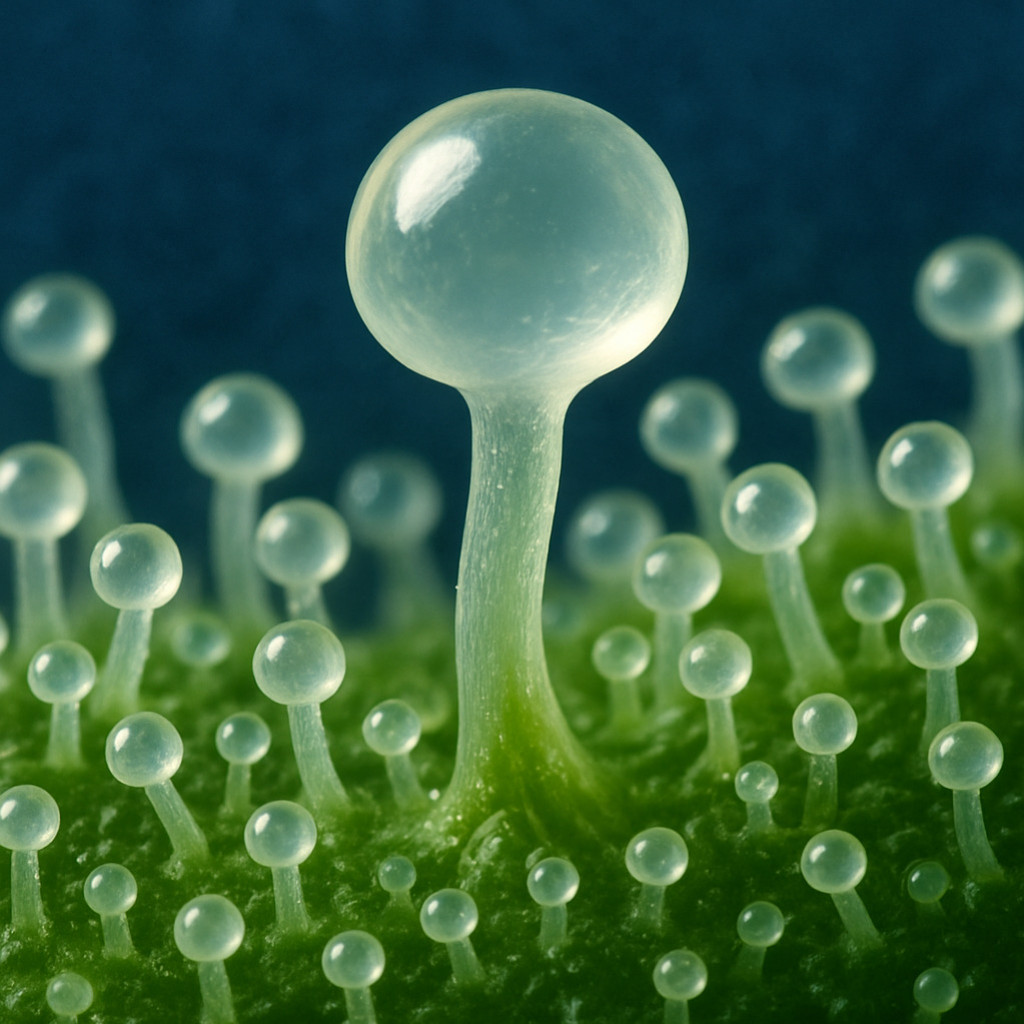
Tout ce qui brille n'est pas forcément puissant. Seuls les trichomes glandulaires pédonculés (avec un "bâton") produisent du THC/CBD. Recherchez des têtes laiteuses et ambrées, pas seulement des paill
In practice, the optimal harvest window for Fresh Frozen is three to seven days earlier than what would be used for direct consumption flower, with variation depending on genetics. Harvesting earlier implies a somewhat lower final weight, but that weight margin is exactly what is exchanged for an intact terpene profile. For those destining the material to extraction, it is an exchange that always comes out favorable.
Cut timing: time of day and prior irrigation
Two timing factors influence the quality of the material at the moment of cutting and neither requires additional investment: only planning.
The first is the time of the cut. The operational criterion is the surface temperature of the flowers at the moment of cutting: the lower the temperature, the lower the vapor pressure of monoterpenes and the lower the passive loss during handling. In cultivation with artificial lighting, this corresponds to the end of the dark period, just before the lights come on, regardless of the light cycle used. In outdoor cultivation, the equivalent is the first hour of the morning. During the night phase, the plant is not subjecting its volatile compounds to the heat of the lights or to photo-oxidation, and the surface temperature of the flowers is lower. It should be noted that specific quantitative evidence for cannabis on differential terpene accumulation depending on time of day is still limited under production conditions. The mechanistic basis is solid —lower surface temperature implies lower vapor pressure and lower passive loss during handling— but precise data for cannabis do not yet allow the difference to be quantified reliably.
The second factor is irrigation prior to harvest. Harvesting with the substrate at a point of moderate water stress —with the last irrigations carried out one or two days before— has two favorable effects for Fresh Frozen: it reduces the content of free water in the tissues, which minimizes the formation of ice crystals during freezing, and can contribute to a higher relative concentration of metabolites in the glands. It should be noted that water stress must be moderate: bringing the plant to severe wilting before harvest can reduce trichome turgidity and facilitate their collapse during trimming, obtaining the opposite effect to what is sought.
The criterion is not time but the state of the substrate: the goal is for it to be at the transition point between field capacity and the onset of mild stress, without visible wilting. In soil this typically corresponds to 48 hours without irrigation; in coco, between 12 and 24 hours are sufficient to reach that point without reaching severe stress. In hydroponic cultivation the parameter does not apply in the same way: the equivalent is slightly reducing the concentration of the nutrient solution in the last watering.
Phases of the Fresh Frozen preparation process
The cold chain does not begin when the material reaches the freezer. It begins at the exact moment of cutting. Any interruption between those two points —however brief— represents a window of degradation that no subsequent process can reverse.
Phase 1: Preparation before cutting. Terpene degradation after cutting is pronounced during the first minutes and hours. Before making the first cut, verify these points:
- The contingency plan is defined. If the process is interrupted for any reason, already-cut material goes into the freezer immediately even if it has not been trimmed. Trimming can be completed later with frozen material; terpenes lost during an unplanned wait cannot be recovered.
- The freezer is at working temperature. Not "almost ready": at stable temperature and with sufficient free space for the planned volume of material.
- Bags are labeled with variety, date and estimated weight. Labeling before —not after— avoids handling already-bagged material at room temperature.
- Trays and work surfaces are pre-chilled. Place them in the freezer at least one hour before the process.
- Nitrile gloves are on. The heat of hands is sufficient to fuse glandular heads in direct contact.
- The work room is at the lowest possible temperature. A room at 26°C is not equivalent to working at 18°C: the urgency of the process increases proportionally with ambient temperature.
Phase 2: Handling and trimming. The time between cutting and the freezer must be the minimum operationally possible. This means working branch by branch —cutting, trimming and bagging before continuing with the next— rather than harvesting the entire plant and trimming afterward. Every minute of exposure to room temperature of already-cut material is an active and irreversible loss.
Phase 3: Initial freezing. Once bagged, material enters the freezer immediately. If the model has a quick-freeze function, it should be activated before starting the harvest. A useful alternative when that function is not available is to first pass the material through a refrigerator at 2-4°C for a brief period before putting it in the freezer: this reduces the initial temperature difference and promotes a more homogeneous thermal drop, minimizing the size of ice crystals formed during freezing. In any case, introducing material in small batches is the most effective measure to maximize the rate of thermal drop.
If the transfer between the cultivation space and the freezer requires transport, the material must travel in portable coolers with dry ice or -20°C gel packs. Conventional ice is not a valid alternative: its surface temperature is around 0°C —insufficient to stop enzymatic activity during transports of any duration— and it also generates liquid moisture on contact with the material. That water, upon refreezing in the destination freezer, forms new ice crystals on the trichomes.
Live trimming: what goes in and what is discarded
The decision about what material to include in the Fresh Frozen process is not secondary. The quality of the final concentrate is directly conditioned by the trichome density of the starting material: introducing plant material with low glandular concentration not only reduces yield, but increases the proportion of chlorophyll, cuticular waxes and plant matter in the extract, affecting the color, profile and cleanliness of the final product.
Priority inclusion material: buds. Complete floral clusters —including smaller ones located on secondary branches— constitute the core of the process.
Conditional inclusion material: sugar leaves. The small leaves that emerge directly from the clusters can be included in the same batch when trichome coverage is clearly visible to the naked eye. In cultivars with standard resin production, their glandular density is notably lower than that of the buds and can drag down the quality of the batch if mixed without criteria. The recommendation is to visually evaluate the resin coverage specifically for each variety before deciding whether to include them with the buds or process them in a separate batch.
Optional inclusion material: quality trim. In cultivars with high trichome production, trim immediately adjacent to the cluster —small leaves with visible glandular coverage— can be included if the goal is to maximize total volume. It is advisable to process it in a separate batch: mixing it with the buds does not elevate the trim result, but rather drags down the bud result.
Discardable material: fan leaves and stems. Large leaves have an insignificant trichome density and a high proportion of chlorophyll and unwanted plant compounds. Their inclusion penalizes the color and cleanliness of the extract without contributing significant yield. The main stem and thick branches are discarded for the same reasons. Discarded material must be physically removed from the work area immediately: leaving it in contact with quality material during trimming can transfer microorganisms to the clean batch.
Trimming requires stainless steel scissors with preserved sharpness and robust construction. The rigid frozen material is harder than fresh material at room temperature, and scissors with fragile springs or light mechanisms break easily when working cold. Scissors should be disinfected with 70% isopropyl alcohol before starting and nitrile gloves must be worn at all times.
Risk factors in Fresh Frozen preparation
Hygiene and risk of microbial contamination
Microbial contamination is the least visible risk of the process and one of the most decisive for the safety of the final product. Fresh plant material has high water activity: although cold inhibits the reproduction of most pathogens, it does not eliminate them. Any interruption of the cold chain that allows the material to recover temperature above 4°C for an extended period reactivates microbial activity on a highly favorable substrate.
Botrytis cinerea. Gray mold is the most common pathogen in cannabis cultivation. Its spores can be present in the material at the time of harvest without visible external signs. If that material is exposed to room temperature for longer than recommended before freezing, the spores find conditions to activate. Processing material with active fungal contamination concentrates pathogens in the final extract.
Cross-contamination from surfaces and tools. Work surfaces, scissors and containers that have not been adequately disinfected can introduce pathogens into the material during trimming. The minimum protocol requires cleaning all surfaces with 70% isopropyl alcohol before the process and working with clean gloves at all times.
Visual inspection of the material before packaging is an essential step. The signs to look for are concrete: gray or white powdery-looking spots on the surface of the flowers, areas of soft or moist texture inside the clusters, and any localized color change toward dark brown or black. Any flower showing these indicators must be discarded from the Fresh Frozen batch before bagging.
The most relevant pathogens in this contamination pathway are molds of the genus Aspergillus and bacteria of the genus Pseudomonas. Both are commonly present in cultivation environments and on surfaces that have not been disinfected, and both are capable of concentrating in the final extract during water extraction, since Ice-o-lator filters do not retain microorganisms. Disinfection with 70% isopropyl alcohol requires a minimum contact time of thirty seconds before drying; applying it and drying immediately is not disinfection. The protocol must be explicitly extended to scissors, trays, weighing containers and scales, not just the main work surface.
Packaging: density, air and bag type
Packaging is the stage most frequently executed incorrectly, even when the rest of the process has been done well. Errors in this phase can compromise the physical integrity of trichomes during freezing and make subsequent extraction more difficult.
Fill density. The most common error is compressing the material excessively to take advantage of bag volume. Fresh plant material has a three-dimensional structure that, under pressure, collapses and crushes trichomes together. During freezing, that crushing becomes fixed: the clusters end up fused into a compact mass with damaged trichomes before extraction has even begun. The correct density is one where the material occupies the volume of the bag with contact between pieces but without active pressure. A practical reference: if closing the bag requires force to expel material, it is too full.
Air management. Oxygen is an oxidizing agent that should be minimized, but extracting all air through vacuum sealing on fresh material exerts sufficient mechanical pressure to damage trichomes. The most balanced solution is to manually expel excess air —pressing the bag gently before sealing— without resorting to active vacuum. Full vacuum sealing is reserved for already-frozen and rigid material: in that state, trichomes hardened by cold withstand the pressure without deforming, and sealing can be done with the bag still inside the freezer or working quickly to avoid breaking the cold chain.
Bag type. For storage up to four weeks, high-density polyethylene freezer bags with thermal sealing are functionally acceptable. For longer periods, the correct option is Mylar bags, laminated with aluminum, which block practically all gas exchange and also protect against light, which acts as a cannabinoid degradation agent. The difference between levels is noticeable especially from the first month of storage onward.
Labeling each bag with the variety, harvest date and approximate weight is a basic operational step that facilitates inventory control and allows tracking of quality evolution as a function of storage time.
Fresh Frozen storage temperatures
Temperature ranges
Storage temperature is not a binary factor —frozen or not frozen— but a variable with quantifiable consequences on the rate of material degradation over time.
-18°C to -24°C: domestic freezers. This is the most accessible temperature and the most commonly used in artisanal production. Most domestic freezers reach between -18°C and -24°C depending on the model and load. At these temperatures, enzymatic activity is effectively halted and terpene evaporation is practically zero. For material to be processed within two to four weeks, this temperature is sufficient and results are consistently good when the rest of the protocol is executed correctly. Its main limitation is thermal stability: domestic freezers are subject to automatic defrost cycles that can temporarily raise the interior temperature, introducing freeze-thaw cycles that progressively damage trichomes. If the model allows, disabling that function is the first setting to adjust. A probe thermometer with min/max recording allows detection of when those cycles occur and how frequently.
Technical-use chest freezers: between -30°C and -45°C. Equipment designed for technical or industrial use —distinct from higher-power domestic freezers, which rarely exceed -26°C stably— maintains minimal interior thermal oscillation and does not incorporate automatic defrost cycles. The practical difference compared to a domestic freezer manifests primarily in prolonged storage: material maintained at these temperatures preserves the terpene profile notably more faithfully for three to six months. For producers with seasonal harvests who need to preserve material for months, the investment has a clear technical justification. For short production cycles of two to three weeks, the difference is marginal.
-80°C: ultra-freezing. This is the standard for biological tissue preservation in scientific research. At -80°C, chemical degradation is practically zero over horizons of up to twelve months or more, and the structural integrity of trichomes is optimally preserved. The cost of the equipment places them out of reach of artisanal production, but they are the reference in high-volume professional production operations.
The choice of temperature should be made based on the actual production cycle, not a theoretical ideal. A well-executed protocol at -18°C produces superior results to a careless protocol at lower temperatures.
Usage window and degradation signals
Fresh Frozen is not indefinitely stable. Even under optimal conditions, the material undergoes progressive degradation that limits its effective usage window. The factors that determine this window are four: storage temperature, sealing quality, frequency of container opening and the temperature at which those openings occur.
At -18°C/-24°C with standard sealing, the material maintains a high-quality terpene profile for two to four weeks. Between the fourth and eighth week, degradation is perceptible in analysis but not necessarily decisive for extract quality. After two months, accumulated losses begin to clearly reflect in the final product. At technical temperatures of -30°C to -45°C with good sealing, the window extends to three to six months. At -80°C, the horizon exceeds twelve months without significant quality losses in well-packaged materials.
Managing openings. Each time a bag of frozen material is opened at room temperature, two simultaneous phenomena occur: condensation of moisture from the air onto the cold material and exposure to atmospheric oxygen. Both are degradation vectors. In a rigorous protocol, material that is not going to be processed immediately is not opened. If it is necessary to extract a part of the batch, the operation must be carried out in the shortest possible time and resealing the remainder immediately.
Degradation signals. Material that has exceeded its optimal usage window shows observable indicators: progressive darkening of trichomes visible through the bag, loss of the characteristic rigidity of well-frozen material and —once thawed— an aromatic profile that is flatter and less expressive than expected for the variety.
When one or more of these signals appear, the correct response is to process the material as soon as possible. No more aggressive extraction can reverse the oxidation already produced: what these signals establish is a quality ceiling that the resulting concentrate cannot exceed.
Materials needed to make Fresh Frozen
To execute the process in productions of one to four plants, the necessary equipment is the following:
Chest freezer with quick-freeze function: €200-350. A model with a rapid ultra-freeze function makes a real difference: it reduces thermal drop time and minimizes the size of ice crystals formed during initial freezing. The minimum recommended capacity is 100 liters for one to four plants. Chest models are preferable to upright ones due to their greater thermal stability when opening the lid. If the model allows, disabling the automatic defrost cycle is the first configuration to make.
Precision stainless steel scissors: €20-60. One main pair and one backup is the minimum configuration. They must be of robust construction: the rigid frozen material is harder than fresh material at room temperature and scissors with fragile mechanisms break when working cold.
High-density freezer bags or Mylar bags: €15-40 per batch. For storage up to four weeks, high-density polyethylene bags with thermal sealing are sufficient. For longer cycles, Mylar bags are the correct option.
Probe thermometer with min/max recording: €30-60. Essential for monitoring the actual temperature inside the freezer. Basic models below €30 frequently lack reliable recording function, which is the relevant data for detecting automatic defrost cycles.
Nitrile gloves, stainless steel trays, isopropyl alcohol: €20-40. Stainless steel trays are pre-chilled in the freezer before the process and keep the material isolated from the heat of the work surface.
Approximate total investment: €285-550, excluding consumable materials per batch.
Where it makes sense to invest first
The freezer is the only line item where equipment quality cannot be compensated by protocol. The work room temperature is the second priority: reducing the working environment from 22°C to 14°C during trimming has a direct impact on terpene retention. The bag type is only decisive when storage exceeds four weeks.
For those working with one to four plants per cycle and processing material within two to three weeks, a well-chosen domestic chest freezer and a rigorous protocol produce results that do not justify the jump in investment to the next level. Investment in more sophisticated equipment has real returns when the storage horizon, material value or production volume require it —in that order.
Handling Fresh Frozen before extraction
Before using Fresh Frozen for extraction, there is an intermediate step that requires attention: the transition from the freezer to the ice water bath.
Fresh Frozen material destined for Ice-o-lator or Live Rosin is not thawed before extraction. It is worked directly frozen. The standard protocol consists of introducing the frozen material into the filter bags and submerging them in water at 0-4°C with ice, allowing the material to minimally hydrate in the bath itself before initiating agitation. Working with the material still rigid maximizes the physical separation of the frozen trichomes from the plant tissue and reduces contamination by chlorophyll and plant material.
If for any reason the material must be opened or handled before extraction, the operation must be performed with the material still cold, in the shortest possible time and in a cool environment. The condensation of moisture on the material when removed from the freezer is immediate at room temperature: that surface water, if allowed to penetrate the material and refreeze, damages trichomes through the formation of new ice crystals. Material that has partially thawed and been refrozen has notably lower yield and quality than material that has maintained the cold chain intact.