
All the THC and CBD in a plant started out as CBG. The difference is that most varieties convert almost all of that CBG into other cannabinoids before harvest time. That's why knowing when to cut is the one variable a grower can control to get CBG from the varieties they already have.
What CBG is and how it forms in the plant
Cannabigerol (CBG) is a non-psychotropic cannabinoid. In the mature plant its concentration is low (under 1% in standard varieties) because the plant converts almost all of it into other cannabinoids as it grows.
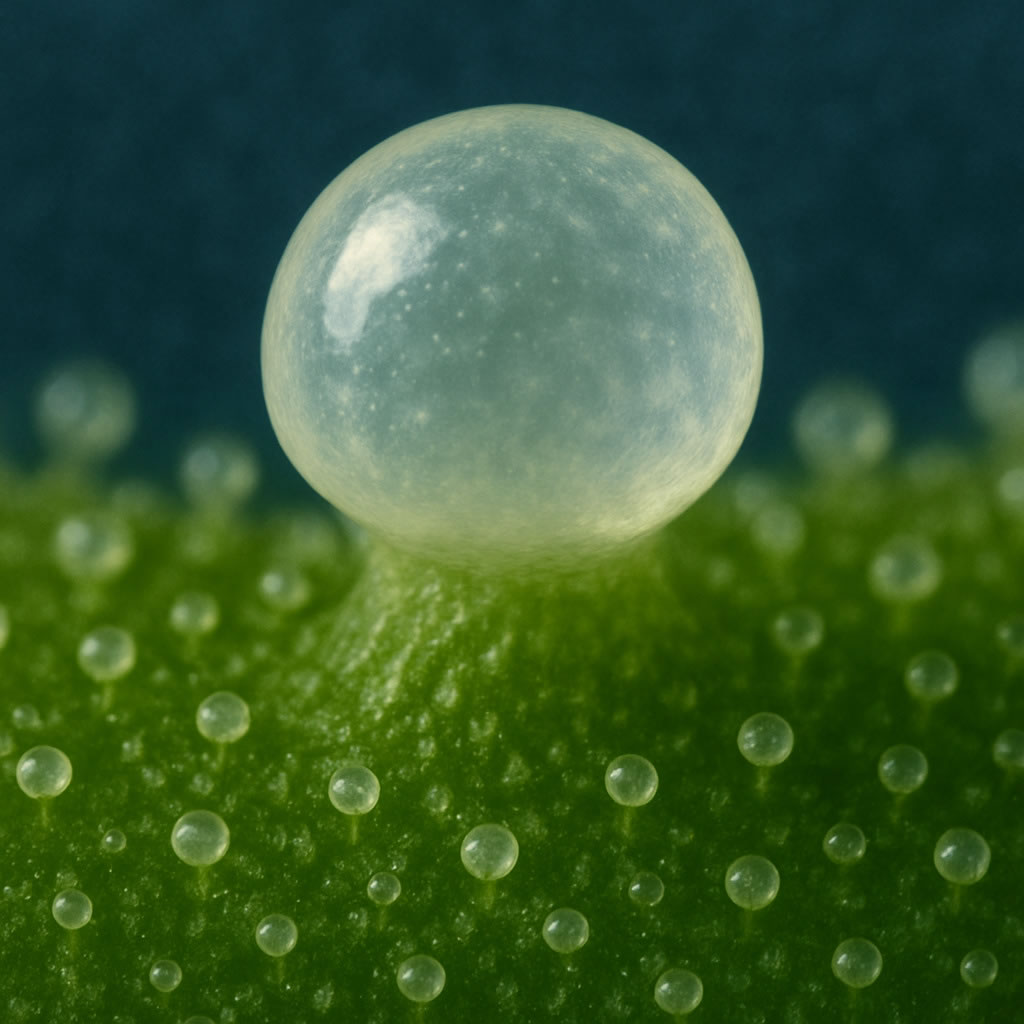
Synthesis begins in the glandular heads of the trichomes. There, the plant combines olivetolic acid with geranyl pyrophosphate to produce CBGA (cannabigerolic acid). CBGA is the "mother molecule": from it, three specific enzymes (THCA synthase, CBDA synthase, and CBCA synthase) convert that CBGA into THCA, CBDA, or CBCA. Whatever the enzymes don't manage to convert is what remains, after decarboxylation, as residual CBG.
Technical note: If the flowering cycle runs its full course, the enzymes will have converted almost all the CBGA into THC, CBD, and other cannabinoids, the same pattern that's been documented mainly in hemp varieties and that we're applying here to photoperiod THC varieties. The window for capturing CBG closes before the plant reaches maturity.
Properties, benefits, and effects of CBG
This article is informational and educational in nature. It does not constitute medical advice and does not replace consultation with a healthcare professional.
Unlike CBD, which acts indirectly, CBG binds directly to the CB1 and CB2 receptors of the endocannabinoid system, as well as interacting with serotonin receptors. As a cannabinoid with no psychotropic effects, this interaction translates into a series of specific effects:
- Stress and anxiety reduction: Studies suggest CBG acts on the nervous system mechanisms that regulate the stress response, reducing anxiety without producing intoxication or drowsiness. The first double-blind clinical trial in humans also recorded an improvement in verbal memory compared to placebo. The authors flag this result with caution, since it's an exploratory finding that needs replication, but it points to CBG not impairing cognitive function.
- Digestive system action: CBG shows affinity for receptors in the gastrointestinal tract. Studies in animal models of colitis document that it reduces the production of compounds that trigger inflammation and mitigates damage to colon tissue. The data come from preclinical research and haven't yet moved into human clinical trials. More recent studies also point to an effect on the gut microbiota, with changes in bacterial composition that could be relevant in contexts of chronic digestive inflammation.
- Antimicrobial properties (MRSA): In vitro studies suggest CBG can weaken the cell membrane of certain bacteria that are highly resistant to conventional antibiotics, such as methicillin-resistant Staphylococcus aureus (MRSA). Research points to the compound blocking the formation of bacterial biofilms and helping inhibit their growth. Current research is focused on evaluating and refining its cellular toxicity profile before considering clinical applications.
- Neuroprotective potential: Studies in cerebral cortex cells suggest CBG could reduce oxidative stress and mitigate the inflammatory response in astrocytes, the cells that support and protect neurons. Although the data come from basic, in vitro research, the results are consistent in showing its ability to preserve cell viability against oxidative damage.
- Skin care and balance: Unlike other cannabinoids that reduce sebum production, CBG increases it under baseline conditions, giving it potential for the care of dry, flaky skin. In human sebaceous cells it also shows anti-inflammatory activity with results relevant to conditions like atopic dermatitis, and it points to preserving the balance of skin microbiota without harming the skin's beneficial bacteria.
Given this effect profile, CBG has gained interest among users looking for non-psychotropic cannabinoids with specific applications. The problem for the home grower is access: most commercial varieties convert almost all their CBGA before harvest, and genetics bred specifically for high CBG are scarce and often sacrifice aroma profile and resin production.
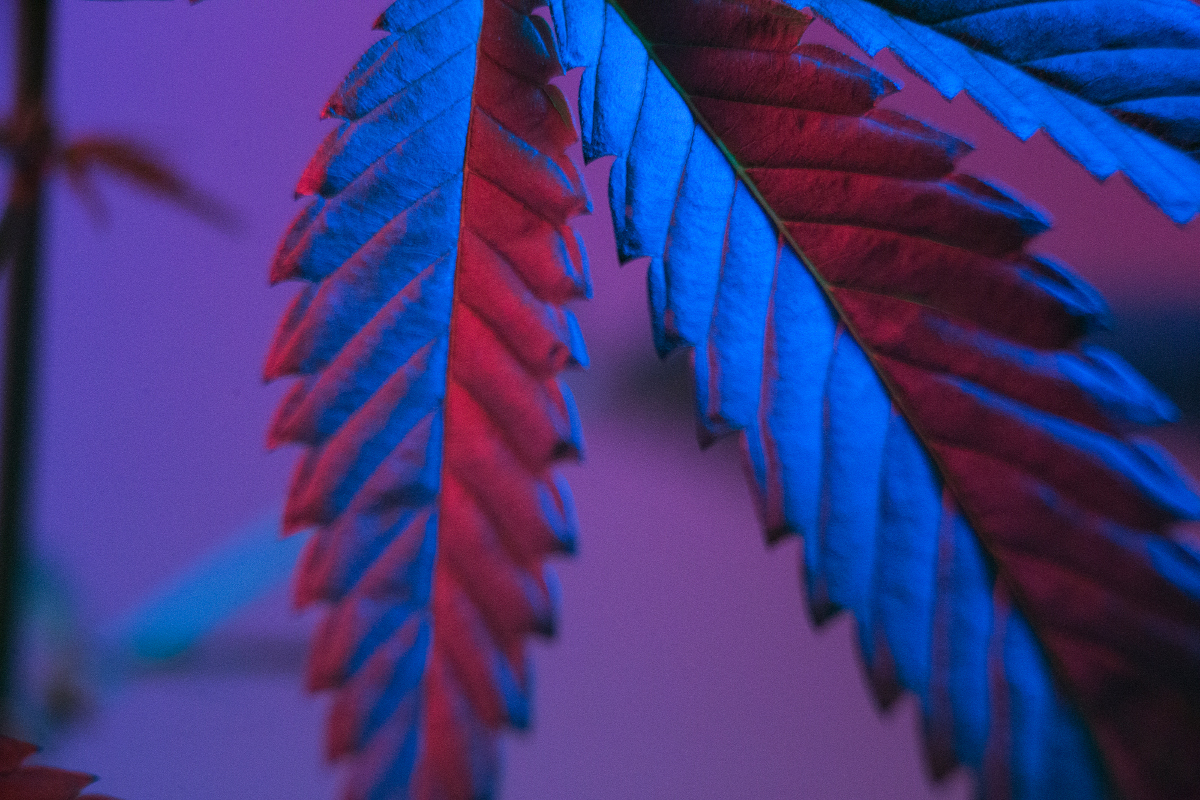
The most accessible alternative doesn't require CBG-specialized genetics, but it does require a variety capable of producing trichomes from the earliest weeks of the cycle.
The fractional harvest method for getting CBG
An accessible option for home growers to get CBG from their plants isn't switching genetics, but applying fractional harvesting: intercepting part of the plants during their premature cutting window, right when CBG is at its peak, before the enzymes complete the conversion into THC.
Which parts of the plant should you harvest early?
The goal isn't to sacrifice yield, but to diversify it. The ideal approach is selective pruning of the lower branches and secondary buds, which are less developed than the main colas. Those flowers are best suited for early cutting because they're worth less in the main harvest anyway, while the tops and upper branches are left to mature to their optimal THC point.
CBG percentage in the early cut
Early-cutting a standard variety won't get you 15% CBG or dense, tight buds. Dry weight yield is low, and the actual CBG percentage runs between 1% and 2% by dry weight.
So why do it? Because in a mature harvest, that percentage drops to almost zero. The real advantage isn't in cutting the whole plant, but in making use of the secondary buds and lower branches, the ones that would be left underdeveloped in the shade anyway, to get a daytime product that's clean and focused, without sacrificing the main THC colas.
When exactly should you cut?
In varieties with a standard 8-week flowering cycle, the window usually opens around week 6, though the exact timing varies by genetics. The reliable indicator isn't days but trichomes. In our own grows, the sweet spot tends to be when, under a loupe, 80% of the trichomes are still fully clear or crystalline, with only about 20% starting to turn milky. If amber trichomes start showing up, the CBG window has closed.
Drying and curing CBG material
When harvesting premature buds, the plant material contains much more water and chlorophyll than mature flower, and its terpenes are highly volatile.
- Slow, cool drying: It's best to dry at a controlled temperature of between 15°C and 20°C, with 60% humidity. Since the tissue is more delicate, rushing the drying process will leave the flowers smelling irreversibly like dried grass.
- Short cure: CBG-rich material doesn't need months-long curing. After 10 to 14 days of drying, move it into glass jars. A 2- to 3-week cure is enough to stabilize it, since the goal is to preserve the freshest, most herbal terpenes (like pinene and limonene) before they oxidize.
What to expect from the final product
- Aroma and yield: Dry weight yield from this early cut will be lower, with a lighter, less dense bud. The aroma will be noticeably fresher, sharper, and more herbal than the same variety harvested mature.
- Effect: Early-cut material offers a clean, focused experience. Physical heaviness or intense relaxation is significantly reduced, since there's barely any mature THC in those lower flowers.
How to blend the harvests to shape the experience
This method ends the season with two distinct products from the same seed. These ratios are a starting point for building your own blends, adjusting proportions to your tolerance and what you're after each time.
- 1:1 ratio (starting point for toning down the psychotropic intensity): Mix equal parts early CBG flower with mature THC flower. This blend dilutes the final THC concentration, giving a more functional result for daytime use.
- 2:1 ratio (starting point for shaping the effect): Combine two parts mature THC flower with one part of your early CBG stash. The CBG presence tempers the mature THC, with less physical heaviness at the tail end of the effect.
How to choose the best varieties for early cutting
The key to making this protocol work lies in flowering speed and the capacity to produce trichomes from the earliest weeks of the cycle. Plants that are slow to "resin up" won't leave you enough to work with by week 6. You need varieties with high resin production and terpene profiles that express early in the cycle.
None of these varieties is a genetic specialized in CBG. What makes them suited to this method is their ability to produce loaded trichomes from the earliest weeks, which is exactly what you need to intercept CBGA before the enzymes convert it.
1. Zombie Kush (Bubba Kush x Lavender x Amnesia)
Why it works for early cutting: It's one of Ripper Seeds' fastest, most trichome-dense varieties. By week 6 the lower flowers are usually already heavily loaded with glands, ideal for intercepting CBG before it converts.
Aroma at early cut: Fresh, floral, earthy profile with notes of pine and lavender, perfect for boosting CBG's clean, cerebral effect.
Recommended use: Cut the lower branches early and let the upper ones mature. The resulting blend combines the best of a focused effect (CBG) with the Zombie's classic indica relaxation.
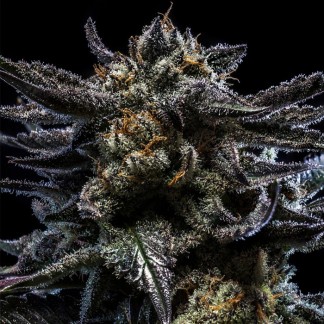
2. KMintZ (Zkittlez x Kush Mintz)
Why it works for early cutting: Its Zkittlez x Kush Mintz heritage gives it a very early burst of glandular trichomes. Even though the buds aren't fat yet at week 6-7, resin density is excellent.
Aroma at early cut: Citrusy, minty, slightly sweet notes that haven't fully matured yet. They pair especially well with CBG's mental clarity.
Recommended use: Perfect for growers after a more modern, aromatic profile in their daytime blends.
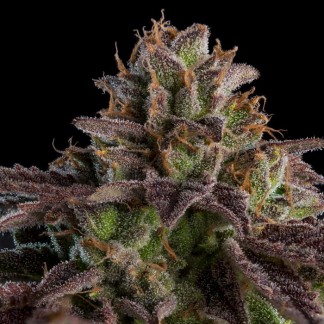
3. Washing Machine (UK Cheese x Bubba Kush)
Why it works for early cutting: Known as a "resin machine," it starts coating itself in trichomes very early on. By week 6 it already offers a good amount of glands in the lower zones.
Aroma at early cut: Fresh, herbal, slightly cheesy terpenes that stay clean, without the heaviness it takes on once fully mature.
Recommended use: Ideal for toning down the sedative power this variety has when harvested at full term. The early cut brings lightness and focus.
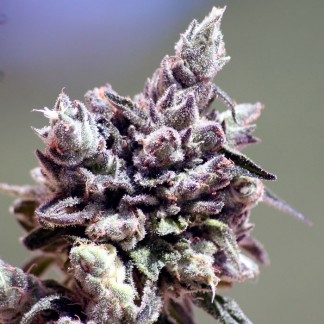
CBG isn't a new or unknown cannabinoid. It's been in the scientific literature for decades, with a well-documented mechanism of action. What's changed is our understanding of how to get it without relying on specific genetics or industrial extracts.
Fractional harvesting isn't a complex technique. It's about applying what you already know about trichomes and ripening to a different goal. The result is a second product with its own profile, from the same plant and the same seed, that's worth exploring in your next grow.
Sources
- Anxiety and stress: Cuttler et al. (2024) — Acute effects of cannabigerol on anxiety, stress, and mood: a double-blind, placebo-controlled, crossover, field trial. Scientific Reports.
- Digestive system and bowel inflammation:
- Borrelli et al. (2013) — Beneficial effect of the non-psychotropic plant cannabinoid cannabigerol on experimental inflammatory bowel disease. Biochemical Pharmacology.
- Anderson et al. (2024) — High Cannabigerol Hemp Extract Moderates Colitis and Modulates the Microbiome in an Inflammatory Bowel Disease Model. Journal of Pharmacology and Experimental Therapeutics.
- Sztolsztener et al. (2024) — Cannabigerol as an anti-inflammatory agent altering the level of arachidonic acid derivatives in the colon tissue of rats subjected to a high-fat high-sucrose diet. Biomedicine & Pharmacotherapy.
- Antibacterial activity (MRSA): Farha et al. (2020) — Uncovering the Hidden Antibiotic Potential of Cannabis. ACS Infectious Diseases.
- Neuroprotective potential: Di Giacomo et al. (2020) — Antioxidant and Neuroprotective Effects Induced by Cannabidiol and Cannabigerol in Rat CTX-TNA2 Astrocytes and Isolated Cortexes. Antioxidants.
- Skin care:
- Kwiecień & Kowalczuk (2023) — Therapeutic Potential of Minor Cannabinoids in Dermatological Diseases. Molecules.
- Oláh et al. (2016) — Differential effectiveness of selected non-psychotropic phytocannabinoids on human sebocyte functions implicates their introduction in dry/seborrhoeic skin and acne treatment. Experimental Dermatology.
- Luz-Veiga et al. (2023) — Cannabidiol and Cannabigerol Exert Antimicrobial Activity without Compromising Skin Microbiota. International Journal of Molecular Sciences.