
The Vapor Pressure Deficit (VPD) represents one of the most critical yet frequently underestimated parameters in professional cannabis cultivation. This environmental factor determines the success or failure of a harvest, directly influencing growth, final quality, and plant yield. Mastering VPD means controlling the physiological heart of your marijuana plants.
What is VPD and why does it revolutionize cannabis cultivation?
VPD (Vapor Pressure Deficit) constitutes a scientific measurement that integrates three fundamental environmental elements: air temperature, relative humidity, and vapor pressure that exists both inside and outside cannabis leaves. This mathematical relationship represents the driving force that controls the entire physiology of the plant.
The importance of VPD lies in its direct control over transpiration rate, determining with what intensity and efficiency water evaporates from inside the leaves to the surrounding atmosphere. This evaporation drives multiple vital processes:
- Water and nutrient absorption by roots through transpiration suction
- Regulation of photosynthetic capacity and energy production
- Control of vegetative growth rate and structural development
- Optimization of production of flowers, terpenes, and cannabinoids
- Prevention of fungal problems and abiotic stress
Research has shown that a cannabis plant cultivated under optimal VPD conditions can increase its yield by up to 30% compared to crops where this parameter is ignored. This increase is due to comprehensive optimization of metabolism that results in denser flowers, richer terpene profiles, and higher concentration of active compounds.
VPD Ranges: interpret your plants' signals
| VPD (kPa) | Environmental Condition | Effect on Cannabis | Visible Symptoms |
|---|---|---|---|
| < 0.6 | Saturated air | Deficient transpiration | Slow growth, weak stems, fungal risk |
| 0.6-0.8 | High humidity | Reduced transpiration | Long internodes, pale green color |
| 0.8-1.6 | Optimal range | Controlled transpiration | Vigorous growth, turgid leaves |
| 1.6-1.8 | Dry air | Accelerated transpiration | Curved leaves, burnt edges |
| > 1.8 | Extreme conditions | Severe water stress | Wilting, stomatal closure, necrosis |
The optimal range, situated between 0.8 and 1.6 kPa, represents the perfect balance where cannabis plants express their maximum potential. Under these conditions, transpiration remains controlled but active, allowing a constant flow of sap that efficiently transports water and nutrients from roots to the youngest leaves.

Scientific foundation of VPD
The water transport system functions like a network of microscopic pipes that connects roots with each leaf through the xylem, operating under the tension-cohesion principle where water evaporation in leaves generates suction that pulls more water from the roots.
When VPD is at very low levels, this suction mechanism weakens considerably. Stomata remain open but the insufficient pressure gradient results in reduced sap flow. This situation generates a paradox: although conditions seem favorable with high humidity, the plant cannot efficiently absorb calcium, magnesium, and other micronutrients that depend exclusively on transpiration flow for their transport.
When VPD reaches excessive levels, the plant activates its survival mechanisms by closing stomata to conserve water. This defensive closure interrupts not only water loss but also the gas exchange necessary for photosynthesis, causing a metabolic collapse that can manifest even when the substrate maintains adequate moisture levels.
The Athena philosophy: VPD as pillar of professional nutrition
Experts have revolutionized the understanding of VPD in commercial cannabis cultivation, establishing that this parameter represents "the only environmental factor that directly connects temperature, humidity, and nutrient absorption". Their research has shown that many apparent nutritional deficiencies are not due to lack of elements in the substrate, but to poor mobilization caused by poorly managed VPD.
The Athena methodology establishes that a VPD below 0.8 kPa drastically reduces suction pressure in the xylem, especially limiting calcium and magnesium absorption. At the opposite extreme, a VPD above 1.6 kPa causes excessive transpiration that can result in salt accumulation in foliar tissues. Athena's central recommendation consists of adjusting VPD in coordination with electrical conductivity (EC) and irrigation pH.
VPD Calculation
Saturation vapor pressure is obtained using Antoine's formula, which considers temperature as the main variable.
To illustrate with a practical example: an environment at 26°C with 60% relative humidity has a saturation vapor pressure of 3.36 kPa, resulting in a VPD of 1.34 kPa, perfectly within the optimal range.
Modern technology has simplified these calculations through specialized mobile applications such as Pulse Grow, VPD Buddy, and Cannabis VPD Calculator, which provide instant readings and alerts. Professional controllers like TrolMaster Hydro-X and AC Infinity Controller completely automate climate control based on predefined VPD parameters.
VPD by cultivation stages: the definitive guide
| Cultivation Phase | Temperature | Relative Humidity | Target VPD | Typical Duration |
|---|---|---|---|---|
| Cuttings/Clones | 22-24°C | 80-90% | 0.4-0.7 kPa | 7-14 days |
| Seedlings | 23-25°C | 70-80% | 0.6-0.9 kPa | 14-21 days |
| Early Vegetative | 24-26°C | 65-75% | 0.8-1.1 kPa | 2-4 weeks |
| Late Vegetative | 26-28°C | 60-70% | 1.0-1.3 kPa | 2-6 weeks |
| Pre-flowering | 25-27°C | 55-65% | 1.1-1.4 kPa | 7-10 days |
| Early Flowering | 24-26°C | 50-60% | 1.2-1.5 kPa | 2-3 weeks |
| Mid Flowering | 24-26°C | 45-55% | 1.3-1.6 kPa | 2-4 weeks |
| Late Flowering | 22-24°C | 35-45% | 1.4-1.7 kPa | 1-2 weeks |
Successful cultivation requires constantly adjusting VPD according to the development stage. During cuttings and clones, plants lack a developed root system, requiring very low VPD (0.4-0.7 kPa). Seedlings thrive with slightly higher values (0.6-0.9 kPa), while the vegetative phase allows progressive increases up to 1.0-1.3 kPa.
The transition to flowering requires careful adjustments to promote flower formation while preventing fungal development. The progression from 1.2-1.5 kPa in early flowering to 1.4-1.7 kPa in the final weeks not only optimizes production but also concentrates terpenes and cannabinoids through controlled water stress.
Climate control technology
Effective VPD control requires a deep understanding of the interaction between temperature, humidity, and air circulation. During the vegetative phase, the main challenge consists of maintaining sufficiently high humidity levels while providing the necessary temperature. High-capacity ultrasonic humidifiers are combined with ventilation systems that uniformly distribute humidity without creating condensation zones.
Lighting selection significantly impacts VPD control. Modern LED systems offer advantages by producing less radiant heat, allowing plants to be kept closer without generating thermal stress.
During flowering, the priority shifts toward humidity reduction to prevent fungal problems. Dehumidifiers with continuous drainage become critical, especially considering that plants transpire more intensely during the illuminated period.
⚠️ Attention: Nighttime control presents unique challenges, particularly the risk of condensation when temperature drops abruptly when lights turn off. Many professional growers maintain minimum continuous ventilation or use gentle heaters to avoid abrupt thermal drops.
The revolution of intelligent controllers
Recommended tools for VPD control
Sensors and Monitors:
- Govee H5179: WiFi, mobile app, automatic alerts (€25-35)
- SensorPush HT1: Bluetooth, data history, high precision (€45-60)
- TrolMaster WCS-1: Professional sensor for integrated systems (€80-120)
Automatic Controllers:
- AC Infinity Controller 69: Intelligent ventilation control (€150-200)
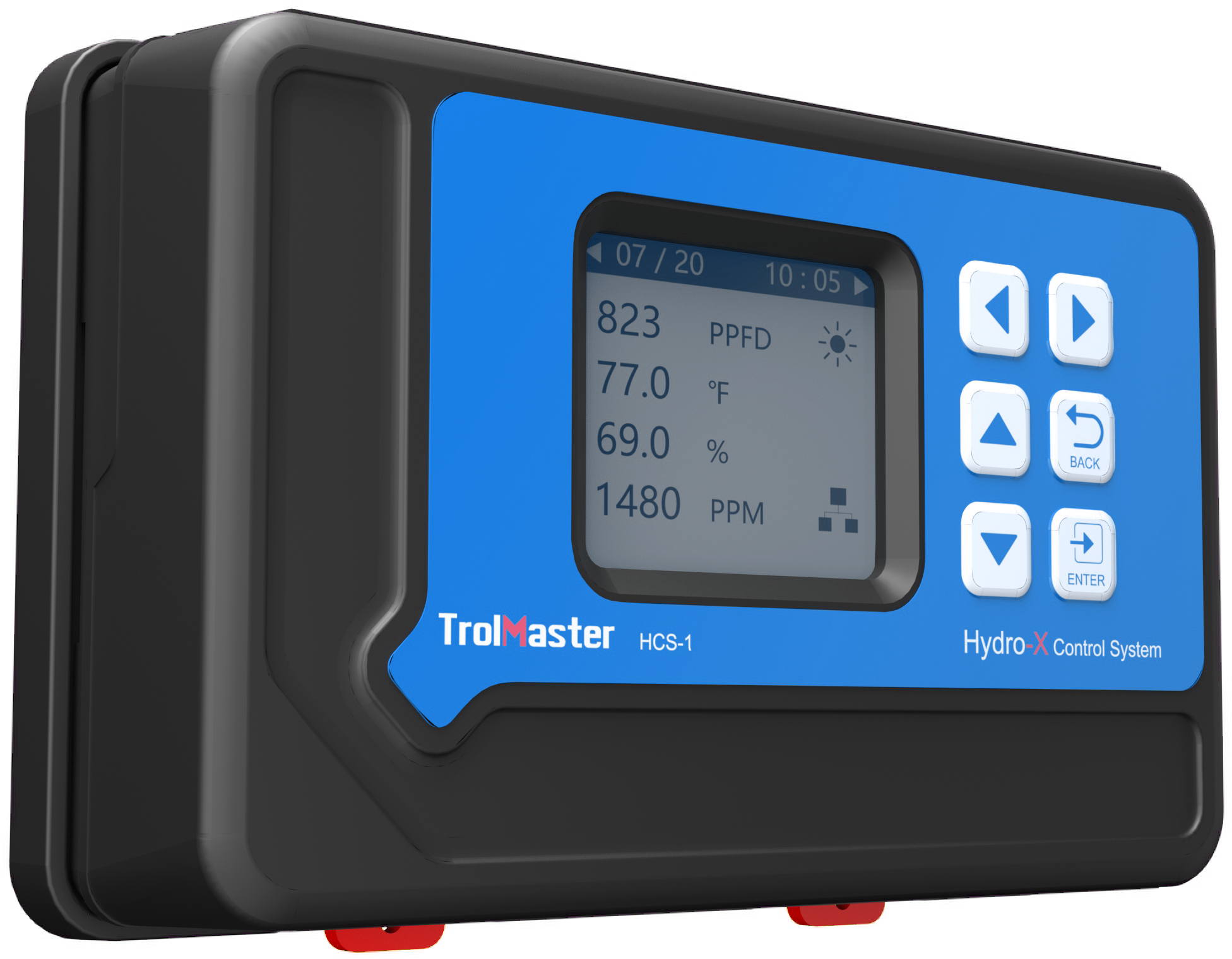
- TrolMaster Hydro-X: Complete climate system (€400-600)
- Growlink: Professional modular platform (€800-1500)
Climate Control Equipment:
- Humidifiers: LEVOIT Dual 100, Venta LW25
- Dehumidifiers: Frigidaire FFAP5033W1, hOmeLabs 4500 Sq Ft
- Ventilation: AC Infinity Cloudline, S&P Silent series
VPD and nutritional optimization
The relationship between VPD and nutrition goes beyond simple element transport. Each nutrient presents specific mobility characteristics that are affected differently by VPD conditions.
Nitrogen, being highly mobile, is less affected by moderate VPD fluctuations, but extreme conditions can alter its distribution. Phosphorus presents intermediate mobility that makes it especially sensitive during flowering, while potassium, crucial for water regulation and terpene synthesis, shows particular dependence on VPD by directly participating in the stomatal opening and closing mechanism.
Calcium: the most VPD-dependent nutrient
Among all nutrients, calcium deserves special attention for its almost exclusive dependence on transpiration flow for transport. Unlike other elements that can move through the phloem, calcium travels only through the xylem, which means that its distribution depends completely on the transpiration rate controlled by VPD.
This dependence explains why calcium deficiencies are so common when VPD is not properly controlled. Symptoms include apical necrosis in young leaves, brown spots, and in severe cases, structural collapse of tissues that require calcium to form resistant cell walls.
VPD in practical cases
A commercial grower in Colorado faced slow growth during vegetative despite using proven genetics and advanced nutritional programs. Diagnosis revealed an average VPD of 0.4 kPa caused by oversized humidifiers and insufficient ventilation. The solution involved a gradual temperature adjustment from 22°C to 26°C while proportionally reducing humidification to achieve a VPD of 1.1 kPa. Results were dramatic: vegetative time was reduced from 6 to 4 weeks, and weekly growth increased by 40%.
Another case involved a recurring botrytis problem in a Spanish cultivation. Despite using preventive fungicides and maintaining active ventilation, the grower lost 15-20% of the harvest. Analysis revealed that nighttime fluctuations created humidity spikes with VPD dropping to 0.6 kPa. Implementation of an automatic controller that maintained VPD between 1.3-1.5 kPa throughout flowering completely eliminated the problem, reducing losses from 20% to 2%.
Advanced problem solving
Experienced growers identify subtle VPD-related problems before they manifest as serious symptoms. An early signal is variation in growth between different areas of the cultivation, indicating microclimates with different VPD conditions caused by uneven air distribution, lighting hot spots, or shaded areas.
Nutrient absorption problems that don't respond to fertilization adjustments frequently originate from inadequate VPD conditions. When substrate analyses show correct nutritional levels but plants exhibit deficiency symptoms, VPD should be the first parameter to evaluate.
Seasonal VPD adaptation
Growers operating year-round face unique challenges related to seasonal variations:
- Spring tends toward low VPD due to moderate temperatures and high atmospheric humidity, requiring increased ventilation.
- Summer presents high temperatures that can elevate VPD to stressful levels, making cooling systems critical.
- Fall offers naturally ideal conditions but requires special vigilance for nighttime condensation.
- Winter presents challenges related to artificial heating, which can excessively dry the environment.
The future of VPD control: emerging technology
Technological evolution is rapidly transforming the possibilities of environmental control in cannabis cultivation. Artificial intelligence systems are beginning to analyze historical VPD patterns and harvest results to generate predictive recommendations that go beyond traditional formulas. These systems can identify subtle correlations between environmental conditions and final quality that would be impossible to detect through human observation.
Integration of distributed sensors is creating three-dimensional microclimate maps that reveal previously invisible variations within the same cultivation space. This technology allows optimization of air distribution, plant placement, and equipment configuration to achieve VPD uniformity that was unthinkable with traditional point monitoring systems.
Advances in image analysis are developing systems that can detect VPD-related stress through subtle changes in leaf color, texture, and position long before they are visible to the human eye. This early detection allows corrective interventions that prevent problems before they affect yield or quality.
Steps to implement VPD Control
- Initial assessment - Measure current conditions during a complete 24-hour cycle, recording temperature and humidity every hour.
- Equipment selection - Invest in accurate and reliable sensors. For small spaces, a Govee H5179 may be sufficient, while commercial operations require systems like TrolMaster.
- Goal establishment - Define specific VPD ranges for each cultivation phase and program your system to adjust automatically.
- Gradual automation - Start with manual control using sensor data, then implement automation gradually.
- Monitoring and optimization - Document results from each harvest relating them to maintained VPD conditions.
The future of cultivation belongs to those who understand that success is measured in the ability to create environments where plants express their maximum genetic potential consistently and predictably. VPD is the tool that makes this vision possible.