
The entourage effect is one of the most fascinating and debated theories in cannabis medicine. It holds that the various compounds of the plant - such as cannabinoids, terpenes and flavonoids - act in synergy to enhance their therapeutic effects, achieving results superior to those that any component could produce alone. Although scientific evidence is still mixed, this hypothesis has transformed both the development of medicinal products and consumer preferences.
In this article, we will explore its origin, the mechanisms behind this synergy and the complex panorama of evidence that supports it.
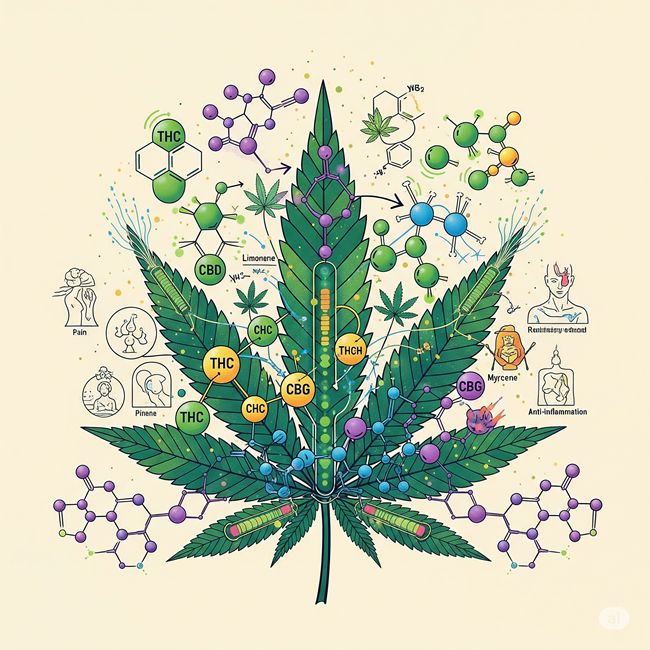
Origin of the "entourage effect" concept and its historical evolution
The history of the entourage effect begins in 1998, when Dr. Raphael Mechoulam —dubbed the "godfather of cannabis research"— and his colleague Dr. Shimon Ben-Shabat published a pioneering study in European Journal of Pharmacology. In it they demonstrated that apparently inert fatty acid metabolites could significantly enhance endocannabinoid activity, particularly that of 2-arachidonoylglycerol, when acting together. This observation gave rise to the hypothesis that cannabis compounds interact like a "molecular orchestra" capable of producing effects that exceed the sum of their parts.
Mechoulam already had a decisive trajectory in the field: in 1964 he had isolated and synthesized THC for the first time, and in 1992 he participated in the discovery of anandamide, the first identified endocannabinoid. However, the modern formulation of the concept took a leap in 2011 thanks to Dr. Ethan Russo, neurologist and former medical director of GW Pharmaceuticals.
In his influential review "Taming THC", published in British Journal of Pharmacology, Russo expanded the original hypothesis to include not only endocannabinoids, but also phytocannabinoids and plant terpenes, proposing concrete mechanisms of synergy with potential applications in pain, inflammation, depression and epilepsy. His theoretical framework supported the development of Sativex, the first full-spectrum cannabinoid medicine approved in more than 30 countries to treat spasticity in multiple sclerosis.
The evolution of this concept reflects the very advancement of cannabis research: from studies focused exclusively on THC during the 1960s to 1980s, through the discovery of the endocannabinoid system in the 90s, to the current understanding of complex interactions between hundreds of plant compounds. This historical journey marks the transition from a reductionist approach to a holistic vision that recognizes the pharmacological complexity of the whole plant.

The chemical pharmacy of cannabis
Cannabis is a true natural pharmacy with more than 540 chemical compounds identified that interact in complex ways. These compounds are divided into three major families: cannabinoids, terpenes and flavonoids, each with a crucial role in the so-called "entourage effect".
- Cannabinoids: The best-known family, with more than 144 types. It includes THC (the psychoactive compound), CBD (with multiple therapeutic properties without being psychoactive) and a series of "minor" cannabinoids such as CBG, CBN and CBC, each with unique effects and activity profiles.
- Terpenes: These aromatic compounds, also present in many other plants, are key to the entourage effect. Recent research has shown that common terpenes like α-humulene, geraniol, linalool and β-pinene not only contribute aroma, but also directly activate CB1 cannabinoid receptors, which can enhance THC action. Additionally, β-caryophyllene functions as a cannabinoid with anti-inflammatory properties, while myrcene can increase blood-brain barrier permeability, improving THC effects. Pinene, meanwhile, can counteract the memory impairment that THC sometimes causes.
- Flavonoids: These compounds, often overlooked, have a significant impact. Cannflavins A, B and C, exclusive to cannabis, possess anti-inflammatory power up to 30 times superior to aspirin. Their presence in full-spectrum extracts contributes notably to the overall therapeutic profile.
How does synergy between cannabis compounds work?
The magic of the entourage effect lies in the fact that cannabis compounds interact on multiple levels. It's not just about the action of one or two components, but about a complex network of mechanisms that enhance therapeutic effects.
Receptor synergy: Changing the body's response
Molecular synergy begins at the cannabinoid receptors (CB1 and CB2). Here, different compounds act as allosteric modulators, that is, they change the shape of the receptor. This alters how cannabinoids bind to them and how the signal is transmitted. This "modulation" allows a combination of compounds to activate specific signaling pathways to obtain more precise therapeutic effects, while avoiding other unwanted effects.
Pharmacokinetic interactions
This mechanism focuses on how the body processes compounds. Terpenes can play a crucial role by improving the bioavailability of cannabinoids. They achieve this by increasing cell membrane permeability and modifying metabolism. A clear example is CBD, which inhibits the CYP3A4 and CYP2D6 enzymes, prolonging the half-life of other compounds and potentially increasing their levels in the body. CBD interaction with CYP3A4 and CYP2D6 enzymes.
Endocannabinoid system modulation
The entourage effect also operates through the body's own endocannabinoid system. CBD, for example, inhibits the FAAH enzyme, which is responsible for breaking down anandamide. By inhibiting this enzyme, CBD increases endogenous anandamide levels and amplifies the overall endocannabinoid "tone". This may explain why full-spectrum extracts are often effective at lower doses.
Interaction with other neuronal systems
Finally, synergy extends beyond the cannabinoid system. Research shows that cannabis compounds can interact with other neurotransmitters and ion channels. For example, they modulate TRPV1 channels for pain control, interact with the adenosine system for anti-inflammatory effects and regulate the GABA/glutamate balance for neuroprotective effects.
The scientific debate: Promises and controversies
The debate about the entourage effect is a reflection of its complex nature and the significant methodological challenges in cannabis research. While some studies yield promising results, others question its fundamental validity. This dual panorama is the norm in cannabis science.
Findings supporting synergy
The most convincing studies come from the field of epilepsy. A 2018 meta-analysis, which included 670 patients, demonstrated that CBD-rich extracts needed doses four times lower than purified CBD to achieve equivalent clinical improvements in treatment-resistant epilepsy cases, and with fewer side effects.
Similarly, a study by Johns Hopkins and the University of Colorado from 2024, considered methodologically rigorous, found direct evidence of the entourage effect. In a double-blind trial, the combination of 30mg of THC with 15mg of d-limonene significantly reduced anxiety, nervousness and paranoia in 20 participants, compared to THC alone. This finding is one of the first to provide direct clinical evidence of interactions between cannabinoids and terpenes.
Studies that raise doubts
Despite the previous findings, multiple systematic reviews have questioned the validity of the concept. One from 2023 concluded that there is a "lack of solid evidence supporting the existence of the proclaimed entourage effect", describing existing data as "contradictory, equivocal and inconclusive". Critics argue that much of the evidence is anecdotal and driven more by marketing than scientific rigor.
In this line, research by Dr. Margaret Haney at Columbia University, which compared whole-plant marijuana with synthetic THC (Marinol), found "almost no difference between them", which directly contradicts the premise of the entourage effect. Likewise, some receptor studies have failed to demonstrate direct interactions between terpenes and CB1 and CB2 cannabinoid receptors at concentrations that would be considered physiologically relevant. This suggests that, if synergistic effects exist, they might operate through alternative mechanisms not yet understood.
Methodological challenges that hinder research
Research on the entourage effect is plagued with significant obstacles:
- Regulatory restrictions: Cannabis status as a Schedule I Controlled Substance in many places severely limits researchers' access to dispensary products. This forces them to use synthetic compounds or government sources that don't always reflect real plant chemistry.
- Lack of standardization: Variability in cultivation, processing and extraction methods of cannabis extracts makes it difficult to replicate studies.
- Absence of analytical methods: There are still no standardized methods to identify and quantify all "entourage compounds", which prevents rigorous and consistent research.
Implications for medical and recreational use
The practical implications of the entourage effect extend far beyond science, directly impacting both medicine and consumer preferences. In medical applications, differences between full-spectrum products and isolated compounds are clinically significant.
Applications in medical practice
A notable example is the medicine Sativex, an oral spray with a 1:1 ratio of THC and CBD. A study showed that with a 48 mg dose of THC, only 4% of 250 patients experienced toxic psychosis, a figure much lower than the 40% that usually has problems with just 10 mg of isolated THC. This suggests that CBD and other compounds modulate the psychoactive effects of THC.
For conditions like multiple sclerosis, patients using Sativex report better control of symptoms such as spasticity, neuropathic pain and sleep problems, compared to medications containing only isolated compounds.
In chronic pain management, full-spectrum extracts offer superior relief, which often allows patients to reduce their dependence on opioid analgesics.
The improved efficacy of full-spectrum extracts is also demonstrated in patients with pediatric epilepsy. These children require doses up to 22.5% lower of full-spectrum CBD extracts than isolated CBD to obtain the same results, which underscores a superior safety profile by minimizing medication exposure.
Impact on recreational use and industry
In the recreational context, EEG technology studies have shown that full-spectrum products generate a psychoactive experience more than twice as intense as distilled products, even with similar THC levels. These effects are faster and longer-lasting, which agrees with user preferences: 98% of respondents prefer natural cannabis to synthetic THC (Marinol).
In response to these preferences, the industry has evolved with the creation of more sophisticated products. Companies like Level Blends develop specific formulations of cannabinoids and terpenes. Additionally, specialized laboratories now offer detailed profiles of these compounds to help consumers make informed decisions.
Studies show that 80-85% of users experience predictable effects with specific terpene formulations, demonstrating the real and practical impact of the entourage effect concept on the consumer experience, whether through pharmacological mechanisms or a potent placebo effect.
Full spectrum versus isolates
The choice between a full-spectrum product and an isolate is one of the most important decisions for patients and consumers. This choice has significant implications for efficacy, dosing and possible side effects.
What is a full-spectrum extract?
Full-spectrum products preserve the complete chemical profile of the cannabis plant, including all cannabinoids, terpenes, flavonoids and other active compounds in their natural proportions. This preservation of the "chemical fingerprint" is the basis of the entourage effect, as it maintains synergy between components.
- Extraction methods: To maintain these complex profiles, processing methods are crucial. Supercritical CO2 extraction is a preferred method because it preserves a wide range of cannabinoids and terpenes. In contrast, more aggressive techniques like distillation can remove essential volatile components. Leading companies perform exhaustive chemical analyses to ensure all minor compounds are preserved.
What is an isolated extract?
In contrast, isolates are compounds with more than 99% purity, from which all plant material has been removed. Although they have certain advantages, such as extremely precise dosing, lack of taste or smell and elimination of the risk of testing positive in drug tests, clinical evidence suggests they are less effective than full-spectrum products for most therapeutic applications.
Real cases: The entourage effect in practice
The most convincing examples of the entourage effect come from clinical practice, where it's observed how the combination of compounds produces therapeutic results that exceed the sum of their parts.
1. Modulation of adverse THC effects
- Limonene and anxiety: A recent Johns Hopkins study demonstrated that adding limonene to THC significantly reduces anxiety and paranoia. This interaction allows using higher doses of THC for pain control or other symptoms without suffering unwanted psychoactive side effects.
- Pinene and memory: α-pinene offers protection against memory impairment that THC sometimes causes. It does this by preserving acetylcholine, a key neurotransmitter for cognitive function, allowing patients to obtain THC benefits without compromising their mental clarity.
2. Synergy in disease treatment
- Pain and inflammation: β-caryophyllene improves pain relief by acting on CB2 receptors, providing an anti-inflammatory mechanism that complements the analgesic effects of THC and CBD. This synergy is very useful in treating conditions with inflammatory pain.
- Multiple sclerosis: Patients using Sativex, a medication with a 1:1 ratio of THC and CBD, report better control of spasticity, neuropathic pain and sleep quality. The combination has demonstrated superior tolerability to either compound separately, suggesting they modulate each other to optimize benefits and minimize adverse effects.
3. Multidimensional benefits in patients
- Pediatric epilepsy: In cases of childhood epilepsy, full-spectrum CBD extracts not only reduce seizures, but also improve alertness, cognitive function and overall quality of life. These benefits are uncommon with isolated CBD, indicating that "minor" cannabis components contribute to broader therapeutic outcomes.
- Palliative care: Advanced cancer patients using full-spectrum Rick Simpson Oil (RSO) often report better pain control, increased appetite and improved sleep quality. Although evidence is largely anecdotal, the consistency of these reports suggests that synergistic effects are genuine and have a practical impact on palliative care.
The future of cannabis: Towards personalized medicine
The future of entourage effect research stands at a fascinating crossroads, where advanced technology, deeper molecular understanding and personalized medicine converge to open new therapeutic possibilities. To advance, the scientific community focuses on several key areas.
1. Resolution of scientific controversy
To resolve the current debate, the priority is to conduct double-blind controlled clinical trials that directly compare full-spectrum products with isolates. These studies, with standardized methodologies and objective measurements, seek to provide solid and definitive evidence that clarifies existing controversies.
2. Understanding at the molecular level
Research into underlying mechanisms is evolving thanks to advanced techniques like neuroimaging, metabolomics and genomics. These tools promise to reveal exactly how terpenes and minor cannabinoids interact at the molecular level.
- Emerging technologies like EEG neurotechnology already offer objective measurements of psychoactive effects.
- Metabolomic analyses can identify specific biomarkers of synergistic interactions.
3. The path to personalized medicine
Perhaps the most promising application of the entourage effect is the development of personalized cannabinoid medicine. Research into genetic polymorphisms in cannabinoid receptors and metabolizing enzymes could predict which patients will respond better to specific formulations of cannabinoids and terpenes. This precision medicine approach has the potential to revolutionize treatment, allowing doctors to prescribe compound combinations based on each patient's individual genetic profile.
4. New areas of research
The microbiome, for example, is an emerging field that suggests intestinal bacteria can significantly influence cannabinoid metabolism and therapeutic response. Understanding this interaction could lead to new approaches, such as using probiotics to optimize drug efficacy.
5. Regulatory advances
Regulatory challenges continue to be an obstacle, but legal frameworks are evolving in various jurisdictions. A potential federal reclassification of cannabis could free academic research, while state-authorized research initiatives are already providing valuable data on the real-world efficacy of full-spectrum products.
Sources and References
Main scientific studies
- Ben-Shabat, S., Fride, E., Sheskin, T., et al. (1998). An entourage effect: inactive endogenous fatty acid glycerol esters enhance 2-arachidonoyl-glycerol cannabinoid activity. European Journal of Pharmacology, 353(1), 23-31.
- Russo, E. B. (2011). Taming THC: potential cannabis synergy and phytocannabinoid-terpenoid entourage effects. British Journal of Pharmacology, 163(7), 1344-1364. https://doi.org/10.1111/j.1476-5381.2011.01238.x
- Pamplona, F. A., Da Silva, L. R., & Coan, A. C. (2018). Potential clinical benefits of CBD-rich cannabis extracts over purified CBD in treatment-resistant epilepsy: observational data meta-analysis. Frontiers in Neurology, 9, 759.
- Russo, E. B., & Marcu, J. (2017). Cannabis pharmacology: the usual suspects and a few promising leads. Advances in Pharmacology, 80, 67-134.
- LaVigne, J. E., Hecksel, R., Keresztes, A., & Streicher, J. M. (2021). Cannabis sativa terpenes are cannabimimetic and selectively enhance cannabinoid activity. Scientific Reports, 11(1), 8232.
Reviews and Meta-analyses
- Cogan, P. S. (2020). The 'entourage effect' or 'hodge-podge hashish': the questionable rebranding, marketing, and expectations of cannabis polypharmacy. Expert Review of Clinical Pharmacology, 13(8), 835-845.
- Ferber, S. G., Namdar, D., Hen-Shoval, D., et al. (2020). The "entourage effect": terpenes coupled with cannabinoids for the treatment of mood disorders and anxiety disorders. Current Neuropharmacology, 18(2), 87-96.
- Santiago, M., Sachdev, S., Arnold, J. C., McGregor, I. S., & Connor, M. (2019). Absence of entourage: terpenoids commonly found in Cannabis sativa do not modulate the functional activity of Δ9-THC at human CB1 and CB2 receptors. Cannabis and Cannabinoid Research, 4(3), 165-176.
Recent clinical studies
- Erwin, K., Kuchinsky, S., Koffer, J., et al. (2024). Vaporized D-limonene selectively mitigates the acute anxiogenic effects of Δ9-tetrahydrocannabinol in healthy adults who intermittently use cannabis. Drug and Alcohol Dependence, 260, 111309.
- Walsh, K. B., McKinney, A. E., & Holmes, A. E. (2021). Minor cannabinoids: biosynthesis, molecular pharmacology and potential therapeutic uses. Frontiers in Pharmacology, 12, 777804.
- Tura, M., Mandolini, G. M., Tura, S., et al. (2021). Phytocannabinoids and epilepsy: a review of clinical studies and potential mechanisms of action. Pharmaceuticals, 14(9), 894.
Specialized review articles
- Gallily, R., Yekhtin, Z., & Hanuš, L. O. (2015). Overcoming the bell-shaped dose-response of cannabidiol by using cannabis extract enriched in cannabidiol. Pharmacology & Pharmacy, 6(2), 75.
- Johnson, J. R., Burnell-Nugent, M., Lossignol, D., et al. (2010). Multicenter, double-blind, randomized, placebo-controlled, parallel-group study of the efficacy, safety, and tolerability of THC:CBD extract and THC extract in patients with intractable cancer-related pain. Journal of Pain and Symptom Management, 39(2), 167-179.
- MacCallum, C. A., & Russo, E. B. (2018). Practical considerations in medical cannabis administration and dosing. European Journal of Internal Medicine, 49, 12-19.
- Namdar, D., Mazuz, M., Ion, A., et al. (2018). Variation in the compositions of cannabinoid and terpenoids in Cannabis sativa derived from inflorescence position along the stem and extraction methods. Industrial Crops and Products, 113, 376-382.
Research on specific compounds
- Barrett, M. L., Gordon, D., & Evans, F. J. (1985). Isolation from Cannabis sativa L. of cannflavin--a novel inhibitor of prostaglandin production. Biochemical Pharmacology, 34(11), 2019-2024.
- Pollastro, F., Minassi, A., & Fresu, L. G. (2018). Cannabis phenolics and their bioactivities. Current Medicinal Chemistry, 25(10), 1160-1185.
- Booth, J. K., Page, J. E., & Bohlmann, J. (2017). Terpene synthases from Cannabis sativa. PLoS One, 12(3), e0173911.
Pharmacokinetics and metabolism studies
- Stott, C., White, L., Wright, S., Wilbraham, D., & Guy, G. (2013). A phase I study to assess the single and multiple dose pharmacokinetics of THC/CBD oromucosal spray. European Journal of Clinical Pharmacology, 69(5), 1135-1147.
- Jiang, R., Yamaori, S., Takeda, S., Yamamoto, I., & Watanabe, K. (2011). Identification of cytochrome P450 enzymes responsible for metabolism of cannabidiol by human liver microsomes. Life Sciences, 89(5-6), 165-170.
- Grotenhermen, F. (2003). Pharmacokinetics and pharmacodynamics of cannabinoids. Clinical Pharmacokinetics, 42(4), 327-360.
Specialized digital resources
- CANNA Foundation. (2024). Full-spectrum cannabis extracts VS CBD isolate. https://www.fundacion-canna.es/en/full-spectrum-cannabis-extracts-vs-cbd-isolate
- Project CBD. (2024). The Entourage Effect. https://www.projectcbd.org/science/cannabis-pharmacology/entourage-effect-cannabis-cannabis
- Cannabis Clinic New Zealand. (2024). Full Spectrum CBD vs Isolate CBD - What's the Difference? https://cannabisclinic.co.nz/full-spectrum-isolate-cbd-difference/
- Kalapa Clinic. (2024). Full spectrum - therapeutic benefits. https://www.kalapa-clinic.com/en/full-spectrum-therapeutic-benefits/