
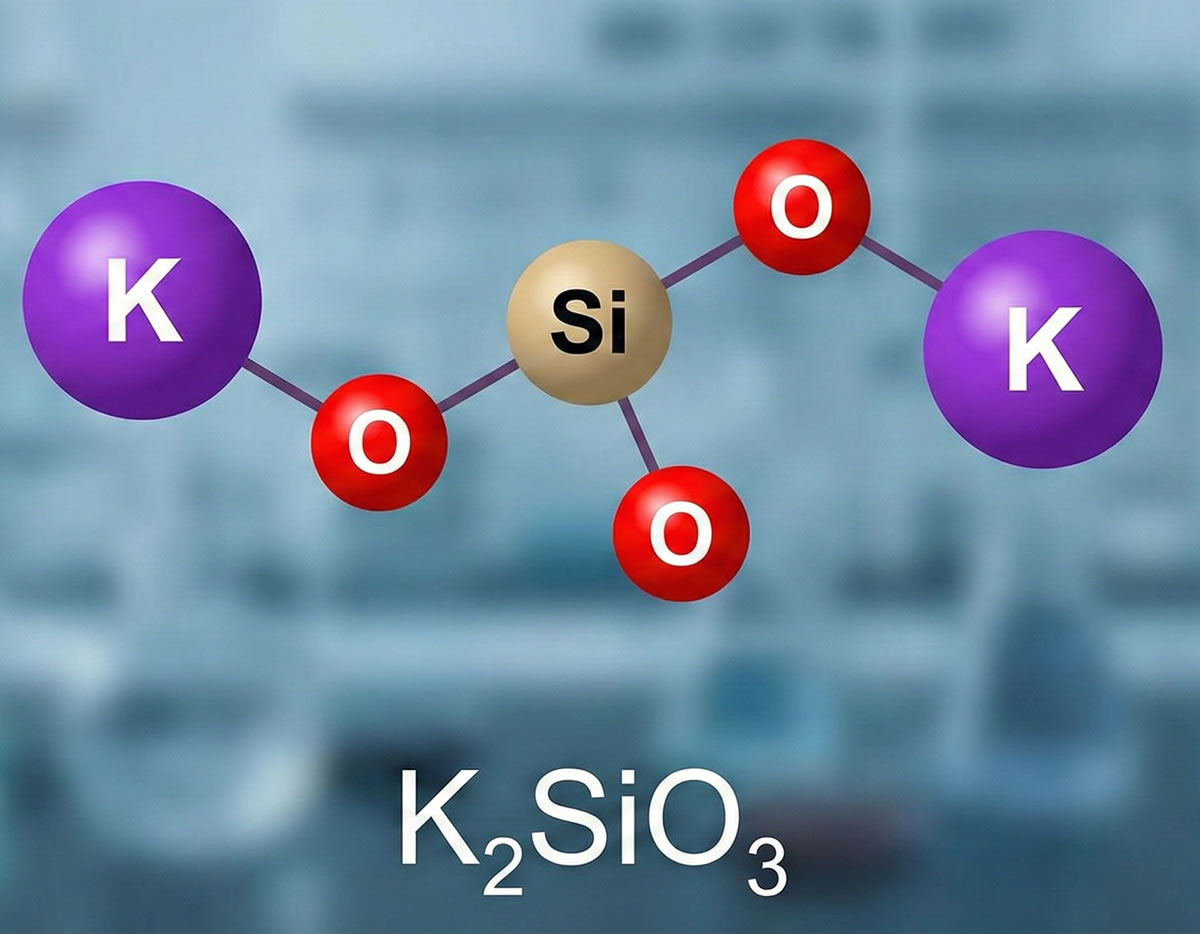
Potassium silicate (K₂SiO₃) has emerged as one of the most valuable additives in advanced plant nutrition, particularly in high-yield cannabis cultivation. Although silicon is not classified as an essential nutrient for plants—meaning it is not strictly necessary to complete their life cycle—decades of research have shown that its supplementation provides extraordinary benefits in terms of disease resistance, stress tolerance, and structural improvement.
Dr. Bruce Bugbee, Professor of Crop Physiology at Utah State University, NASA research collaborator, and one of the world's leading authorities on crop optimization, draws a perfect analogy:
"Silicon is not essential for plant survival, just as exercise is not essential for human survival. However, both represent extremely valuable practices that significantly improve performance and resilience."
Solubility and pH of potassium silicate
The main historical limitation of potassium silicate has been its low solubility under normal pH conditions, which has restricted its widespread use in agriculture. This technical obstacle was directly addressed in groundbreaking research by Fatzinger and Bugbee (2021), which established precise parameters to maximize its availability.
The researchers demonstrated that the solubility of potassium silicate increases exponentially when pH exceeds 11.3. Below this threshold, especially in neutral or acidic pH ranges (pH 6–7, optimal for most crops), the compound tends to precipitate and form insoluble structures that can clog drip irrigation systems and damage fertilizer injectors.
However, the key finding was that once fully dissolved at alkaline pH, silicate remains in solution even when the pH is subsequently lowered to levels optimal for root uptake (pH 5.5–6.5). This chemical behavior allows the preparation of stable alkaline concentrates that, after dilution and pH adjustment, keep silicon bioavailable.
Application methods for potassium silicate
1. Slow-release amendments for growing media
In crops grown in solid substrates (peat, coco coir, organic mixes), incorporating silicon-rich amendments provides a gradual and steady supply:
- Rice hulls: Contain approximately 15–20% silicon by dry weight. Studies at Utah State University showed that a 12% incorporation by volume releases an average of 1.5 mmol Si/L per leaching event for over 120 days. They are inexpensive, widely available, and also improve substrate aeration.
- Wollastonite (CaSiO₃): This white powdered calcium silicate mineral quickly reaches effective concentrations of soluble silicon when incorporated at a rate of 1 g/L of substrate. In addition to supplying silicon, it provides slow-release calcium and can help stabilize pH in acidic substrates.
- Diatomaceous earth: Although effective, it is more expensive compared to the previous alternatives, and its silicon release can be less consistent4.
2. Fertigation in hydroponic systems
For hydroponic systems, rockwool (Grodan) cultivation, NFT, or DWC, silicate must be carefully integrated into the nutrient solution. The following protocol is based on research recommendations from Utah State University:
Silicate concentrate preparation (Tank A – Silicon):
- Use deionized or reverse osmosis water to avoid interactions with carbonates
- Raise the water to pH >11.3 by adding potassium hydroxide (KOH) before adding the silicate (approximately 0.3 g KOH/L)
- Add potassium silicate slowly under constant stirring until the desired concentration is reached
- Keep the tank covered to minimize absorption of atmospheric CO₂, which lowers pH and causes precipitation
- This concentrate should be the first injector in any fertigation system
Application in the final nutrient solution:
- Dilute the silicate concentrate into the main fertigation line
- Include a mixing chamber after the silicate injector to ensure complete dilution before adding other nutrients
- Adjust the pH of the complete solution to 5.8–6.2 after mixing
- Maintain a final concentration of 0.6 mM (20 ppm or mg/L) of silicon
Critical precautions:
- Never mix concentrated potassium silicate with other concentrated fertilizers—this will cause massive precipitation of phosphates and micronutrients
- In systems with standard A-B header tanks, an auxiliary injector dedicated exclusively to silicate is required
- Silicate can compete with phosphate for absorption sites due to their chemical similarity; maintain proper balances
Powdery mildew control
The most significant and best-documented benefit of potassium silicate in cannabis is the suppression of powdery mildew (Golovinomyces spadiceus, G. ambrosiae, G. cichoracearum), which is the most prevalent and economically devastating fungal disease in greenhouse and indoor cannabis cultivation.
A rigorous study published in Plant Health Progress by Dixon et al. (2022) evaluated over six weeks the effect of root-applied silicon on hemp plants grown in peat-based soilless mixes. The results were unequivocal:
- Clear dose-response relationship: There was a negative linear correlation between the percentage of silicon accumulated in leaf tissue and the percentage of leaf area affected by powdery mildew
- Upper canopy protection: Doses of 300 kg Si/ha significantly reduced infection severity on the most exposed leaves
- Mid-canopy protection: Doses of 600 kg Si/ha were necessary to provide effective protection to leaves in the middle tier
- Comparable efficacy: Silicon treatments showed efficacies of 86–95% in powdery mildew reduction, comparable to conventional fungicides
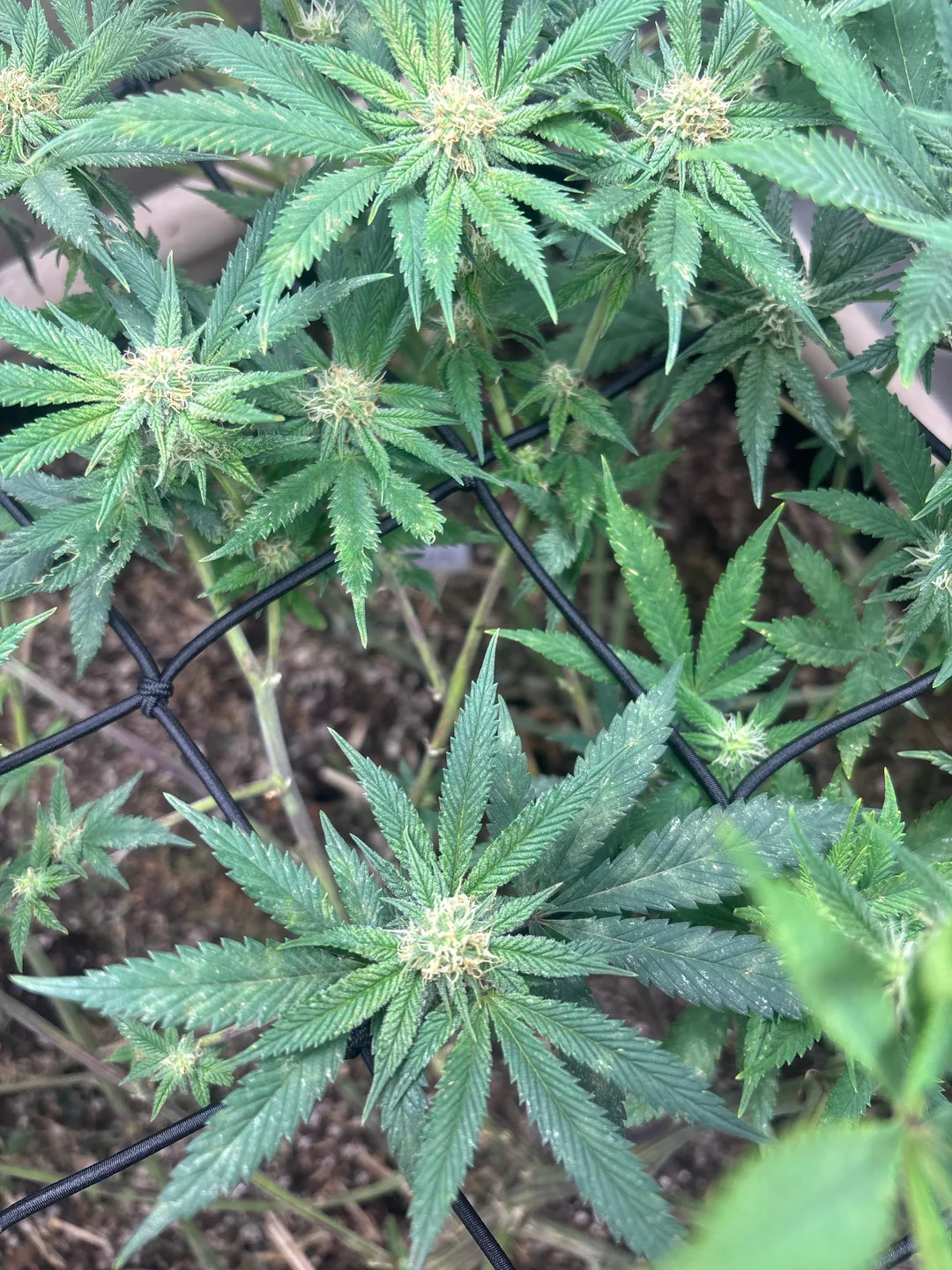
As Dr. Bugbee emphasizes based on years of practical observation: "When we maintain adequate levels of potassium silicate in the root system, we virtually never see powdery mildew outbreaks. The effect is dramatic: as soon as silicate is no longer present in the substrate or nutrient solution—even for brief periods—the disease reappears with alarming speed. For this reason, continuous silicon supplementation is amply justified."
Protection mechanisms: a dual defense
The protection conferred by silicon operates through two well-characterized synergistic mechanisms:
1. Physical barrier (passive mechanism): After being absorbed as monosilicic acid [Si(OH)₄], silicon is transported via the xylem and deposited as amorphous silica (SiO₂·nH₂O) in the epidermal cell walls, especially beneath the cuticle. This deposition creates a structural reinforcement layer that:
- Increases the mechanical rigidity of cell walls, making fungal penetration more difficult
- Reduces susceptibility to cell collapse during pathogen attack
- Decreases water loss through wounds, limiting secondary colonization
2. Systemic Acquired Resistance/SAR (active mechanism): When silicon is absorbed by the roots, it activates signaling cascades that induce systemic defensive responses7:
- Increased synthesis of antimicrobial compounds (phytoalexins)
- Production of pathogenesis-related proteins (PR proteins)
- Activation of defense genes before pathogen contact (priming)
- Localized accumulation of silicon at infection sites, selectively creating "fortified zones"
Important note: Foliar application of silicates, while it may have direct fungicidal effects due to its alkaline pH or physical effects on spores, does not induce systemic resistance because of limited absorption through the leaves. The most robust preventive benefits are obtained through continuous root application.
Additional benefits of potassium silicate
The scientific literature documents multiple additional benefits of silicon supplementation:
- Insect pest resistance: Silica-enriched cell walls increase abrasion on the mouthparts of chewing insects (caterpillars, beetles) and hinder feeding by sucking pests (aphids, thrips). Studies across various crops have reported significant reductions in damage from borers, leafhoppers, and mites.
- Architectural improvement: Thicker and more rigid stems and petioles reduce lodging and improve light exposure across the canopy. This is particularly valuable in tall sativa varieties or in high-density plantings.
- Enhanced photosynthetic efficiency: Plants supplemented with silicon show increases in chlorophyll concentration and higher photosynthetic rates, resulting in greater biomass production.
- Abiotic stress tolerance: Silicon improves plant responses to water stress (drought, salinity), thermal stress (heat, cold), and nutritional stress (heavy metal toxicities, deficiencies). The study by Dey (2022) demonstrated that silicon significantly increased cannabis tolerance to drought stress.
- Post-harvest quality: Greater structural rigidity can translate into firmer flowers that are more resistant to handling during trimming and curing.
Dosing and monitoring
Based on years of research at Utah State University and cannabis-specific trials, the dosing recommendations are as follows:
Nutrient solution concentration (hydroponics/fertigation):
- 0.6 millimolar (mM) of elemental silicon
- Equivalent to approximately 16.8 ppm or mg/L of Si
- Or expressed as K₂SiO₃: approximately 60 ppm
- This concentration is soluble and stable at pH 5.8–6.2
Note on unit conversion: Many commercial products express their content as SiO₂ (silica) rather than elemental Si. To convert: 1 ppm elemental Si ≈ 2.14 ppm SiO₂. Therefore, 20 ppm Si ≈ 43 ppm SiO₂.
Substrate application (slow release):
- Rice hulls: 10–15% of total substrate volume
- Wollastonite: 0.5–1 g per liter of substrate
Plant tissue monitoring: Although not a common practice in small-scale grows, tissue analysis can confirm adequate levels. Foliar concentrations >1% Si by dry weight are associated with good pathogen protection.
Practical considerations and warnings
Compatibility with other nutrients: The main challenge is avoiding phosphate precipitation. Never mix concentrated silicate directly with fertilizers containing phosphorus. Always use separate injection systems or ensure complete dilution before adding other salts.
Concentrate stability: Concentrated silicate solutions are hygroscopic and absorb CO₂ from the air, which gradually lowers the pH and causes precipitation. Keep tanks tightly sealed and check pH regularly. If cloudiness or precipitates appear, the concentrate has lost its effectiveness.
Interaction with irrigation systems: Precipitated silicate can form extremely hard ceramic deposits in pipes, drippers, and pumps. This is the main risk of improper application and can cause costly damage to drip irrigation systems.
Effect on pH: Potassium silicate solutions are strongly alkaline (pH 10–11.5). Although this is corrected in the final nutrient solution, it can be used strategically as a "pH up" in systems where raising the pH is needed.
Potassium silicate is one of the most effective and evidence-based tools for integrated pest management in cannabis cultivation, particularly for preventing powdery mildew without relying on synthetic fungicides. Its application requires an understanding of basic solution chemistry and careful attention to mixing protocols, but when implemented correctly, it provides:
- A dramatic reduction (>85%) in powdery mildew incidence
- Improved plant architecture and robustness
- Greater tolerance to multiple abiotic and biotic stresses
- An excellent safety profile for both growers and consumers
As Dixon et al. conclude in their landmark study: "The results confirm that silicon can be a valuable tool for integrated powdery mildew management. As the cannabis market expands, silicon may serve as a viable option for greenhouse growers, especially for plants grown in soils or soilless media that are low or limiting in soluble silicon."
In a context where sustainability, reduced chemical inputs, and final product quality are increasingly prioritized, silicon supplementation based on scientifically validated protocols offers a significant competitive advantage to professional growers.
Sources and references
- Epstein, E. (1999). Silicon. Annual Review of Plant Physiology and Plant Molecular Biology, 50, 641-664.
- Bugbee, B. (Athena Ag Channel). "Bruce Bugbee Series (ES) – Los Efectos Del Potasio Silicato". YouTube. https://www.youtube.com/watch?v=P_a5YPC0gDQ
- Fatzinger, B., & Bugbee, B. (2021). pH 11.3 Enhances the Solubility of Potassium Silicate for Liquid Fertilizer. American Society for Horticultural Science. Digital Commons @ Utah State University. Link
- Dey, M. G. (2022). Approaches to Supplementing Silicon in Soilless Media and the Value of Silicon in the Mitigation of Drought Stress. All Graduate Theses and Dissertations, 8680. Utah State University.
- Dixon, E., et al. (2022). Suppression of Hemp Powdery Mildew Using Root-Applied Silicon. Plant Health Progress, 23(3). https://doi.org/10.1094/PHP-01-22-0005-SC
- Wang, M., Gao, L., Dong, S., Sun, Y., Shen, Q., & Guo, S. (2017). Role of Silicon on Plant-Pathogen Interactions. Frontiers in Plant Science, 8:701.
- Fauteux, F., Chain, F., Belzile, F., Menzies, J. G., & Bélanger, R. R. (2006). The Protective Role of Silicon in the Arabidopsis–Powdery Mildew Pathosystem. Proceedings of the National Academy of Sciences, 103(46), 17554-17559.
- Cannabis Business Times (2023). Far-out (red) research: Cannabis research at U.S. universities. Produce Grower. Link
- Akinrinlola, R. J., et al. (2021). Evaluation of disease management approaches for powdery mildew on Cannabis sativa L. (marijuana) plants. Canadian Journal of Plant Pathology.
- Punja, Z. K. (2020). Evaluation of disease management approaches for powdery mildew on Cannabis sativa L. (marijuana) plants. Canadian Journal of Plant Pathology, 43(1), 1-18.
- Rx Green Technologies (2025). Silica Nutrient Supplements for Cannabis Cultivation. Link
- Cannabis Horticultural Association (2023). Understanding The Role of Silicon in Plant Health. Link
- Custom Hydro Nutrients (2022). AgSil Potassium Silicate and Fertilizer Injector Concentrates. Link
- USDA (2023). Limited Scope Technical Evaluation Report: Aqueous Potassium Silicate for Crops.
- Dude Grows Archive. Silica for DWC: How? When? Increased yields? Link
Note: This article is based on the educational video transcript by Dr. Bruce Bugbee (Utah State University, NASA collaborator) and has been extensively supplemented with scientific references from peer-reviewed publications, doctoral theses, and specialized technical resources. The goal is to translate cutting-edge research into actionable protocols for professional growers and advanced enthusiasts.