
In cannabis cultivation, mother plants play a crucial role. They are the foundation for preserving genetics, ensuring stability of desired traits, and maintaining plant health over time. At Ripper Seeds, we apply strict and standardized protocols to preserve our mother plants under controlled conditions, which guarantees genetic integrity, phenotypic uniformity, and quality of seeds and clones obtained from them.
Mother plant management is not limited to horticultural maintenance. It involves a technical approach that combines knowledge in genetics, plant physiology, preventive health, and advanced clonal propagation techniques to create a reliable and productive genetic bank.
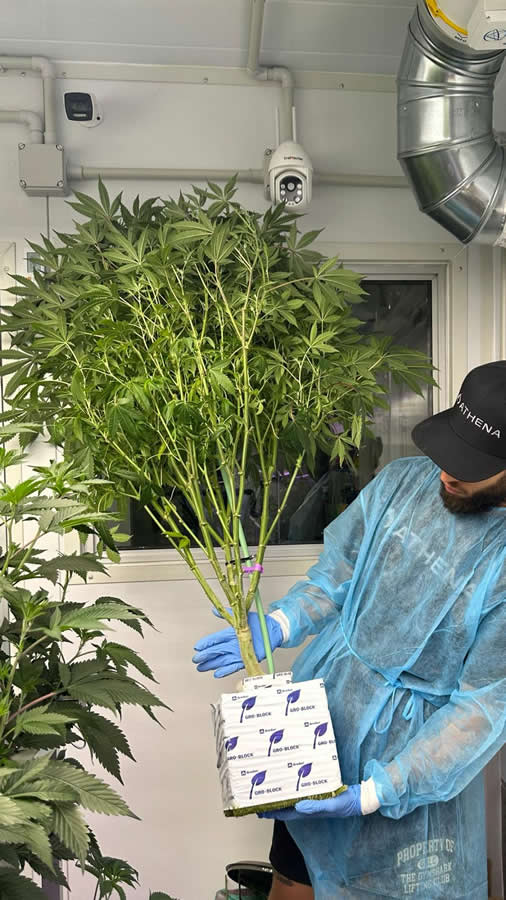
What is a cannabis mother plant?
A mother plant is a selected female specimen maintained indefinitely in vegetative phase. Its sole function is to continuously produce genetically identical plant material through asexual propagation. Unlike plants destined for flowering, these are not exposed to the 12/12 photoperiod, which prevents their floral induction and maintains their capacity to generate clones over time.
This model of conservation and clonal multiplication is not exclusive to cannabis. It also applies to crops like grape (Vitis vinifera), olive (Olea europaea), tomato (Solanum lycopersicum), or strawberry (Fragaria × ananassa), among others, where the goal is to preserve and replicate genotypes of high commercial and agronomic value.
Physiological bases of vegetative maintenance
Success in maintaining mother plants depends on hormonal control that regulates their development. Auxins, cytokinins, gibberellins, and other phytoregulators must be kept in balance to ensure key points:
- Controlled apical dominance: favors vertical growth and balanced branching.
- Active cell division in meristems: Maintaining the regenerative capacity of tissues
- Continuous chlorophyll synthesis: Preserving photosynthetic efficiency
- Stable primary metabolism: Avoiding accumulation of secondary metabolites associated with senescence
Importance of cannabis mother plants
Genetic preservation
Maintaining mother plants allows for conservation of elite phenotypes validated and characterized in terms of organoleptic profiles, productive characteristics, therapeutic properties, and natural resistances. This genetic preservation is critical considering the dioecious nature of cannabis and the variability of traditional genetic improvement processes.
Clonal uniformity and productive predictability
Clonal propagation guarantees genetic homogeneity among all propagated individuals, eliminating the phenotypic variability of sexual reproduction. This uniformity translates into operational predictability:
- Synchronized development times
- Homogeneous nutritional requirements
- Uniform responses to phytosanitary treatments
- Consistent yields
- Standardized organoleptic qualities
Optimization and efficiency
The availability of mother plants eliminates the most variable phases of the production process such as germination, initial establishment, phenotypic selection, and yield evaluation. This optimization translates into:
- Reduction of production cycles: Elimination of 2-4 weeks of initial phase
- Cultivation space optimization: No need for germination and selection areas
- Reduction of losses due to genetic variability: Elimination of unwanted plants
- Precise production planning: Ability to schedule harvests with accuracy
Constant availability of clones
Mother plants provide plant material ready for propagation at any time of the year, regardless of seasonal conditions, seed availability, or market variations. This flexibility allows rapid response to specific demands and optimization of productive infrastructure utilization.
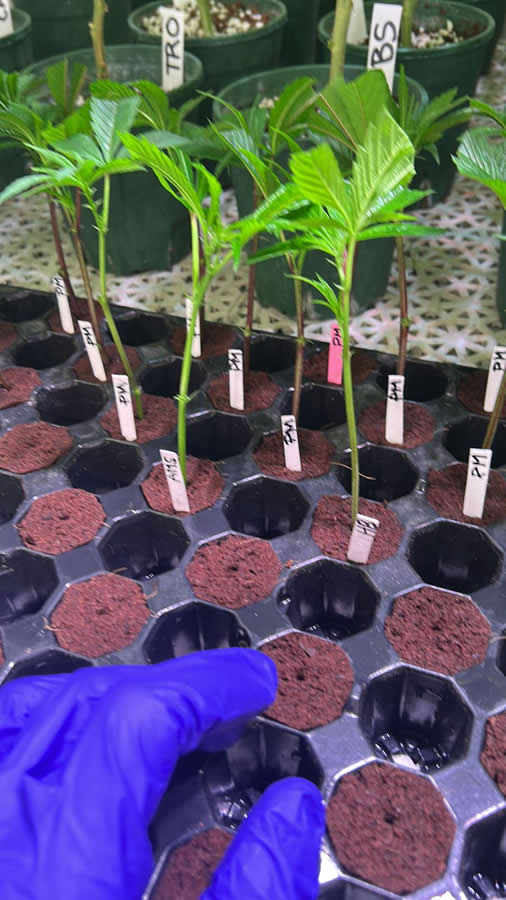
Key factors for maintaining mother plants
Selection of candidates for mother plants requires exhaustive and systematic evaluation through multiple quantifiable and documentable parameters. We detail below what factors we must monitor for proper maintenance.
Vegetative vigor evaluation
- Apical growth rate: Weekly measurement of height increase (cm/week)
- Biomass production: Quantification of dry weight of pruned material
- Leaf area index: Relationship between leaf surface and canopy volume
- Branching density: Number of lateral shoots per unit length of main stem
Architecture and morphology analysis
- Optimal branched structure: Evaluation of lateral branch insertion angle
- Internode length: Measurement of internodal distances to optimize cutting point density
- Structural flexibility: Response capacity to training and pruning techniques
- Root development: Evaluation of root system architecture
Hormonal and genetic stability
- Absence of hermaphrodite tendencies: Evaluation under controlled stress conditions
- Chromosomal stability: Cytogenetic analysis to detect possible aberrations
- Consistent gene expression: Monitoring of specific molecular markers
- Stress response: Evaluation of tolerance to adverse abiotic factors
Chemical and organoleptic characterization
- Cannabinoid profile: Chromatographic analysis (HPLC/GC-MS) of THC, CBD, CBG, CBN
- Terpene profile: Identification and quantification of monoterpenes and sesquiterpenes
- Expression stability: Monitoring chemical consistency over time
- Transmission potential: Verification of heritability of desired characteristics
Environmental parameters and control systems
Specialized light regime
- Standardized photoperiod: Strict maintenance of 18 hours of light and 6 hours of darkness, using high-precision timing systems to avoid fluctuations that could induce flowering responses.
- Optimized LED technology: Implementation of full-spectrum LED systems with emphasis on blue range (400-500 nm) to promote compact and vigorous vegetative growth, complemented with red spectrum (600-700 nm) to maintain optimal photosynthetic activity.
- Photosynthetic photon flux density: Maintenance between 200-400 µmol m⁻² s⁻¹ in the plant canopy, with homogeneous distribution through reflector systems and strategic positioning of fixtures.
Precision thermal control
- Constant temperature: Rigorous maintenance between 22-24°C during light period and 18-20°C during dark period, avoiding fluctuations greater than ±1°C through automated heating and cooling systems.
- Continuous monitoring: Implementation of strategically distributed temperature sensors with data recording every 15 minutes and alert systems for deviations.
Relative humidity management
- Optimal range: Maintenance between 65-70% relative humidity to optimize stomatal gas exchange without creating favorable conditions for fungal pathogen development.
- Dynamic control: Humidification and dehumidification systems that automatically respond to variations caused by changes in plant transpiration and external environmental conditions.
Air circulation and ventilation
- Constant airflow: Complete air renewal every 3-5 minutes to prevent thermal stratification and gas accumulation
- Internal air movement: Oscillating fans to strengthen stems and prevent stagnant air zones
Nutrition and watering of mother plants
Feeding mother plants requires formulations specifically designed for prolonged vegetative maintenance:
Nutrient concentration: Electrical conductivity (EC) maintained between 1.0-1.4 mS/cm, significantly lower than production plants to avoid salt accumulation and osmotic stress.
Optimized NPK ratio: Formulations with high nitrogen (N) proportion to maintain vegetative growth, moderate phosphorus (P) for continuous root development, and balanced potassium (K) for general metabolic functions. Typical NPK ratio: 3-1-2.
Essential micronutrients: Controlled supplementation of chelated iron, magnesium, calcium, and trace elements (zinc, manganese, boron, molybdenum) to prevent deficiencies that would compromise propagation material quality.
Technical water management
Controlled irrigation cycles: Implementation of automated irrigation systems with substrate moisture sensors to maintain optimal levels without saturation.
Water quality: Use of water with base EC ≤ 0.3 mS/cm and pH adjusted between 5.8-6.2 to optimize nutrient absorption.
Drainage and oxygenation: Systems allowing 15-20% drainage to prevent salt accumulation and guarantee adequate root oxygenation.
Advanced pruning techniques
Systematized technical pruning
Pruning mother plants must follow specific protocols that maximize useful material production while maintaining plant health and vigor:
Primary structural pruning: Modification of plant architecture during the first 4-6 weeks to establish a branched structure that favors multiple apex production. Includes:
- Early apical pruning to break dominance
- Selection and strengthening of 6-8 primary branches
- Elimination of non-productive basal growth
Continuous functional pruning: Regular maintenance that combines propagation material harvest with new growth stimulation:
- Harvest of 10-15 cm apexes every 2-3 weeks
- Selective pruning of interior growth to improve light penetration
- Elimination of senescent or damaged plant material
Training techniques: Implementation of low-stress methods like LST (Low Stress Training) and SCROG (Screen of Green) to optimize light distribution and maximize harvest points.
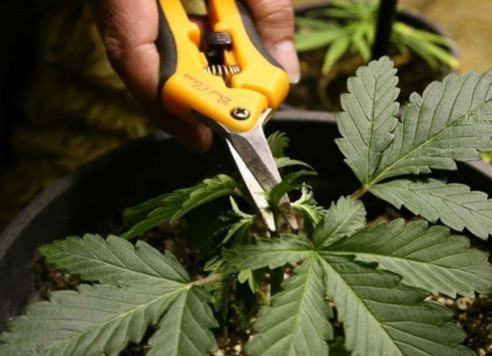
5 essential pruning techniques for cannabis: LST, Supercropping, bottom pruning, apical pruning and FIM. A practical guide with advantages, timing and procedures to maximise your crop.
Errors in mother plant management
Analysis of common failures and their consequences
Indefinite maintenance without programmed renewal
Identified problem: Prolonged maintenance of mother plants without renewal causes progressive genetic fatigue, epigenetic drift, accumulation of somatic mutations, and general deterioration of reproductive vigor.
Observable manifestations:
- Gradual reduction in clone rooting rate
- Increased time needed for clone establishment
- Appearance of morphological anomalies in offspring
- Increased susceptibility to pathogens and environmental stress
- Loss of original organoleptic characteristics
Systematic prevention strategy:
- Implementation of renewal schedule every 6-9 months maximum
- Maintenance of backup mother plants at different stages
- Planned rotation to avoid production interruptions
- Detailed documentation of lineage and age of each mother plant
Inadequate and irregular pruning techniques
Identified problem: Extreme, irregular, or poorly executed pruning interventions compromise physiological balance, reduce productive capacity, and create entry points for pathogens.
Frequent errors:
- Excessive elimination of leaf mass (>30% in a single session)
- Pruning during periods of environmental stress
- Use of non-sterilized tools
- Lack of sealing of large pruning wounds
- Irregular intervals between prunings
Protocolized solution:
- Development of gradual pruning protocols with maximum 20-25% reduction per session
- Programming interventions during periods of lower stress
- Systematic sterilization of tools between plants
- Application of healing paste on cuts larger than 8mm in diameter
- Fixed pruning schedule with intervention recording
Environmental instability and uncontrolled fluctuations
Identified problem: Thermal, hydric, and light oscillations induce chronic physiological stress, compromise the plant immune system, and increase susceptibility to opportunistic pathogens.
Risk factors:
- Inadequate or poorly calibrated environmental control systems
- Lack of redundancy in critical equipment
- Insufficient monitoring of environmental parameters
- Slow response to environmental deviations
Integrated technological solution:
- Installation of automated environmental control systems with multiple sensors
- Implementation of backup equipment for critical functions
- Early warning systems with automatic notifications
- Continuous environmental data recording with trend analysis
Critical deficiencies in biosecurity protocols
Identified problem: Cross-contamination through contaminated instruments, movement of personnel or infected materials represents one of the most severe risks to mother plant integrity.
Identified contamination vectors:
- Non-disinfected pruning and handling tools
- Reused substrate or containers without sterilization
- Personnel movement between infected and clean areas
- Introduction of external plant material without quarantine
- Shared irrigation or drainage systems
Strict biosecurity protocols:
- Mandatory tool hygienization with sodium hypochlorite between each plant
- Use of new or adequately sterilized substrate and containers
- Implementation of clothing and footwear change protocols
- Mandatory 30-day quarantine for all new plant material
- Independent irrigation and drainage systems per plant or area
From Ripper Seeds we hope to have helped by sharing our maintenance protocol for the mothers that produce our seeds, clones and new varieties