
Taxonomy and distribution of alternaria
The genus Alternaria belongs to the Pleosporaceae family, a taxonomic group comprising more than 44 different species distributed practically throughout the world. The species Alternaria alternata represents the most frequently identified strain in cannabis crops, with its presence documented in commercial crops in Canada, Israel, China, and various European regions.
Recent research has identified additional species of the genus affecting cannabis. A study conducted in northern China identified not only A. alternata, but also A. helianthiinficiens and a new species called Alternaria cannabina, belonging to the Infectoriae section. These findings underscore the diversity of the pathogen and the complexity of its management in different geographical contexts.
Biological cycle of alternaria and conditions for infection
The Alternaria fungus plays a fundamental ecological role in the decomposition of organic matter in various ecosystems. However, when it finds favorable conditions in living plant tissue, it can behave as an aggressive pathogen. Its reproductive cycle is based on the production of asexual spores called conidia, multicellular brown-colored structures that disperse efficiently through air and water.
Environmental conditions constitute the determining factor for disease establishment and development. Pathogenicity studies have demonstrated that optimal growth of fungal colonies occurs in a temperature range between 25°C and 30°C. Paradoxically, although the fungus requires high humidity for germination and reproduction, it has been observed that it thrives with greater virulence in situations where periods of humidity and drought alternate, a common situation in outdoor crops during transitional seasons.
How to know if your marijuana plant is infected with alternaria?
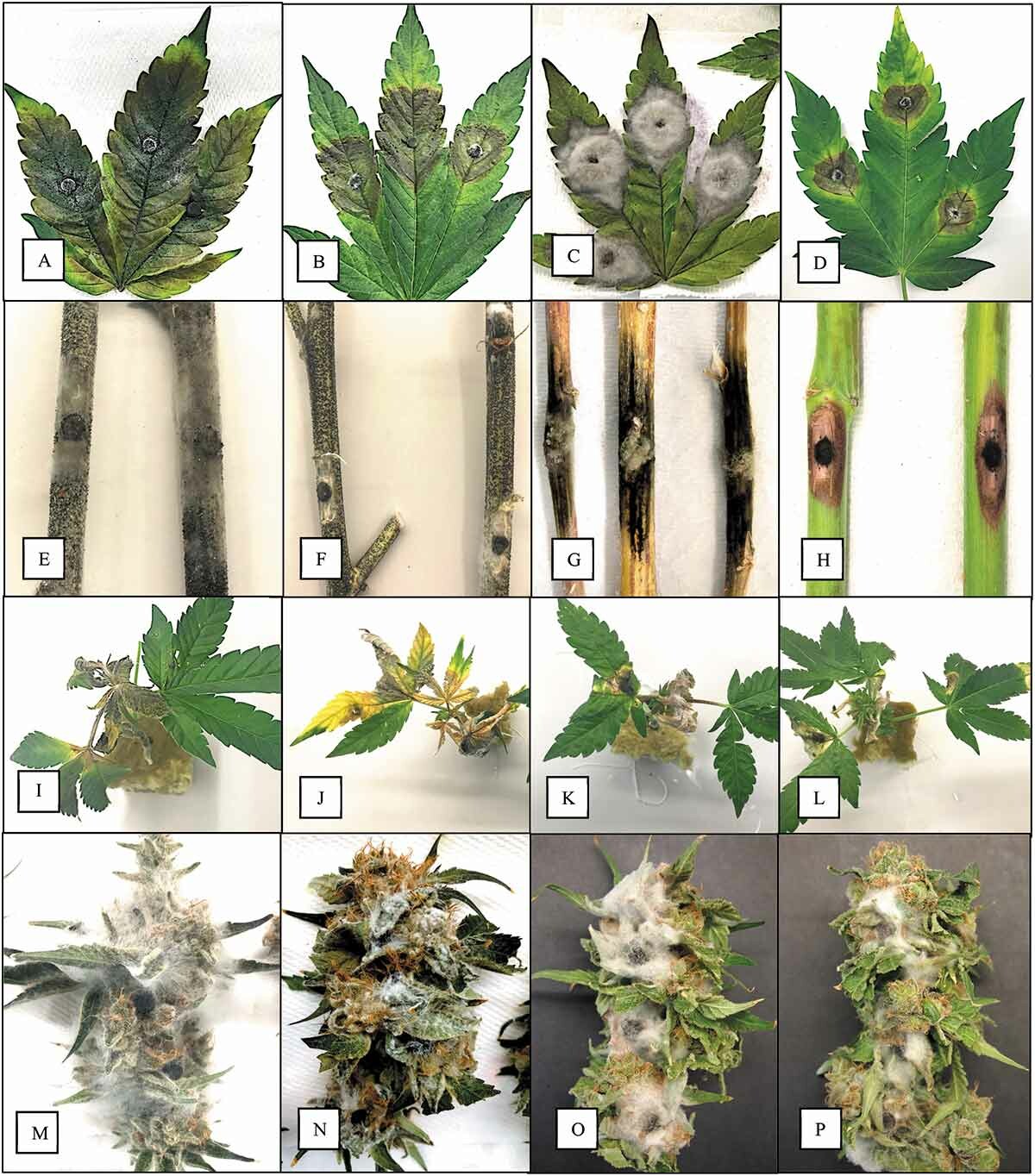
The initial manifestation of Alternaria infection consists of the appearance of foliar spots that evolve from yellowish tones to acquire dark brown or black colorations. A distinctive diagnostic characteristic is the development of concentric patterns in the lesions, reminiscent of a target, frequently surrounded by chlorotic yellow halos. These spots can reach diameters of up to 2.5 centimeters and are typically delimited by the main veins of the foliar tissue.
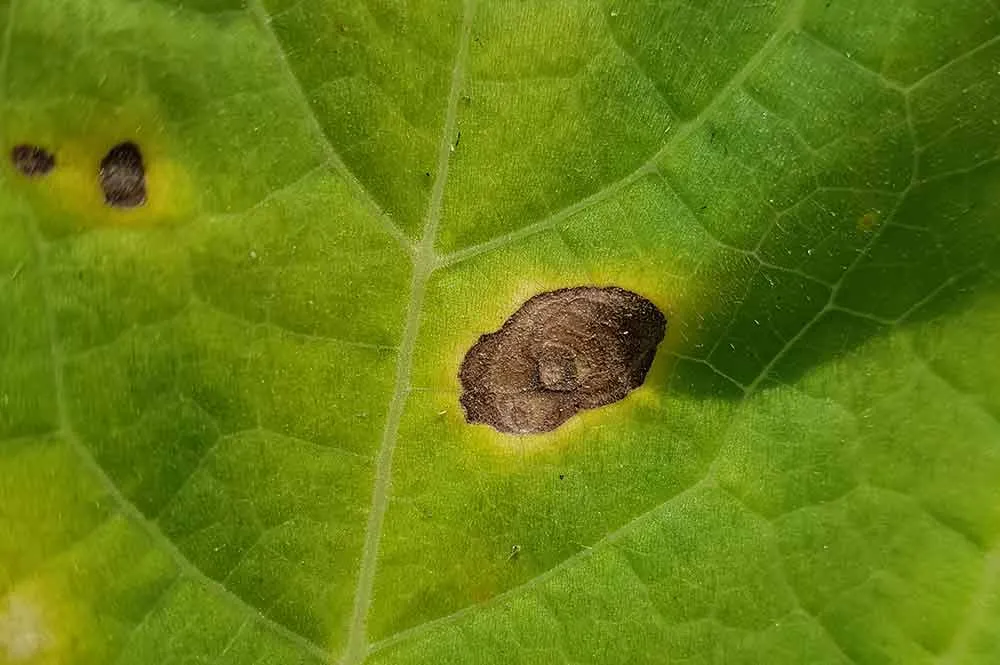
In advanced phases of infection, the presence of small black structures on the lesions is observed, corresponding to spore-producing conidiophores. The infection is not limited to foliar tissue; in young seedlings, the pathogen can attack the stems at substrate level, causing narrowing and grayish-brown colored spots that are frequently lethal to the plant.
A particularly relevant aspect from the perspective of medicinal cannabis production is the ability of A. alternata to infect inflorescences. Research conducted in Israel has identified the fungus as an important pathogen of flowers, with the additional capacity to produce mycotoxins such as alternariol and alternariol monomethyl ether, compounds that present potentially deleterious effects on human health. This finding underscores the critical importance of quality control in products intended for medicinal or recreational consumption.
Predisposing factors and vulnerability of cannabis cultivation
The susceptibility of cannabis plants to Alternaria infection increases significantly under certain physiological stress conditions. Plants that present nutritional deficiencies, particularly of potassium and nitrogen, show decreased resistance to the pathogen. Similarly, crops established in poor substrates or with inadequate drainage that maintain prolonged excessive moisture constitute high-risk scenarios.
The prior presence of nematode infections or damage caused by sucking insects such as aphids can compromise the plants' immune system, facilitating the establishment of the fungus. Interestingly, there is evidence suggesting that insects can act as transmission vectors of the pathogen between plants, by carrying spores while feeding on sap from different individuals in the crop.
Comparative studies between cannabis genotypes have revealed significant differences in susceptibility to infection depending on variety, suggesting that there is genetic variability in resistance to the pathogen. This finding opens interesting perspectives for breeding programs aimed at developing varieties with greater natural resistance.
Prevention strategies for alternaria infection
Cultural measures and cultivation environment management
Prevention constitutes the most effective strategy against Alternaria, given that once the infection is established, treatment options are limited. The rigorous implementation of hygiene practices in the cultivation area is fundamental. This includes systematic elimination of senescent or decomposing plant material, removal of infected leaves, and exhaustive cleaning of equipment and surfaces between cultivation cycles.
Management of the cultivation microclimate acquires particular relevance in greenhouse or indoor production systems. Adequate ventilation must be ensured to prevent the formation of humid and stagnant air pockets. Planting density requires careful planning to guarantee sufficient air circulation between individual plants. The irrigation regime must be adjusted to prevent foliage from remaining wet for prolonged periods, with it being preferable to conduct irrigation in the early morning hours to allow plants to dry during the day.
Substrate management deserves special attention. The reuse of soil from previous crops represents a significant inoculation risk, so the use of fresh substrate is recommended or, failing that, the implementation of appropriate sterilization methods. Propagation material must come from reliable sources, given that seeds can carry the pathogen even after surface disinfection processes.
Biological control of alternaria and products of natural origin
The approach to control through biological agents presents advantages from perspectives of environmental sustainability and final product safety. Inoculation of substrate with beneficial fungi of the genus Trichoderma and arbuscular mycorrhizae has shown protective effects through mechanisms of competition for nutrients and space, as well as by induction of systemic resistance in plants.
Among plant extracts with fungicidal properties, horsetail (Equisetum arvense) has demonstrated efficacy based on its content of equisetinine, a saponin with toxic properties for fungi, and silicic acid, which contributes to strengthening plant cellular structure. Propolis extract, rich in phenolic compounds and flavonoids, exhibits both fungicidal and bactericidal properties, in addition to providing B complex, C and E vitamins that favor the biochemical processes of plants.
Neem oil, derived from Azadirachta indica, constitutes another natural origin control alternative with documented fungicidal properties. Recent research has even explored the fungicidal potential of industrial hemp inflorescence extracts, observing inhibitory effects on A. alternata dependent on the concentration of secondary metabolites such as polyphenols and flavonoids.
Chemical control and regulatory considerations
When preventive measures and natural origin treatments prove insufficient, it may be necessary to resort to broad-spectrum synthetic fungicides. Commonly employed active ingredients include trifloxystrobin, chlorothalonil and triflumizole. However, their application in cannabis intended for human consumption requires careful consideration of regulatory and safety aspects.
It is critical to avoid applications during the flowering phase, given that floral structures directly absorb active ingredients, which can compromise the safety of the final product. Alternation of products with different modes of action helps prevent the development of resistance in pathogen populations. In all cases, the manufacturer's indications regarding dose, dilution and withholding periods must be strictly followed.
Health considerations
Beyond its impact on cultivation, Alternaria presents direct implications for human health. The World Health Organization estimates that between 10% and 15% of the world's population exhibits some degree of allergic sensitivity to spores of this fungal genus, typically manifesting as allergic rhinitis, bronchial asthma or dermatitis. In cultivation contexts, occupational exposure to high concentrations of spores can represent a risk for workers, particularly during harvest and processing operations.
Additionally, the ability of certain Alternaria species to produce mycotoxins raises specific concerns in the context of medicinal cannabis. Studies have documented cases of immunocompromised patients who developed invasive pulmonary aspergillosis after inhaling cannabis contaminated with fungal spores, underscoring the critical need for rigorous microbial quality control protocols in products intended for vulnerable populations.
References and sources:
- Roberts, A.J., Olson, W.A., Thompson, A., Lefol, E. & Punja, Z.K. (2021). Pathogenicity of seedborne Alternaria and Stemphylium species and stem-infecting Neofusicoccum and Lasiodiplodia species to cannabis (Cannabis sativa L., marijuana) plants. Canadian Journal of Plant Pathology, 43(6), 844-860. https://doi.org/10.1080/07060661.2021.1988712
- Jerushalmi, S., Maymon, M. & Freeman, S. (2020). Fungal Pathogens Affecting the Production and Quality of Medical Cannabis in Israel. Plants, 9(7), 882. https://doi.org/10.3390/plants9070882
- Tang, L., Song, X., Zhang, L., Wang, J. & Zhang, S. (2022). Alternaria species causing leaf spot on hemp (Cannabis sativa) in Northern China. European Journal of Plant Pathology, 163, 267-280. https://doi.org/10.1007/s10658-021-02450-1
- Punja, Z.K. (2018). Flower and foliage-infecting pathogens of marijuana (Cannabis sativa L.) plants. Canadian Journal of Plant Pathology, 40(4), 514-527.
- Punja, Z.K., Collyer, D., Scott, C., Lung, S., Holmes, J. & Sutton, D. (2019). Pathogens and molds affecting production and quality of Cannabis sativa L. Frontiers in Plant Science, 10, 1120.
- Dróżdż, P., Marć, M., Wójciak, M., Stępnik, K. & Przywara, A. (2024). Attempts to Use Hemp (Cannabis sativa L. var. sativa) Inflorescence Extract to Limit the Growth of Fungi Occurring in Agricultural Crops. Applied Sciences, 14(4), 1680. https://doi.org/10.3390/app14041680
- Pacific Northwest Pest Management Handbooks. Hemp (Cannabis sativa) - Brown Blight (Alternaria Diseases). Consulted in January 2026. https://pnwhandbooks.org/plantdisease/host-disease/hemp-cannabis-sativa-brown-blight-alternaria-diseases